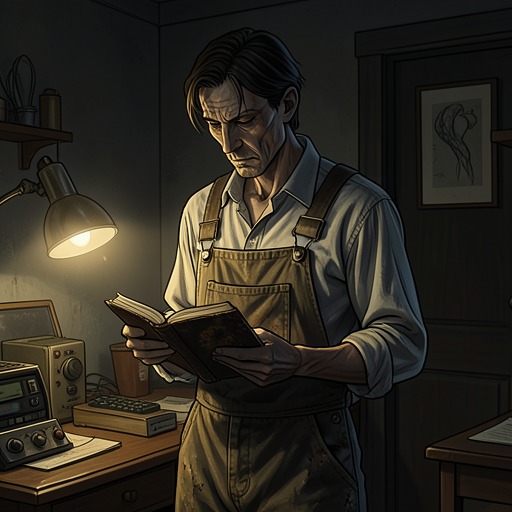
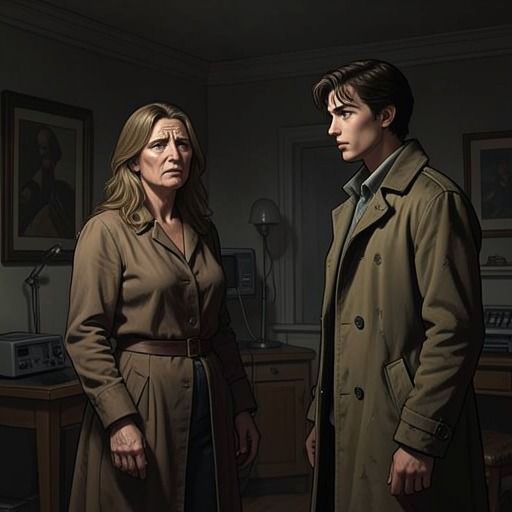
Abraham Portman Leaves Miss Peregrine’s Time Loop
Miss Peregrine's Home of Peculiar ChildrenAbraham Portman Leaves Miss Peregrine’s Time Loop is recalled as both a departure for war and the beginning of an unfulfilled promise to Emma Bloom. Abraham said he would return, but the war changed him: he came back determined to live outside the loop, and his subsequent move to America became a lasting separation. The episode also illuminates why he concealed his Peculiarity from his grandson: he hoped the younger man might have the ordinary life Abraham himself had wanted.
The promise and the separation
Emma’s account begins at the end of the relationship: Abraham left after telling her he loved her and promising to come back one day. He did not return. His departure was therefore not simply a journey away from the loop; it left Emma waiting on the strength of a promise that would never be fulfilled.
Abraham described going to war as a matter of duty. He could not live with himself if he stayed out of the conflict while his people were hunted and killed. Emma understood that he had chosen to fight, but the choice also meant leaving her behind. She waited and worried throughout the war, fearing that each letter might bring news of his death.
A changed man after the war
The war’s end did not bring Abraham back to Emma. He told her that returning was impossible for him: he feared he would lose his sanity, and believed he no longer needed the protective care of Miss Peregrine, whom he called the Bird. Having learned to defend himself in the army, he intended to make a home for himself and Emma in America and then send for her. Emma waited again, but by the time that plan had run its course, Abraham had taken up with someone outside the Peculiar community. Their relationship was over.
Miss Peregrine later placed his decision in the wider danger faced by his community. Abraham had been born Jewish during a period of extreme persecution and faced what she described as a double genocide: Jews were being murdered by the Nazis, while Peculiars were hunted by Hollowgasts. He was tormented by the thought that he remained hidden while both groups to which he belonged were being slaughtered. His choice to fight was thus bound to the peril of his people, not just to a desire to leave the loop.
The end of the war did not end the danger to Peculiars. Although Nazi rule was defeated, Hollowgasts had emerged stronger, and many Peculiars continued to hide. Abraham, however, returned from the war a changed man: a warrior who was determined to build a life beyond the loop and refused to remain concealed. His departure marked a personal break with the protection and confinement of loop life, even as the community around him continued to live in hiding.
America and the wish to be ordinary
Abraham chose America in part because it then had relatively few Hollowgasts. After the war, some Peculiars migrated there, and for a time many could pass as ordinary people. Abraham hoped to do the same. His wish, Miss Peregrine explained, was to live a common life—a possibility he often mentioned in letters. Emma and the other children tried to dissuade him from going, but he persisted.
That wish could not fully be realized. Abraham’s unusual ability, together with the hunting skills he had developed during the war, made him valuable to other Peculiars. He was often called on to help eliminate troublesome groups of Hollowgasts, and his nature was such that he rarely refused. The life he sought as an ordinary man was repeatedly interrupted by the very identity and abilities he had hoped to leave behind.
What he withheld from his grandson
Miss Peregrine said Abraham knew that his grandson was like him; she had learned this from a letter. She could only imagine that Abraham kept the truth from him in order to protect him. In her view, their community’s life involved trials and deprivation, and Abraham’s own experience of persecution gave him particular reason to wish that the boy might avoid it.
The choice of America and the secrecy about his Peculiarity were linked by that hope. Abraham wanted for his grandson what he had never managed to secure for himself: the chance to be ordinary. His grandson later reinterprets the family photograph of Abraham on a hunting trip, where he is wearing a suit. What had once seemed an amusing mismatch now points to a life in which Abraham hunted not only animals, but Hollowgasts as well. The recalled departure consequently clarifies both the distance Abraham maintained from his old life and the continuing demands that kept drawing him back into danger.