Children’s home lockdown
Miss Peregrine's Home of Peculiar ChildrenChildren’s home lockdown is the system of confinement and surveillance Miss Peregrine institutes after Miss Avocet is abducted. Intended to prevent another attack, it reshapes daily life at the home: movement is restricted, residents are watched, and the children’s security comes at the cost of their freedom and ease.
Cause and Rules
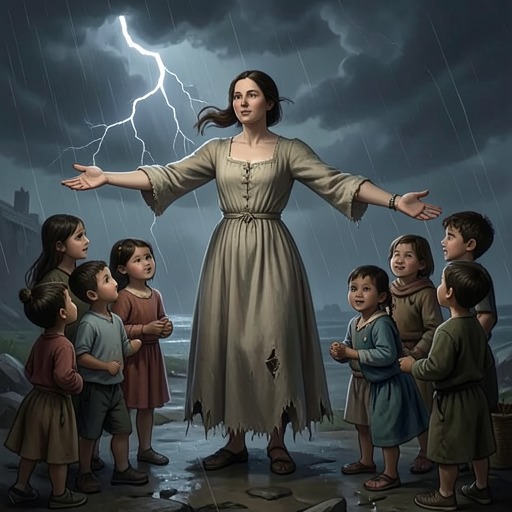
After calling Miss Avocet’s fate a tragedy that must not be repeated, Miss Peregrine orders the children to remain calm and sets new precautions. They may leave the house only with her consent and only in pairs; anyone who sees an unfamiliar person, even someone who appears peculiar, must report them to her immediately. She postpones discussion of further precautions until morning and dismisses the meeting, making clear that the rules are an urgent response to the danger rather than a temporary debate.
The restrictions soon amount to a near-lockdown. Younger children cannot go anywhere without an escort, older ones must travel in pairs, and Miss Peregrine must know everyone’s whereabouts. Even permission to go outside becomes an ordeal. The rules reach beyond the threshold: the house is no longer simply shelter from danger, but a place where movement and access are controlled.
Surveillance and Daily Routine
Sentries take rotating shifts at the front and rear of the house. At all hours of the day and through most of the night, residents watch from the windows. If someone approaches, they pull a chain that rings a bell in Miss Peregrine’s room. When Jacob arrives, she is waiting inside the door to question him about what is happening beyond the loop, whether he has seen anything strange, and whether he is sure he was not followed. Surveillance therefore extends to the children’s contact with the outside world and to the headmistress’s assessment of what they bring back from it.
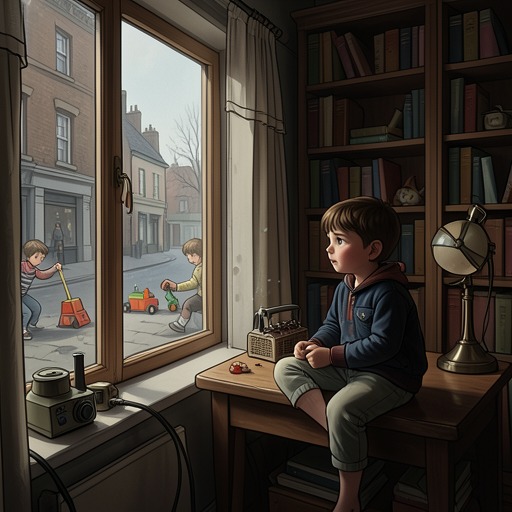
Miss Peregrine keeps the household on a regimented schedule, trying to counter depression through daily lessons, meal preparation, and cleaning. Yet routine cannot restore the home’s former ease. Once direct orders stop, the children sink into chairs, stare through locked windows, reread familiar books, or sleep. After two days of confinement, the residents are lethargic: the protective system has reduced exposure to danger while also narrowing everyday life to guarded rooms and prescribed tasks.
Effects and Significance
The lockdown alters the household’s mood as well as its rules. Younger children become rambunctious; older ones mope and complain loudly enough to be overheard. The sentries’ constant attention and Miss Peregrine’s repeated checks make vigilance an ordinary part of domestic life, while the locked windows give that vigilance a visible boundary. The contrast between the home’s protective purpose and the children’s mounting listlessness defines the cost of the precautions: safety requires accepting a life under watch, with even ordinary trips outside requiring permission and company.
Miss Peregrine’s response is both practical and anxious. She tries to keep every child within sight, while the children’s boredom and complaints expose how difficult it is to sustain emergency restrictions as daily routine. Her lessons, meals, and cleaning give the confined household structure, but after two days they have not lifted its heaviness. The lockdown thus marks a change in the home from a shared domestic refuge to a guarded space organized around the possibility of another attack.