Jacob Discovers He Can See Hollowgasts
Miss Peregrine's Home of Peculiar ChildrenJacob Discovers He Can See Hollowgasts is the turning point at which Jacob learns that what he had regarded as evidence of his own instability is a genuine peculiar ability. Emma identifies the talent as one Abraham possessed: the rare capacity to see the monsters that others cannot. The disclosure confirms that the creatures were real and that Jacob’s grandfather was killed by them, while giving Jacob a new explanation for his own past.
Identity and Background
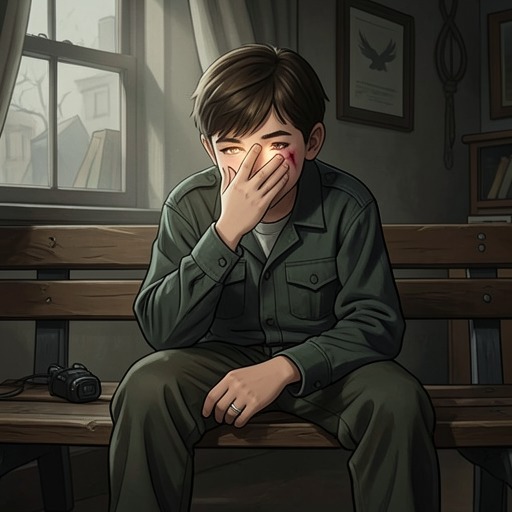
Before Emma’s explanation, Jacob insists that he is common, like his grandfather, and argues that an extraordinary ability would have been apparent to him. He describes himself as an average person and has no framework for understanding why he might be peculiar. His certainty rests partly on the assumption that a special talent would be spectacular and unmistakable; the ability to see Hollowgasts has instead been entangled with experiences he had treated as frightening and discrediting.
Emma counters that common people cannot pass through time loops. She then points to Abraham as evidence that Jacob’s family is not ordinary in the way he imagines: Abraham had a rare talent that almost no one else could perform. Rather than telling Jacob about the ability as though it were general knowledge, Emma acknowledges that she is not meant to disclose it. The revelation is therefore both personal and consequential, changing Jacob’s understanding of himself through information about his grandfather.
The Revelation
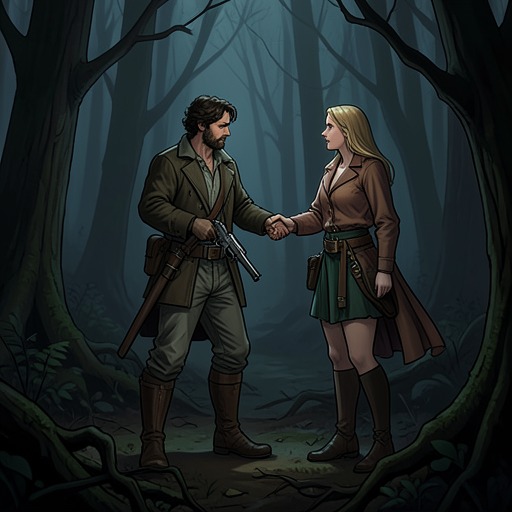
Emma meets Jacob’s eyes and tells him that Abraham could see the monsters. The statement immediately revives the horrors Jacob believed he had left behind. He recognizes their implication: the creatures were real, and they had killed his grandfather. What had remained an unbearable possibility becomes a confirmed part of his family history.
Jacob admits that he can see them too, speaking quietly, as if confessing something shameful. Emma responds by embracing him and saying that she had known there was something peculiar about him; she means the word as the highest compliment. Her reaction gives the new knowledge an emotional dimension. Jacob’s perception is not treated as a defect to hide but as an ability that places him within the peculiar world Emma understands.
Past Experiences Reinterpreted
The discovery reorganizes Jacob’s memories as well as his view of the present. He had always known he was strange, but had never imagined that he was peculiar. Now he can connect his ability to see the creatures with the fact that Ricky saw nothing in the woods on the night Abraham was killed. The difference between their perceptions no longer proves that Jacob imagined what happened; it helps explain why Ricky could not confirm what Jacob had seen.
The same explanation recasts the judgment that Jacob was crazy or seeing things. He understands that he was not simply misperceiving events or undergoing a stress reaction. The panic he felt when the creatures were near, together with seeing them when others could not, belonged to his gift. The revelation does not erase the fear attached to those experiences; it changes their meaning, turning apparent evidence against Jacob’s credibility into evidence of a rare capacity.
Abraham and the Limits of Sight
Abraham’s talent gives the revelation its intergenerational force. Jacob had compared himself to his grandfather to argue for their commonness; Emma instead makes Abraham the precedent for Jacob’s peculiarity. The ability is rare even among peculiar people, and its presence in both generations connects Jacob’s inherited identity to the danger surrounding Abraham’s death.
Jacob asks whether Emma can see the creatures at all. She explains that she can see only their shadows, which is why they hunt mainly at night. This distinction makes clear that Jacob’s ability is not simply a shared form of sight: even Emma, who recognizes his peculiarity, cannot see the creatures as he can. The event thus establishes both the specificity of Jacob’s talent and the uneven distribution of knowledge that shapes the danger around him.
Narrative Significance
The scene moves Jacob from denial toward recognition without making the transition painless. His self-image as an average person is challenged by Emma’s explanation, and his earlier fear is validated by the confirmation that the monsters existed. The repeated assertion that they were real marks the scale of the change: Jacob is no longer trying to decide whether his experience happened, but beginning to understand what it means.
The revelation also gives his ability a double significance. It is a rare talent linking him to Abraham, but it has made Jacob an isolated witness to threats that other people cannot see. Emma’s embrace and affirmation offer recognition in place of disbelief, while her account of her own limited sight preserves the distinction that makes Jacob’s role unusual. The event establishes seeing Hollowgasts as both the source of his past alienation and a defining capacity for what follows.