Jacob’s acute stress reaction
Miss Peregrine's Home of Peculiar ChildrenJacob’s acute stress reaction names the crisis that follows his grandfather’s death and his own encounter with the creature in the woods. The diagnosis offers an explanation for Jacob’s distress, but not a quick cure: even after Dr. Golan persuades him that the creature was a product of shock and imagination, fear continues to shape his sleep, his movement through the world, and his dealings with other people. The episode also reverses the family’s earlier pattern of disbelief: Jacob had not believed his grandfather, and now others doubt Jacob’s account.
Background and Diagnosis
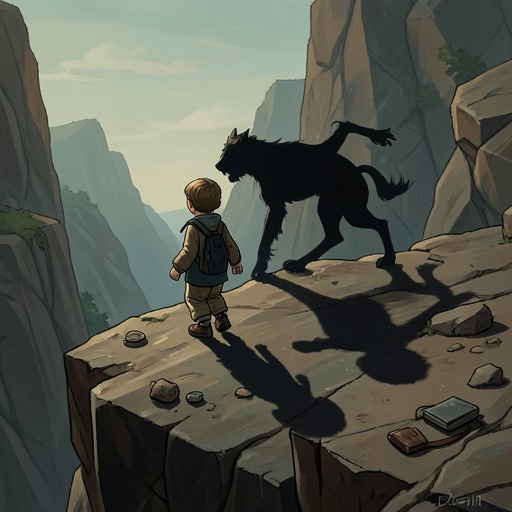
In the months after his grandfather’s death, Jacob is repeatedly examined and interviewed in waiting rooms and offices. His parents treat him as fragile, careful not to argue or show distress around him. Meanwhile, he suffers nightmares and remains convinced that the creature from the woods killed his grandfather and may return for him. His fear spreads beyond the original encounter: he imagines the creature waiting in dark trees, near cars in parking lots, or behind the garage.
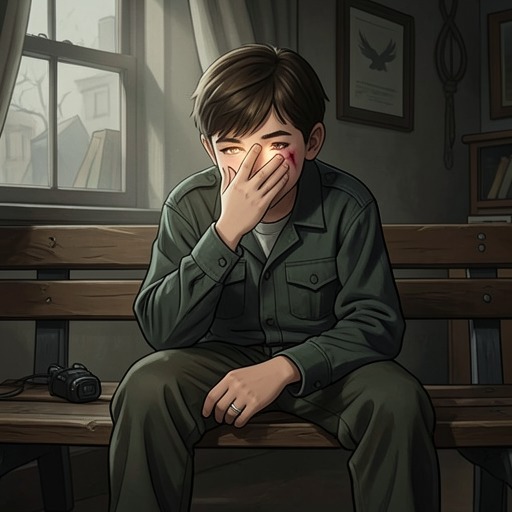
Jacob responds by withdrawing from ordinary life. For weeks, he will not even go into the driveway to collect the morning paper. He sleeps on the laundry-room floor, choosing a room without windows and with a door that locks from the inside; on the day of his grandfather’s funeral, he remains there, trying to lose himself in online games. The room’s practical security and his retreat from the outside world make his distress visible as a change in daily life, not merely a frightening memory.
Jacob also blames himself, repeating that he should have believed his grandfather. When a police officer comes to the house, Jacob tells him what happened, including the creature. The officer listens, writes nothing in his notebook, and then asks Jacob’s parents whether he has seen anyone. Jacob understands the question as a dismissal of his account, makes an obscene gesture, and leaves. His experience thus repeats, in altered form, the disbelief that he now recognizes his grandfather must have faced.
Treatment and Its Limits
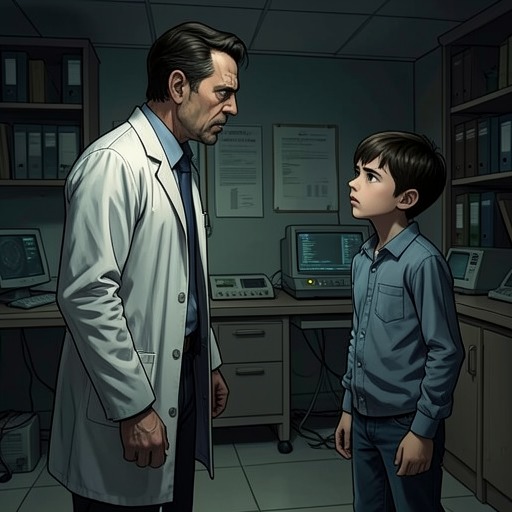
Eventually Jacob’s parents take him to Dr. Golan, a quiet psychiatrist. Jacob does not resist the appointment; he recognizes that he needs help. Dr. Golan quickly persuades him that he did not see a real creature, explaining the vision as a consequence of the shock of his grandfather’s death. In this account, his grandfather’s stories had supplied the creature’s image, and Jacob’s mind had drawn on it during the crisis.
Dr. Golan calls the condition an acute stress reaction. Jacob’s mother jokes that she does not see anything “cute” about it, but the diagnosis reassures Jacob because it seems preferable to being considered crazy. Naming the condition changes how he understands what happened, yet it does not restore him to his former life. He continues to have nightmares and panic, remains twitchy and wary of sudden noises, and struggles socially enough that his parents hire a tutor so he can attend school only when he feels able. They also let him leave his job at Smart Aid.
Treatment becomes frustrating when it is reduced, in Jacob’s view, to prescriptions: medication for nightmares and panic, and increased dosages when he cannot sleep. He feels that the pills make him fat and stupid, while he still sleeps only three or four hours a night. Rather than report that failure honestly, he lies to Dr. Golan, claims to be well, and invents bland dreams in a dream journal. The performance of improvement becomes another burden layered over symptoms that have not gone away.
Recurrence and Significance
Jacob’s later conversation with his father shows that the diagnosis remains part of his life after the initial crisis. When his father says Jacob is turning a corner with the matter of his grandfather, Jacob identifies it as an acute stress reaction, then hesitates over whether to speak of it in the past or present tense. His uncertainty—whether it is something he had or still has—captures the gap between receiving a label and knowing that the distress has ended.
The episode’s emotional structure is shaped by repetition: Jacob’s disbelief of his grandfather is followed by other people’s disbelief of Jacob, while the remembered creature returns through nightmares and fear. The diagnosis gives Jacob language for his condition and confirms his need for help, but the narrative keeps that naming distinct from recovery. His distress continues to affect home, school, work, sleep, and trust in whether others will take his experience seriously.