September 4, 1940
Miss Peregrine's Home of Peculiar ChildrenSeptember 4, 1940 is the first day beyond Miss Peregrine’s repeating loop: after the children’s home is destroyed, the group leaves Cairnholm Island and enters moving time. The date turns the loop’s calendar mechanism into a lived threshold, joining the loss of their former shelter to the possibility of a future beyond the same day.
From the Repeating Day to the Next
Miss Peregrine has explained that the loop repeats September 3, 1940, while the people living inside it experience their days continuously and retain the memories they accumulate. Its inhabitants have therefore lived for decades within a single calendar date. Crossing the loop’s maintained entryway is part of the mechanism that keeps it pliable; without periodic passage, the temporal enclosure can become unstable.
That arrangement makes September 4 more than the next date on a calendar. It is the first day in a very long time when the children are no longer held within the loop’s daily repetition. Their departure follows the destruction of their home, so the break with the old day is inseparable from the loss of the place that had sheltered them.
The Change in the Children
The children leave after a sleepless night, but their exhaustion does not show. They say they can feel a difference: the air in their lungs seems fuller, their blood moves faster, and they feel more vital and more real. Jacob shares that sensation. The shift in time is thus registered not just as a change of date but as a bodily and collective change in their experience of life.
The contrast clarifies the loop’s double character. Its repetition offered a refuge in which the children could remain, but it also confined them to a day that never advanced. Earlier, Jacob had sensed that the loop’s tranquil atmosphere could make staying feel effortless even as the children’s inability to leave made it resemble a prison. On September 4, the calendar begins to move again, and the group’s future is no longer contained within the recurring September 3.
Departure and the Weight of Before and After
The children prepare to leave the island in three stout rowboats. Their belongings must be pared down; some take small pieces of brick or flowers as mementos, while much is left behind on the dock. The passage is not an uncomplicated escape. Jacob recognizes that leaving means carrying memories of his parents, his town, and his former best friend, rather than simply casting off the weight of his old life.
The narrative frames the departure as a boundary between “Before and After.” Jacob understands that returning to his former life is as impossible as returning to the bombed house. The image of the doors blown from their cages captures both release and rupture: the children have gained movement beyond the loop, but their old shelter and the life associated with it cannot be recovered.
A Shared Beginning
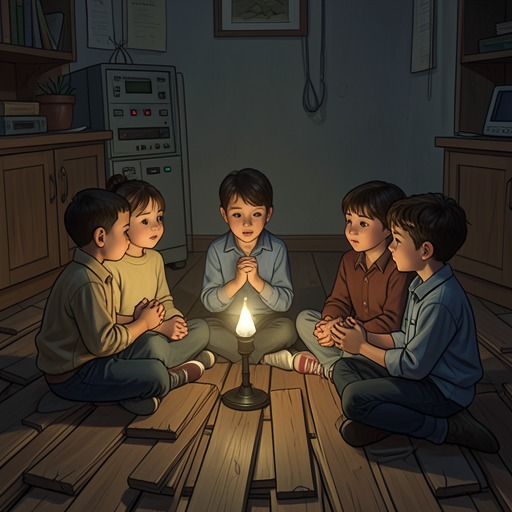
No one is ready to make the speech Emma suggests to dedicate the journey. Instead, Enoch raises Miss Peregrine’s cage, and she cries out; the children answer together. Their response is at once a victory cry and a lament, acknowledging what has been lost while affirming what may still be gained. The group rows away from the island with Miss Peregrine still in her cage, making their departure a collective beginning rather than a return to safety as it was.
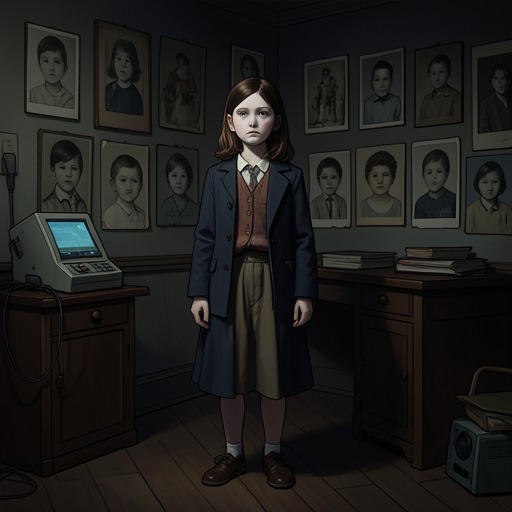
The closing image looks forward through photography. The children have brought none of the old albums, but Bronwyn raises Miss Peregrine’s camera toward Jacob, who imagines the picture as the first in a new album and himself someday telling stories to skeptical grandchildren. The image links the new, moving time of September 4 to the photographs that preserved the past: the children leave with their history, but the record of what comes next has yet to be made.