The children leave Miss Peregrine’s loop
Miss Peregrine's Home of Peculiar ChildrenThe children leave Miss Peregrine’s loop when the bombing has made the house unsafe and Miss Peregrine cannot return from bird form. Their departure turns a familiar refuge into a place they can no longer wait in: carrying what they can, they set out by rowboat without knowing precisely what to say about the journey ahead. The final cry they share expresses the departure’s double meaning, a lament for what has been lost and a declaration of what may still be gained.
The house becomes untenable
The immediate crisis is the bomb’s failure to follow its familiar course. Instead of coming to rest atop Adam’s finger as it usually does, it splits him and explodes. The blast damages the house’s back corner, leaves two rooms charred and burning, and opens a crater where Adam had been. The children flee down the path; when they reach the lawn, the younger ones begin to cry. The scene makes the damage both immediate and a forewarning: Jacob recognizes in the smoking house the ruined, desecrated building he had discovered weeks earlier, now understood as the future of this home.
The physical damage is accompanied by a second, unresolved danger. Miss Peregrine flaps and jumps, apparently straining, but remains unable to change her shape. The children crowd around her in concern. The house has been struck, and the person responsible for maintaining their refuge cannot resume her usual form; together, these facts leave the group without the security that staying once offered.
The decision to leave
Emma states the practical conclusion plainly: the house and its headmistress are in a state that makes their previous life there untenable, and their good run is over. Millard supports her while lying on the ground with broken masonry beneath his head. He rejects waiting in the hope that no more hollows will come or that Miss Peregrine will recover, reasoning that neither hope is a viable alternative. The children’s departure therefore follows not from a prepared plan described in these scenes, but from the recognition that remaining would mean waiting amid continuing danger and uncertainty.
The choice marks a change in their relation to the home. It had been a protected place shaped by routine; after the blast, it is damaged, and its headmistress is unable to resume her human form. The children must exchange the relative security of the loop for an uncertain journey. Their departure is at once an escape from an untenable situation and a move toward a future they have not yet defined.
Leaving the ridge behind
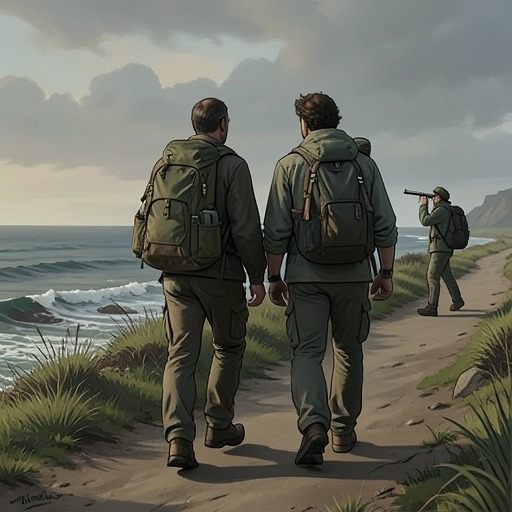
As the group sets out for the ridge, Jacob reaches the spot where he habitually stopped to measure how far he had come. This time he continues walking rather than looking back. The small change in his action gives the departure a personal as well as collective shape: a familiar pause is left behind along with the damaged home. His reflection that sometimes it is better not to look back underscores the cost of turning away without suggesting that the losses have ceased to matter.
Three boats and a shared farewell
The group packs ten peculiar children and one peculiar bird into three sturdy rowboats. Space is limited, so much of what they might otherwise have taken is left on the dock. Their departure is therefore materially defined by selection and loss: they cannot carry everything from the place they are leaving, and the evidence does not present the journey as a fully provisioned or confidently mapped expedition.
Emma proposes that someone make a speech dedicating the journey ahead, but no one is ready with words. Instead, Enoch lifts Miss Peregrine’s cage, and she gives a loud cry. The children answer together. Their response is both a victory yell and a lament, holding the two sides of the moment together: the home and other things have been lost, but the journey also carries the possibility of what remains to be gained. Rather than ending on a formal address or an assurance of safety, the departure closes on a collective sound and an open road.