The loop’s failure to reset
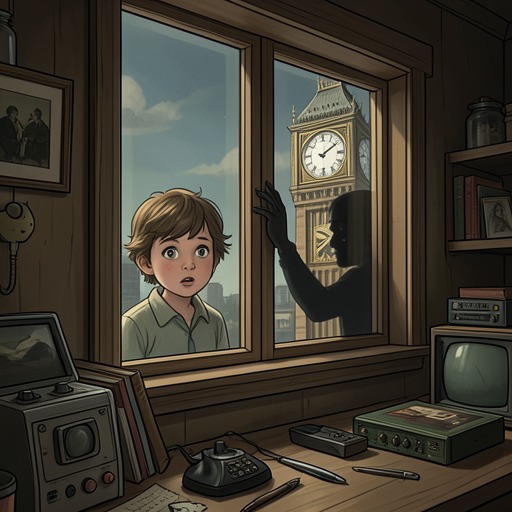
Miss Peregrine's Home of Peculiar ChildrenThe loop’s failure to reset, also called loop slippage, is the collapse of the daily renewal that preserved Miss Peregrine’s home in September 3, 1940. The breakdown turns a protected but repetitive refuge into an unstable place: the bombing’s aftermath persists, Miss Peregrine cannot resume human form, and the children ultimately abandon the home. When they leave on September 4, time moves forward again, making the escape both a response to danger and a departure from the suspended life the loop had sustained.
The daily loop and its vulnerability
Miss Peregrine explains that the children’s home exists within a loop whose date is September 3, 1940. The day repeats, but the residents experience their own lives continuously and retain memories across the repetitions; they have lived there for decades without experiencing those decades as repeated from the inside. The loop thus holds the outside world’s time at a single date while allowing its inhabitants to accumulate experience.
That arrangement depends on active maintenance. Miss Peregrine says that one of the ymbrynes must pass through a loop’s entryway periodically to keep it pliable. She compares the ingress point to a hole in fresh dough: without attention it may close, and without a route in or out, the temporal system can become unstable. The reset is therefore not an automatic guarantee. It is a daily protection sustained by continued access and the work of the loop’s keeper.
The loop’s appeal also has a cost. During his stay, Jacob finds the home’s atmosphere so soothing that he imagines it as a mood-enhancing sedative; its pleasantness helps explain how residents might live through the same day for decades. But the same repetition makes the refuge prisonlike, particularly for children who cannot simply leave without confronting the risks beyond it. The loop’s eventual failure makes that latent tension immediate: remaining inside no longer means safety, while leaving means giving up the protected recurrence.
The reset fails
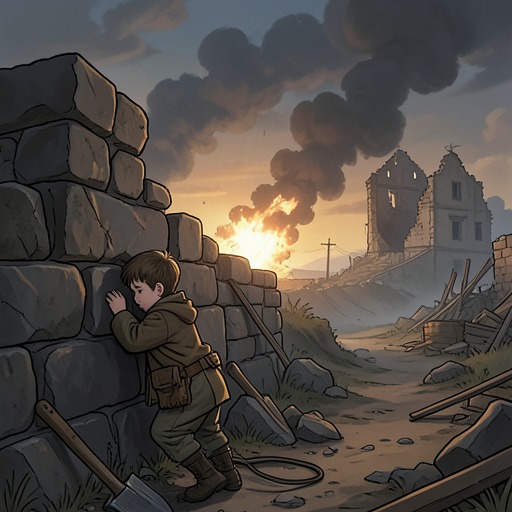
The crisis becomes clear after the bombing. Millard points out that the loop should have reset an hour earlier. The battle has ended, but the skies remain quiet and the bomb smoke still hangs among the clouds. Rather than returning the inhabitants and surroundings to the loop’s familiar beginning, the day’s damage persists. The children can no longer rely on the reset to erase what has happened or restore their ordinary conditions.
Miss Peregrine’s condition deepens the alarm. The children hope she will turn back from bird form, but she cannot. They surround her to give her privacy and wait, considering whether exhaustion and cold might explain her inability to change. Claire proposes that the headmistress and the loop may both return to normal after rest. That hope reflects how closely the loop’s operation is tied, in the children’s minds, to the person responsible for keeping it.
Enoch offers a possible precedent rather than a certain diagnosis. He recalls Miss Kestrel, who remained a kestrel for a week after a bicycle accident and whose loop slipped at that time. He suggests that Miss Peregrine may have injured her head and that the children may need to wait for her to recover. The comparison gives them a reason to hope, but it also establishes that an ymbryne’s inability to change form can accompany a loop’s failure. With Miss Peregrine unable to speak or resume her human shape, the group has no immediate way to restore the usual arrangement.
Abandoning the home
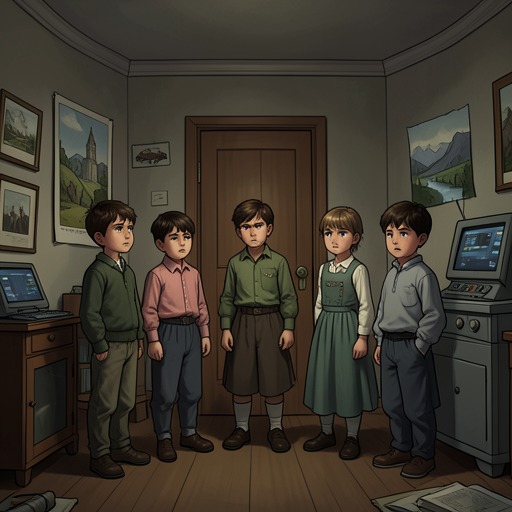
The children debate whether to remain and hope for recovery or prepare to leave. Millard argues that waiting is no real alternative when they cannot assume that more Hollows will stay away or that Miss Peregrine will get better. The dissenters eventually agree: the house will be abandoned, belongings packed, and boats requisitioned from the harbor so that the group can depart in the morning. The decision marks a change from endurance within a self-renewing refuge to action under uncertain conditions.
Their preparations connect the failed reset to a larger possibility of travel. When Jacob asks how children who have been on the island for nearly eighty years will navigate, Emma points to a map that may have survived the fire. Millard explains that leapfrogging between loops can provide access to other loops, including ones that have ceased to exist in the intervening decades. The journey is complex and dangerous, but the breakdown of their own loop makes movement among loops newly relevant: the children’s future depends on routes beyond the home they are leaving.
Departure into moving time
Before setting out, the children bury the crater left by the bomb and cover the earth with shrubs and vines. Fiona grows the plants over the filled ground; Adam returns to his former place, now marking Victor’s grave. The preparations for departure therefore take place alongside acts of repair and remembrance. Some children take chips of brick or flowers from the garden as keepsakes before the group crosses the damaged island and passes through the town.
Their departure takes place on September 4, a date that had not arrived for the residents while the loop was functioning. The children have not slept, yet they feel the difference as time resumes: some describe fuller air in their lungs and faster blood in their veins, and they feel more vital and more real. The failed reset is thus not merely the loss of a routine. It ends the temporal stillness that had structured their lives and forces them into a moving present, where danger and possibility are no longer held at the loop’s fixed date.