Jacob’s childhood
Jacob’s Ordinary Childhood
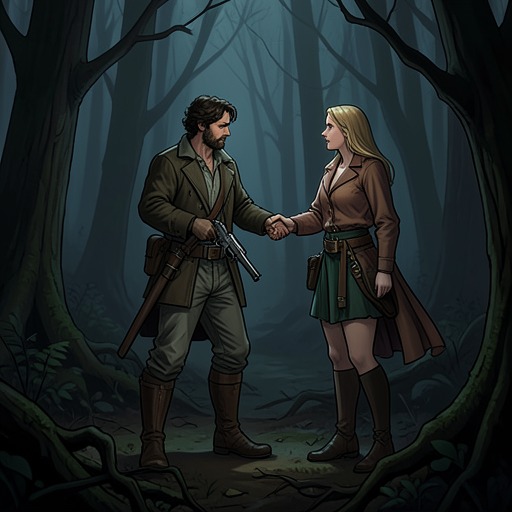
Growing up in Florida, [Jacob Portman](entity:character-recall-character-jacob-portman-7296d7f739ed) is captivated by his grandfather [Abraham Portman](entity:character-recall-character-abraham-portman-d769b0ddbe5e)’s tales of war, travel, and a Welsh children’s home protected by a pipe-smoking bird. Abraham’s stories describe peculiar children who can fly, disappear, or lift impossible weights, and monsters with black eyes and tentacle-filled mouths.
When Jacob is six or seven
The Photographic Proof
Abraham shows [Jacob](entity:character-recall-character-jacob-9a0fda5e8753) old photographs that seem to prove the stories: an invisible boy, a floating girl, a child lifting a boulder, and a man with a face painted on the back of his head. Jacob believes him, partly because he wants an extraordinary life of his own.
Jacob’s second-grade years
Jacob Rejects the Stories
After classmates mock him for repeating his grandfather’s tales, [Jacob](entity:character-recall-character-jacob-9a0fda5e8753) tells Abraham that he no longer believes them. Abraham accepts the rejection without protest, leaving Jacob ashamed and resentful that he had trusted what he now considers a lie.
Jacob’s later childhood
The Hidden History
[Jacob](entity:character-recall-character-jacob-9a0fda5e8753)’s father explains that Abraham’s childhood stories were a disguised account of real persecution. Abraham was sent from Poland to a Welsh children’s home as a boy; his Jewish family was murdered in the Holocaust, and the home’s refuge had seemed like a paradise beside the horrors he had escaped.
Before September 3, 1940
Abe’s Early Refuge
As a Jewish child fleeing persecution in Europe, Abraham is sent to Britain and eventually taken in at the home on [Cairnholm Island](entity:location-recall-location-cairnholm-island-5c8756be657d). [Miss Alma LeFay Peregrine](entity:character-recall-character-miss-alma-lefay-per-d24568140f6a) protects him among children whose peculiar gifts make them targets in the ordinary world.
September 3, 1940
The Air Raid
A German air raid strikes [Cairnholm Island](entity:location-recall-location-cairnholm-island-5c8756be657d), destroying the children’s home and killing its residents—except Abraham. The bombing becomes the disaster that [Miss Alma LeFay Peregrine](entity:character-recall-character-miss-alma-lefay-per-d24568140f6a)’s time loop will later contain, preserving the children at the moment before the fatal impact.
September 4, 1940
Abe Leaves the Island
After surviving the attack, Abraham walks into town and asks when the next boat leaves for the mainland. He intends to fight the monsters who have taken his adopted family, beginning a life outside the refuge and the loop.
After the war
Abraham’s Peculiar Gift
Abraham becomes a hunter of [Hollowgast](entity:character-recall-character-hollowgast-b7384fcdc6f3), using his rare ability to see them even when common people cannot. He tries to build a normal life in America, but is repeatedly drawn into dangerous work against the creatures and keeps much of his past secret from his family.
During World War II
Abraham and Emma’s Parting
Before Abraham leaves to fight, he and [Emma Bloom](entity:character-recall-character-emma-bloom-17b8dfc5e67d) share a deep affection. He promises to return after the war, but he ultimately chooses a life in America and does not come back to the loop, leaving [Emma](entity:character-recall-character-emma-0b5c09f9ac66) to wait for him and preserve his letters and photographs.
From September 3, 1940, for decades
The Loop’s Daily Prison
[Miss Alma LeFay Peregrine](entity:character-recall-character-miss-alma-lefay-per-d24568140f6a) keeps her wards safe by repeating [September 3, 1940](entity:time-recall-time-september-3-1940-c8a7f4d50dcf), resetting the day before the bomb destroys the home. The children experience the loop continuously and age only in the sense of accumulated years, while the outside world moves on; leaving for too long would make their withheld years catch up with them.
Decades before Jacob’s arrival
The Hollowgast’s Long Hunt
The [Hollowgast](entity:character-recall-character-hollowgast-b7384fcdc6f3) continue hunting peculiar people beyond the loops, while [Wights](entity:character-recall-character-wights-fbe8d28ed48d) scout among ordinary society and arrange victims for them. Abraham survives for years in the outside world, but the danger eventually reaches him and, later, his grandson.
April 1963
The Final Letters
Abraham’s correspondence with [Emma](entity:character-recall-character-emma-0b5c09f9ac66) dwindles over the years. His last surviving communication includes photographs, one of them showing him with his young daughter Susie; afterward, the letters stop, though Emma keeps them carefully in a hatbox.
Decades before Jacob’s sixteenth birthday
Abe’s Family Life
Abraham raises a family in America, but his son Frank experiences him as distant and frequently absent. Frank later remembers an unanswered promise to take him trick-or-treating and suspects that Abraham’s travels concealed affairs, while [Jacob](entity:character-recall-character-jacob-9a0fda5e8753) grows up especially close to his grandfather.
The 1970s
The Old Man’s Discovery
Peat cutters uncover the exceptionally preserved body of a young man in the bog near a stone cairn. The islanders call him the Old Man, though he died as a teenager thousands of years earlier; the cairn will later prove to be a passage into the time loop.
1985 or 1986
The First Loop Tragedy
A young peculiar named Charlotte wanders out of a loop while [Miss Peregrine](entity:character-recall-character-miss-peregrine-ed17d102477f) is away. By the time she is found and recovered, decades of aging have caught up with her, leaving her psychologically damaged—a warning of what prolonged exposure to the present can do to loop children.
Before Jacob turns sixteen
Jacob’s Uneventful Life
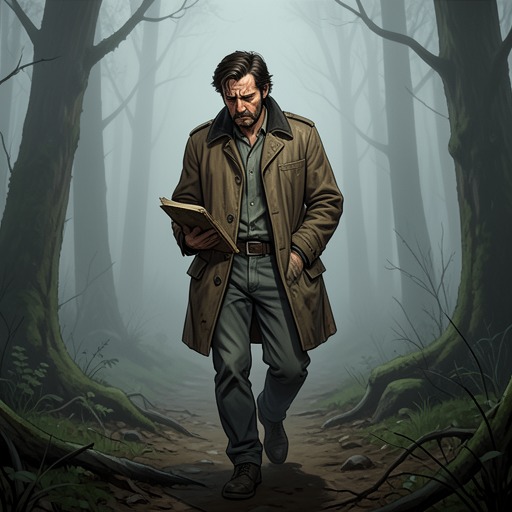
[Jacob](entity:character-recall-character-jacob-9a0fda5e8753) grows up in [Englewood](entity:location-recall-location-englewood-db9a202d26b0) amid family wealth and expectations that he will eventually work in the family’s [Smart Aid](entity:organization-recall-organization-smart-aid-03dcd9dbe801) business. He is lonely, uncomfortable with his privileged future, and fascinated by the childhood adventures Abraham once described.
The summer before Jacob turns sixteen
The Unwanted Job
[Jacob](entity:character-recall-character-jacob-9a0fda5e8753) deliberately sabotages his work at [Smart Aid](entity:organization-recall-organization-smart-aid-03dcd9dbe801), hoping to get fired, but Shelley keeps him on because his relatives own the chain. His resentment of a life mapped out by family privilege is already gathering force when an urgent call from Abraham interrupts his shift.
The afternoon before Abraham’s death
Abraham’s Panic Call
Abraham phones [Jacob](entity:character-recall-character-jacob-9a0fda5e8753) in a state of fear, demanding the key to his weapons locker and warning that monsters have found him. Jacob believes dementia has made his grandfather’s old stories real to him, but he agrees to visit after speaking with his father.
The evening before Abraham’s death
The House in Disarray
[Jacob](entity:character-recall-character-jacob-9a0fda5e8753) and his friend [Ricky](entity:character-recall-character-ricky-5445a37318ad) reach Abraham’s home and find it ransacked, with the refrigerator open and the house in chaos. A flashlight points toward the woods, and a long slash in the screen door suggests that something has forced its way through.
The night of Abraham’s death
Abraham’s Last Words
[Jacob](entity:character-recall-character-jacob-9a0fda5e8753) finds his grandfather bleeding in the woods, clutching a letter opener. As Abraham dies, he tells Jacob to find the bird in the loop, beyond the Old Man’s grave, on [September 3, 1940](entity:time-recall-time-september-3-1940-c8a7f4d50dcf), and to read Emerson’s letter. The message becomes the route out of Jacob’s grief and into the hidden world Abraham tried to explain.
Moments after Abraham’s death
The Creature in the Woods
[Ricky](entity:character-recall-character-ricky-5445a37318ad) hears barking but sees no attacker. [Jacob](entity:character-recall-character-jacob-9a0fda5e8753), however, catches the creature in his flashlight beam: hunched, dark, and opening its mouth to reveal long writhing tongues. He blacks out, and the police later attribute Abraham’s death to feral dogs.
The months after Abraham’s death
A Traumatic Diagnosis
[Jacob](entity:character-recall-character-jacob-9a0fda5e8753) is consumed by nightmares and fear that the creature will return. His parents and the police dismiss his account, and a sketch artist’s attempt to placate him only deepens his sense that nobody believes him; [Dr. Golan](entity:character-recall-character-dr-golan-159c2267e7b0) diagnoses an acute stress reaction and persuades him the creature was imagined.
The months after the funeral
The Last-Words Obsession
[Dr. Golan](entity:character-recall-character-dr-golan-159c2267e7b0) repeatedly asks [Jacob](entity:character-recall-character-jacob-9a0fda5e8753) to interpret Abraham’s final directions. Jacob considers streets and letters, then investigates Ralph Waldo Emerson, but none of his guesses explains the bird, the loop, or the grave. The nightmares persist, and he begins lying in therapy to escape the questions and medication.
During the clearing of Abraham’s house
The Cigar Box Revisited
While sorting through his grandfather’s belongings, [Jacob](entity:character-recall-character-jacob-9a0fda5e8753) rediscovers the cigar box of photographs. He now sees how many appear manipulated, and the newly discovered images seem to confirm his suspicion that Abraham had manufactured the whole story. He nearly gives up on the mystery.
Jacob’s sixteenth birthday
The Emerson Book
At [Jacob](entity:character-recall-character-jacob-9a0fda5e8753)’s birthday party, [Aunt Susie](entity:character-recall-character-aunt-susie-aa5c42ee9f90) gives him an old copy of Emerson’s works that belonged to Abraham. A letter slips from between its pages, with a photograph of a woman smoking a pipe; the envelope bears a postmark from [Cairnholm Island](entity:location-recall-location-cairnholm-island-5c8756be657d).
The night of Jacob’s sixteenth birthday
The Bird in the Letter
The letter is from [Miss Alma LeFay Peregrine](entity:character-recall-character-miss-alma-lefay-per-d24568140f6a), who refers to Abraham and to those who remain. [Jacob](entity:character-recall-character-jacob-9a0fda5e8753) recognizes the name Peregrine as a kind of hawk and connects her pipe-smoking portrait to the bird of his grandfather’s stories. He decides that she may know the truth about Abraham’s childhood.
The weeks before the June trip
The Journey Approved
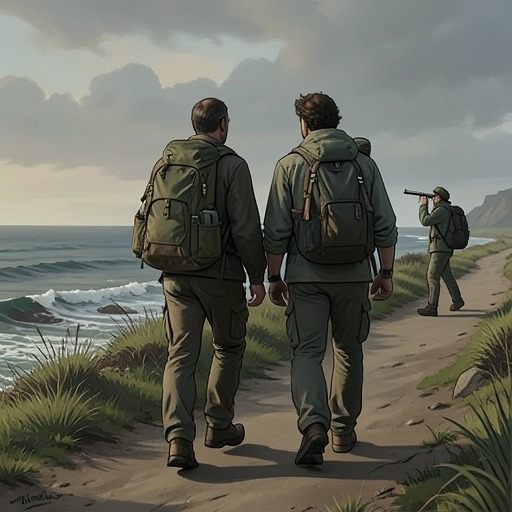
[Jacob](entity:character-recall-character-jacob-9a0fda5e8753) persuades his parents to let him travel to [Cairnholm](entity:location-recall-location-cairnholm-a7434533721e) with his father. His father is drawn by the island’s bird colonies, while [Dr. Golan](entity:character-recall-character-dr-golan-159c2267e7b0) supports the trip as a way to test Jacob’s beliefs against reality. Jacob keeps the letter and Abraham’s last words to himself.
Weeks before departure
The Only Island Phone
[Jacob](entity:character-recall-character-jacob-9a0fda5e8753) tries to call [Cairnholm](entity:location-recall-location-cairnholm-a7434533721e) to warn [Miss Peregrine](entity:character-recall-character-miss-peregrine-ed17d102477f) he is coming, but the island’s only telephone reaches a noisy pub. He hangs up without learning anything, unaware that the place is the Priest Hole, where he and his father will later stay.
June, after a thirty-six-hour journey
Arrival at Cairnholm
[Jacob](entity:character-recall-character-jacob-9a0fda5e8753) and his father reach [Cairnholm](entity:location-recall-location-cairnholm-a7434533721e) through fog and rough seas. [The island](entity:location-recall-location-the-island-51ec41aeb699) is remote, windswept, and dotted with shipwrecks; its town feels poorer and more diminished than the dramatic cliffs suggested from the ferry. The two find lodging at the [Priest Hole pub](entity:location-recall-location-priest-hole-a9d267e26b90).
The first day on Cairnholm
The Ruined Home’s Direction
At the island museum, curator [Martin Pagett](entity:character-recall-character-martin-pagett-f4314d55bb2a) tells [Jacob](entity:character-recall-character-jacob-9a0fda5e8753) that the old children’s home lies beyond the bog and the woods. Jacob’s father warns him not to go alone, but Jacob soon persuades a local fishmonger to send Dylan along as a guide.
The first day on Cairnholm
The Bog Shack Prank
Dylan’s friend Worm joins the trek, and the boys trick [Jacob](entity:character-recall-character-jacob-9a0fda5e8753) into entering a shack filled with sheep dung. When Jacob realizes the humiliation was deliberate, Dylan and Worm abandon him near the bog and refuse to continue toward the house.
The first day on Cairnholm
Jacob’s First House Exploration
[Jacob](entity:character-recall-character-jacob-9a0fda5e8753) crosses the bog and woods alone and discovers a decaying mansion, its windows broken and trees growing through its walls. He explores the ground floor but finds no sign of life, and the ruin seems impossible to reconcile with Abraham’s memories of a bright, safe home.
The first evening on Cairnholm
The Island’s Wartime Past
[Jacob](entity:character-recall-character-jacob-9a0fda5e8753) asks [Martin Pagett](entity:character-recall-character-martin-pagett-f4314d55bb2a) about the home’s former residents. [Martin](entity:character-recall-character-martin-f5cb6653498c) says they died in the German air raid of [September 3, 1940](entity:time-recall-time-september-3-1940-c8a7f4d50dcf), then takes Jacob to his elderly uncle Oggie, who remembers the children and the night the bombs struck.
The first evening on Cairnholm
Oggie’s Survivor Story
Oggie recalls that the morning after the bombing, one young man walked into town unharmed and asked for a boat to the mainland so he could fight the monsters that had killed his people. [Jacob](entity:character-recall-character-jacob-9a0fda5e8753) realizes the survivor was Abraham, and the coincidence of the exact date with his grandfather’s last words shocks him.
The dawn after Jacob meets Oggie
The Peregrine Falcon
A peregrine falcon appears in [Jacob](entity:character-recall-character-jacob-9a0fda5e8753)’s room and leaves talon marks and a feather. His father identifies the bird, and Jacob takes the name as another sign that he has not yet finished investigating the island or the old house.
The next morning
The Trunk in the Attic
[Jacob](entity:character-recall-character-jacob-9a0fda5e8753) returns to the ruined home and searches its upper rooms. He finds what appears to have been Abraham’s bedroom and an empty suitcase beneath a bed, then notices a locked steamer trunk hidden under another. Unable to open it, he drags it to the landing and drops it through the floor into the basement.
The next morning
The Photographs in the Trunk
In the dark basement, [Jacob](entity:character-recall-character-jacob-9a0fda5e8753) finds jars of preserved organs before reaching the shattered trunk. It contains dozens of photographs, including images of children and peculiar feats that match the pictures Abraham once showed him. Their shared details make Jacob wonder whether the photographs—and the stories—were genuine.
The next morning
The Children Appear
A crash above [Jacob](entity:character-recall-character-jacob-9a0fda5e8753) and a sudden blackout leave him trapped in darkness. A girl asks whether he is Abe, and when a light returns, children from the photographs peer down at him from the broken floor. Their presence turns his doubts into a living impossibility.
The next morning
The Chase Through the Bog
The children flee, and [Jacob](entity:character-recall-character-jacob-9a0fda5e8753) chases a girl through the woods and into the bog, following her footprints to the ancient cairn. He crawls through the tunnel, finds the inner chamber empty, and concludes that he has hallucinated them—until he emerges into a sunlit, radically altered island.
September 3, 1940, after Jacob leaves the cairn
The Wrong Year
The town is suddenly full of horses, carts, and people who treat [Jacob](entity:character-recall-character-jacob-9a0fda5e8753) as a stranger. At the pub, the bartender denies that rooms are rented and the men accuse Jacob of being a German spy. He realizes the island has shifted into the past, though he cannot yet explain how.
September 3, 1940, shortly after the shift
Emma’s Knife
[Emma Bloom](entity:character-recall-character-emma-bloom-17b8dfc5e67d) corners [Jacob](entity:character-recall-character-jacob-9a0fda5e8753) with a knife and demands to know why he was in the house. She refuses to believe he is Abraham’s grandson until he shows her [Miss Peregrine’s letter](entity:object-recall-object-fb2cfb130ec7), but a pursuing mob interrupts them before he can explain further.
September 3, 1940, shortly after the confrontation
Millard’s Invisible Rescue
[Emma](entity:character-recall-character-emma-0b5c09f9ac66) and the invisible [Millard Nullings](entity:character-recall-character-millard-nullings-3701e08b5ce0) bind [Jacob](entity:character-recall-character-jacob-9a0fda5e8753) and shelter him from the townsmen searching for him. [Millard](entity:character-recall-character-millard-5412c3d2b56e) predicts that a passing squadron of German planes will distract the mob; the children use the moment to slip through town and escape in a horse-drawn wagon.
September 3, 1940, later that day
The Priest Hole Escape
When the bartender recognizes [Jacob](entity:character-recall-character-jacob-9a0fda5e8753), [Emma](entity:character-recall-character-emma-0b5c09f9ac66) sets the liquor-soaked bar alight and leads Jacob through a concealed priest hole beneath the floor. They emerge through a hidden passage, meet [Millard](entity:character-recall-character-millard-5412c3d2b56e), and continue toward the children’s home under cover of the town’s confusion.
September 3, 1940, that afternoon
The Restored Mansion
[Jacob](entity:character-recall-character-jacob-9a0fda5e8753) sees the house restored to order, its gardens bright and its rooms full of children. [Olive](entity:character-recall-character-olive-c0d31a45d09d) rises into the air on a rope while a wild-haired girl animates a topiary centaur, making clear that the photographs showed genuine peculiar abilities rather than tricks.
September 3, 1940, that afternoon
Jacob Meets Miss Peregrine
[Miss Alma LeFay Peregrine](entity:character-recall-character-miss-alma-lefay-per-d24568140f6a) recognizes [Jacob](entity:character-recall-character-jacob-9a0fda5e8753) as Abraham’s grandson and orders [Emma](entity:character-recall-character-emma-0b5c09f9ac66) to untie him. She explains that she has watched him in her falcon form and confirms that he has reached the home his grandfather described.
September 3, 1940, that afternoon
Abraham’s Death Revealed
[Jacob](entity:character-recall-character-jacob-9a0fda5e8753) tells [Miss Peregrine](entity:character-recall-character-miss-peregrine-ed17d102477f) that Abraham is dead, offering the police explanation that wild animals killed him. Miss Peregrine grieves and says Abraham let himself grow old; [Emma](entity:character-recall-character-emma-0b5c09f9ac66), overhearing the news, breaks down because she had loved him.
September 3, 1940, that afternoon
The Peculiar World
[Miss Peregrine](entity:character-recall-character-miss-peregrine-ed17d102477f) teaches [Jacob](entity:character-recall-character-jacob-9a0fda5e8753) that peculiars are a hidden branch of humanity, often born to common parents and endangered by fear and persecution. [Ymbrynes](entity:character-recall-character-ymbrynes-dc4ed6a6800a) create and maintain time loops to shelter peculiar children, and Miss Peregrine’s loop is the repeating day of the air raid.
The evening of September 3, 1940, inside the loop
The Loop’s Repeated Bombing
The children take [Jacob](entity:character-recall-character-jacob-9a0fda5e8753) outside to watch the nightly bombing, wearing gas masks as planes and explosions fill the sky. A bomb descends toward a topiary Adam, but [Miss Peregrine](entity:character-recall-character-miss-peregrine-ed17d102477f) freezes the moment; light overwhelms the scene, and the loop resets without killing its inhabitants.
September 3, 1940, after the evening reset
Emma’s Farewell Walk
[Emma](entity:character-recall-character-emma-0b5c09f9ac66) escorts [Jacob](entity:character-recall-character-jacob-9a0fda5e8753) through the fog toward the cairn and admits that she recognized his resemblance to Abraham from the start. She grieves for the man she loved, and Jacob comforts her as they cross the bog together.
The next morning, still September 3, 1940
Jacob Returns to the Loop
[Jacob](entity:character-recall-character-jacob-9a0fda5e8753) returns through the cairn and is welcomed by [Emma](entity:character-recall-character-emma-0b5c09f9ac66), who has been waiting for him. The repeated day feels new to him, and he begins to imagine that the peculiar children’s life might offer a place he has never found in the ordinary world.
September 3, 1940, later that morning
The Children’s Variety Show
[Miss Peregrine](entity:character-recall-character-miss-peregrine-ed17d102477f)’s wards stage a show of their abilities, including [Millard](entity:character-recall-character-millard-5412c3d2b56e)’s invisibility, [Olive](entity:character-recall-character-olive-c0d31a45d09d)’s levitation, [Emma](entity:character-recall-character-emma-0b5c09f9ac66)’s fire, Bronwyn’s strength, and [Fiona](entity:character-recall-character-fiona-cb23a9321826)’s power over plants. [Jacob](entity:character-recall-character-jacob-9a0fda5e8753) sees how the children once used their talents as entertainment while hiding in plain sight among common people.
September 3, 1940, afternoon
The Beach and the Future
[Jacob](entity:character-recall-character-jacob-9a0fda5e8753) spends the day with the children, who ask about modern life and its technology. He tells them about telephones, television, air travel, and the moon landing, not yet understanding how [Miss Peregrine](entity:character-recall-character-miss-peregrine-ed17d102477f) will regard his revelations.
September 3, 1940, the following morning
The Loop’s Aging Rule
[Miss Peregrine](entity:character-recall-character-miss-peregrine-ed17d102477f) reprimands [Jacob](entity:character-recall-character-jacob-9a0fda5e8753) for telling the children about the future. She explains that they cannot remain outside the loop: their accumulated years would catch up with them in hours. Jacob begins to see that their safe, pleasant refuge is also a prison.
September 3, 1940, midmorning
Enoch’s Clay Soldiers
[Jacob](entity:character-recall-character-jacob-9a0fda5e8753) meets [Enoch O’Connor](entity:character-recall-character-enoch-o-connor-ffcf0821e57a), who animates clay homunculi by placing animal hearts inside them. [Enoch](entity:character-recall-character-enoch-819a8e939663) reveals his power to transfer life from one being to another, hinting at a harsher side to the children’s gifts and appetites.
September 3, 1940, later that morning
Victor’s Hidden Room
[Enoch](entity:character-recall-character-enoch-819a8e939663) directs [Jacob](entity:character-recall-character-jacob-9a0fda5e8753) to a locked bedroom, where Jacob finds [Victor Bruntley](entity:character-recall-character-victor-bruntley-9b79dc4fb412)’s dead body. Bronwyn arrives and identifies her brother; Enoch offers to revive him briefly, but the others avoid explaining how [Victor](entity:character-recall-character-victor-046c8bf7b3bc) died.
September 3, 1940, shortly afterward
Raid the Village
[Enoch](entity:character-recall-character-enoch-819a8e939663) admits that some children periodically terrorize the town in a game called Raid the Village, using their gifts because the repeated day leaves them restless. He warns [Jacob](entity:character-recall-character-jacob-9a0fda5e8753) that the home is not as idyllic as it appears and hints that the children have secrets.
September 3, 1940, later that day
Abraham’s Letters to Emma
[Jacob](entity:character-recall-character-jacob-9a0fda5e8753) finds a box of Abraham’s letters in [Emma](entity:character-recall-character-emma-0b5c09f9ac66)’s room. The correspondence shows their romance continuing after he left for war, then fading as he built a family in America. Emma explains that she waited for him, but he never returned to her.
September 3, 1940, later that day
Emma’s Unfinished Grief
[Jacob](entity:character-recall-character-jacob-9a0fda5e8753) apologizes for reading the letters, and [Emma](entity:character-recall-character-emma-0b5c09f9ac66) recounts how Abraham promised to return but chose a life beyond the loop. Jacob realizes that Emma’s affection for him is entangled with her love for his grandfather and hesitates to treat their closeness as a new romance.
The evening of September 3, 1940, outside the loop
A Suspicious Birder
[Jacob](entity:character-recall-character-jacob-9a0fda5e8753)’s father describes a bearded ornithologist camping in the storm and competing for access to the island’s bird colonies. Jacob remembers the stranger’s raw meat and sunglasses and suspects he may be connected to the danger [Miss Peregrine](entity:character-recall-character-miss-peregrine-ed17d102477f) warned about.
Late on September 3, 1940
Jacob and Emma’s Shipwreck Swim
[Emma](entity:character-recall-character-emma-0b5c09f9ac66) takes [Jacob](entity:character-recall-character-jacob-9a0fda5e8753) to a submerged shipwreck, where they breathe through a tube and watch flashlight fish glow around them. Their intimacy deepens, and Emma urges Jacob to stay in the loop; she then reveals that Abraham could see the monsters, suggesting Jacob inherited the same rare gift.
Late on September 3, 1940
Jacob’s Gift Confirmed
[Jacob](entity:character-recall-character-jacob-9a0fda5e8753) admits that he can see the creatures, and [Emma](entity:character-recall-character-emma-0b5c09f9ac66) confirms that Abraham possessed the same ability. His childhood fear and the night of his grandfather’s death acquire a new meaning: he was not hallucinating but seeing a [Hollowgast](entity:character-recall-character-hollowgast-b7384fcdc6f3) others could not perceive.
Late on September 3, 1940
The Avocet Warning
[Miss Avocet](entity:character-recall-character-miss-avocet-7d32d2017fc6) arrives at the house gravely shaken and reports that [Wights](entity:character-recall-character-wights-fbe8d28ed48d) disguised as council members lured children out of another loop. [Hollowgast](entity:character-recall-character-hollowgast-b7384fcdc6f3) attacked the group, and Miss Bunting was abducted along with other [Ymbrynes](entity:character-recall-character-ymbrynes-dc4ed6a6800a), revealing a coordinated assault on the guardians.
Late on September 3, 1940
The Ymbryne Kidnapping Plot
[Miss Avocet](entity:character-recall-character-miss-avocet-7d32d2017fc6) explains that [Wights](entity:character-recall-character-wights-fbe8d28ed48d) are taking [Ymbrynes](entity:character-recall-character-ymbrynes-dc4ed6a6800a), possibly to force them to repeat a forbidden experiment. [Miss Peregrine](entity:character-recall-character-miss-peregrine-ed17d102477f) imposes strict precautions, keeping the children inside and warning them not to trust strangers, while [Jacob](entity:character-recall-character-jacob-9a0fda5e8753) insists on learning the truth about his grandfather’s killers.
The night of September 3, 1940
The Hollowgast’s Origin
In the greenhouse, [Miss Peregrine](entity:character-recall-character-miss-peregrine-ed17d102477f) explains that a renegade group of peculiars attempted to conquer time and death in Siberia. The experiment transformed them into [Hollowgast](entity:character-recall-character-hollowgast-b7384fcdc6f3), monstrous beings with empty souls who crave peculiar flesh; those who feed enough become [Wights](entity:character-recall-character-wights-fbe8d28ed48d), their human-passing agents.
The night of September 3, 1940
The Wight’s Disguise
[Miss Peregrine](entity:character-recall-character-miss-peregrine-ed17d102477f) describes [Wights](entity:character-recall-character-wights-fbe8d28ed48d) as spies who can pass among ordinary people but lack pupils. [Jacob](entity:character-recall-character-jacob-9a0fda5e8753) recognizes the white-eyed neighbor he saw near Abraham’s home and worries that the same enemy may have followed him to [Cairnholm](entity:location-recall-location-cairnholm-a7434533721e).
The days following September 3, 1940
The Lockdown Begins
After [Miss Avocet](entity:character-recall-character-miss-avocet-7d32d2017fc6)’s warning, [Miss Peregrine](entity:character-recall-character-miss-peregrine-ed17d102477f) confines the children to the house and assigns sentries. The children grow restless under the restrictions, while [Jacob](entity:character-recall-character-jacob-9a0fda5e8753) privately suspects that the strange birder outside the loop may be a Wight.
During the lockdown
Horace’s Vision
[Horace](entity:character-recall-character-horace-b10f546a44e5) suffers a waking nightmare in which the seas boil, ash falls, and smoke smothers the earth. The children have seen such episodes before, but [Jacob](entity:character-recall-character-jacob-9a0fda5e8753) senses that Horace may be withholding part of a prophecy that could concern the looming threat.
During the storm, several days after Jacob’s arrival
Martin’s Body Recovered
[Martin Pagett](entity:character-recall-character-martin-pagett-f4314d55bb2a) disappears, and fishermen later recover his mutilated body from the sea. The islanders debate whether he was drunk or murdered, while [Jacob](entity:character-recall-character-jacob-9a0fda5e8753) recognizes the death as a possible sign that a [Hollowgast](entity:character-recall-character-hollowgast-b7384fcdc6f3) is nearby.
The stormy night after Martin’s body is found
Jacob Warns the Home
[Jacob](entity:character-recall-character-jacob-9a0fda5e8753) slips out of the Priest Hole and tells [Miss Peregrine](entity:character-recall-character-miss-peregrine-ed17d102477f) that [Martin](entity:character-recall-character-martin-f5cb6653498c) has died under suspicious circumstances. She treats the news as a threat to the children’s safety and orders a full lockdown, forbidding everyone to leave the house.
The stormy night after Martin’s body is found
The Banishment Ultimatum
[Jacob](entity:character-recall-character-jacob-9a0fda5e8753) refuses to remain inside while his father is exposed to danger outside the loop. [Miss Peregrine](entity:character-recall-character-miss-peregrine-ed17d102477f) tells him that if he leaves, he may never return; when he decides to go anyway, she insists that he must also leave the children’s refuge behind for good.
That same night
The Children Choose to Act
[Jacob](entity:character-recall-character-jacob-9a0fda5e8753) tells [Emma](entity:character-recall-character-emma-0b5c09f9ac66), Bronwyn, [Enoch](entity:character-recall-character-enoch-819a8e939663), and [Millard](entity:character-recall-character-millard-5412c3d2b56e) that he is going to protect his father. Emma joins him, and the others debate whether to obey [Miss Peregrine](entity:character-recall-character-miss-peregrine-ed17d102477f) or confront the threat; Enoch proposes using his ability to question [Martin](entity:character-recall-character-martin-f5cb6653498c)’s briefly revived body.
That night, during the storm
The Icehouse Expedition
The group escapes the home by climbing onto the roof and floating down with [Olive](entity:character-recall-character-olive-c0d31a45d09d)’s help. Carrying hearts supplied by [Enoch](entity:character-recall-character-enoch-819a8e939663), they cross the dangerous bog and break into the fishmonger’s icehouse to find [Martin](entity:character-recall-character-martin-f5cb6653498c)’s body.
That night, in the icehouse
Martin’s Brief Revival
[Enoch](entity:character-recall-character-enoch-819a8e939663) uses several sheep hearts to revive [Martin](entity:character-recall-character-martin-f5cb6653498c) for a few moments. The dead curator tells [Jacob](entity:character-recall-character-jacob-9a0fda5e8753) that a powerful figure he called the Old Man killed him, but Jacob realizes Martin actually encountered a [Hollowgast](entity:character-recall-character-hollowgast-b7384fcdc6f3) and mistook it for the bog mummy he had cared for.
That night, in the icehouse
Dr. Golan Unmasked
The bearded ornithologist enters armed and recognizes each child by name and ability. He is [Dr. Golan](entity:character-recall-character-dr-golan-159c2267e7b0), [Jacob](entity:character-recall-character-jacob-9a0fda5e8753)’s psychiatrist, who admits that he used his medical role to learn about Jacob and track him to the island; the supposed treatment had been part of a long deception.
That night, in the icehouse
Golan’s Offer
Golan offers [Jacob](entity:character-recall-character-jacob-9a0fda5e8753) money, safety, and a life at home in exchange for helping locate more peculiars. Jacob rejects the bargain, unwilling to betray his friends, and Golan retreats after promising that a larger plan is already underway.
That night, in the icehouse
Malthus Attacks
Golan unleashes [Malthus](entity:character-recall-character-malthus-3ffe4e25e730), a [Hollowgast](entity:character-recall-character-hollowgast-b7384fcdc6f3) that has stalked [Jacob](entity:character-recall-character-jacob-9a0fda5e8753) since Abraham’s death. The creature corners Jacob and his companions among the fish troughs, its tongues probing toward them while they search for a way out.
That night, moments after Malthus attacks
Escape from the Icehouse
Bronwyn hurls a heavy ice trough onto [Malthus](entity:character-recall-character-malthus-3ffe4e25e730) and then tears down the icehouse wall to open an escape route. She, [Emma](entity:character-recall-character-emma-0b5c09f9ac66), [Enoch](entity:character-recall-character-enoch-819a8e939663), and [Jacob](entity:character-recall-character-jacob-9a0fda5e8753) flee into the storm, but the creature survives beneath the wreckage and begins pursuing them.
During the same night
The Kidnapping of the Ymbrynes
While [Jacob](entity:character-recall-character-jacob-9a0fda5e8753) and the others are away, Golan enters the home with a gun and forces [Miss Peregrine](entity:character-recall-character-miss-peregrine-ed17d102477f) and [Miss Avocet](entity:character-recall-character-miss-avocet-7d32d2017fc6) to take bird form. He cages them, locks the children in the basement, and escapes with the two [Ymbrynes](entity:character-recall-character-ymbrynes-dc4ed6a6800a) as captives.
During the storm, after the kidnapping
Jacob’s First Hollowgast Kill
[Malthus](entity:character-recall-character-malthus-3ffe4e25e730) pursues [Jacob](entity:character-recall-character-jacob-9a0fda5e8753) and [Emma](entity:character-recall-character-emma-0b5c09f9ac66) through the bog. Jacob draws the creature away from Emma and reaches the cairn, but its tongue catches his ankle; as they collide, the shears in his hands pierce its eyes and kill it. Emma pulls Jacob from the bog before he sinks.
That night, after Malthus dies
The Children Find the Captive
[Jacob](entity:character-recall-character-jacob-9a0fda5e8753) and [Emma](entity:character-recall-character-emma-0b5c09f9ac66) return to the loop and reunite with Bronwyn, [Enoch](entity:character-recall-character-enoch-819a8e939663), and [Hugh](entity:character-recall-character-hugh-079243f3b34d). They learn that Golan took [Miss Peregrine](entity:character-recall-character-miss-peregrine-ed17d102477f) and [Miss Avocet](entity:character-recall-character-miss-avocet-7d32d2017fc6), threatened the children, and left a photograph of another bird as a warning; the group decides to pursue him rather than surrender.
That night, after the kidnapping
Horace’s Prison Vision
[Fiona](entity:character-recall-character-fiona-cb23a9321826) finds the group and reports that [Millard](entity:character-recall-character-millard-5412c3d2b56e) followed Golan to a boat and the lighthouse. [Horace](entity:character-recall-character-horace-b10f546a44e5) then paints a vision of a snowy place marked by bars and razor wire, suggesting that the abducted [Ymbrynes](entity:character-recall-character-ymbrynes-dc4ed6a6800a) may be taken to a prison in another time or loop.
After the lighthouse rescue attempt begins
The Loop Fails to Reset
The children discover that the bombing has not reset the day as usual. [Miss Peregrine](entity:character-recall-character-miss-peregrine-ed17d102477f) remains trapped in bird form, and the house has been split open by a bomb that explodes instead of being stopped. The familiar refuge becomes a ruined, unstable place.
After the bomb destroys the house
The Ymbryne Rescue Plan
The children argue over whether to stay or leave the failing loop. They agree that they must seek another Ymbryne who might restore [Miss Peregrine](entity:character-recall-character-miss-peregrine-ed17d102477f) and find the captives, using [Horace](entity:character-recall-character-horace-b10f546a44e5)’s vision and the [Map of Days](entity:object-recall-object-map-of-days-254a5399b6cd) to navigate among loops.
After the house is bombed
The Map of Days
[Emma](entity:character-recall-character-emma-0b5c09f9ac66) finds the [Map of Days](entity:object-recall-object-map-of-days-254a5399b6cd), an atlas of known time loops and their dates. [Millard](entity:character-recall-character-millard-5412c3d2b56e) explains that travelers can reach vanished loops by leapfrogging through other loops, but that the journey is dangerous because [Wights](entity:character-recall-character-wights-fbe8d28ed48d) often wait near historical entrances.
Before dawn, after the house’s destruction
Jacob Chooses the Children
[Jacob](entity:character-recall-character-jacob-9a0fda5e8753) considers returning to his parents and ordinary life, but the [Hollowgast](entity:character-recall-character-hollowgast-b7384fcdc6f3) threat makes that safety illusory. He chooses to travel with the children and help rescue the [Ymbrynes](entity:character-recall-character-ymbrynes-dc4ed6a6800a), accepting that the damaged loop may be impossible to return to.
Before dawn, the day after the kidnapping
Jacob’s Unsent Letter
[Jacob](entity:character-recall-character-jacob-9a0fda5e8753) returns to the Priest Hole and tries to explain the peculiar children and the danger in a letter to his father. He destroys it, unable to make the truth convincing on paper, and faces Frank when he wakes.
Before dawn, the day after the kidnapping
A Dreamlike Goodbye
Frank confronts [Jacob](entity:character-recall-character-jacob-9a0fda5e8753) over his unexplained absences and insists they leave on the next ferry. [Emma](entity:character-recall-character-emma-0b5c09f9ac66), [Olive](entity:character-recall-character-olive-c0d31a45d09d), and the invisible [Millard](entity:character-recall-character-millard-5412c3d2b56e) arrive and demonstrate their abilities, letting Frank see that Jacob’s friends are real. Confused and exhausted, he accepts Jacob’s departure with a quiet warning to be careful.
Before dawn, September 4, 1940
The Cairn’s Inscription
[Jacob](entity:character-recall-character-jacob-9a0fda5e8753) and the children leave the failing loop through the cairn. Inside, they find old dates and initials carved into the stone; [Millard](entity:character-recall-character-millard-5412c3d2b56e) adds an inscription for [Miss Peregrine](entity:character-recall-character-miss-peregrine-ed17d102477f), marking the end of the children’s long stay in her loop.
September 4, 1940
Victor’s Burial
The children bury [Victor](entity:character-recall-character-victor-046c8bf7b3bc) in the crater left by the bomb. [Enoch](entity:character-recall-character-enoch-819a8e939663) places one of his clay figures beside him, and [Fiona](entity:character-recall-character-fiona-cb23a9321826) grows vegetation over the grave; the topiary Adam stands above it as a marker of the loss that has changed the home forever.
September 4, 1940, at dawn
Departure from Cairnholm
The children cross the damaged island and load themselves into three rowboats, leaving behind the home, the loop, and much of what they cannot carry. For the first time in decades, their days will move forward; [Jacob](entity:character-recall-character-jacob-9a0fda5e8753) feels both the loss of his family and the pull of an unknown future.
September 4, 1940, shortly after departure
The Battleships Ahead
As the boats row away from [Cairnholm](entity:location-recall-location-cairnholm-a7434533721e), the children spot a silent procession of battleships on the horizon. The sight suggests that war and danger still await them, and they row faster toward the uncertain world beyond the island.