Bombing of Miss Peregrine’s Home
Miss Peregrine's Home of Peculiar ChildrenThe Bombing of Miss Peregrine’s Home is the air raid on Cairnholm that destroyed the children’s home on September 3, 1940, killing its residents. Recalled first as a local wartime disaster and later understood through Abraham Portman’s history, the bombing marks the end of a refuge for children displaced by persecution and makes the cost behind his stories impossible to separate from their wonder.
Background and the island under threat
Abraham was sent from Poland to a children’s home in Wales when he was twelve, after his parents placed him on a train to Britain with a suitcase and the clothes he wore. He was the only member of his family to escape before the Second World War; his parents, older brothers, and extended family were killed before his sixteenth birthday. His childhood account of monsters pursuing him was not simply invented: the danger he escaped was human persecution under the Nazis.
The children’s home on Cairnholm was remembered in Abraham’s stories as a protected, almost enchanted place. That account likewise translated a harsher truth into the language of safety and wonder: its children were refugees, and their supposed peculiarity stood for the Jewishness for which they had been hunted. Their survival and arrival at the island were already remarkable; the home offered a haven within a continent marked by persecution.
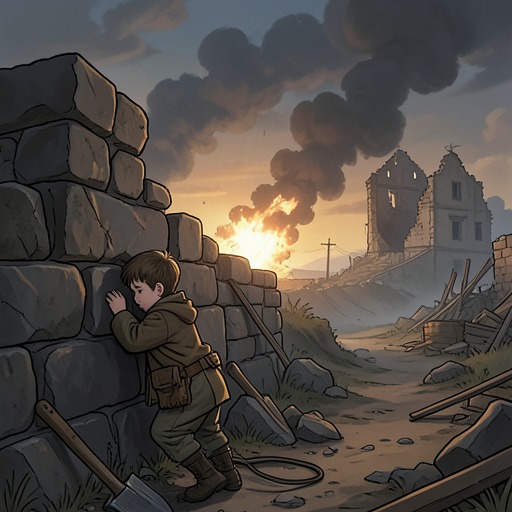
During the war, Cairnholm prepared for possible German air raids. Sirens sounded, residents hurried to shelter, and a volunteer air-raid warden checked houses at night to ensure that shades were drawn and streetlights extinguished, reducing the island’s visibility to enemy pilots. The residents considered the island less likely to be targeted than mainland ports and factories, despite its small gun emplacement. That expectation failed when the bombs began to fall.
The raid of September 3, 1940
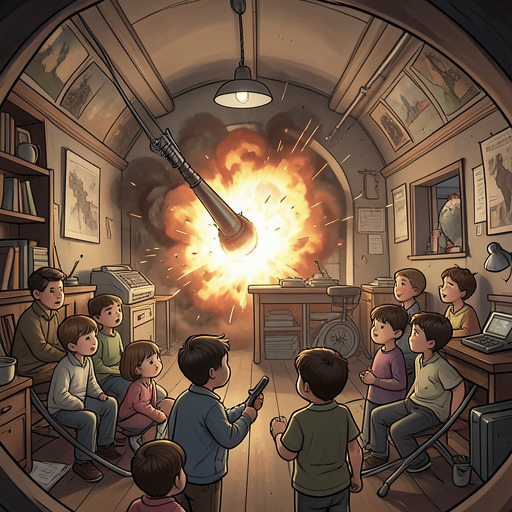
Oggie, recounting the attack years later, described prolonged bombing across the island. No one in the town was killed, he said, but the island’s gun crews suffered losses, and the children at the home were killed when a single bomb struck it. His account distinguishes the home’s destruction from the wider raid: the town survived without civilian deaths, while the children’s refuge did not.
Oggie gave the date precisely: September 3, 1940. Hearing it, Jacob connected the local history to his grandfather’s final words, which had also named that date. The specific match makes the bombing more than a remote episode in an islander’s recollection: it ties the attack to the story Abraham had carried and to the mystery Jacob is trying to understand.
Loss, memory, and the stories Abraham told
The raid gives tragic historical weight to Abraham’s picture of the home as a place of endless summers, guardian angels, and magical children. The refuge was real, but its safety was temporary; its inhabitants were children who had escaped the violence of mainland Europe and were killed when war reached the island. The contrast between the enchanted version and the bombing does not make the story meaningless. It reveals how a survivor could give an unbearable past the shape of a tale about sanctuary.
The bombing also belongs to a broader persecution that Abraham later described as a double danger: Jews were being slaughtered by the Nazis, while peculiars faced the Hollowgast. After the war ended Nazi rule, the Hollowgast threat remained, and many peculiars continued to hide. Abraham, however, returned from war changed and resolved to build a life outside the loop rather than remain concealed. The destruction of the home is therefore one part of the history that shaped both his sense of loss and his refusal to hide.
Narrative significance
The event is disclosed through layers of recollection. Jacob first hears Oggie’s account of the raid, then recognizes its date from Abraham’s last words; later explanations clarify why the children’s home and its inhabitants mattered to Abraham. This movement from local testimony to family memory changes the meaning of the stories Jacob once dismissed as false: their fantastic language had preserved fragments of actual displacement, danger, and refuge.
The bombing’s central reversal is that the island, remembered as a haven from the mainland’s horrors, was not beyond the reach of war. A single bomb ended the home’s protection and killed the children who had found shelter there. In Jacob’s investigation, that loss anchors the imaginative story to historical violence without erasing the distinction between supernatural threats and human persecution.