Emerson collection
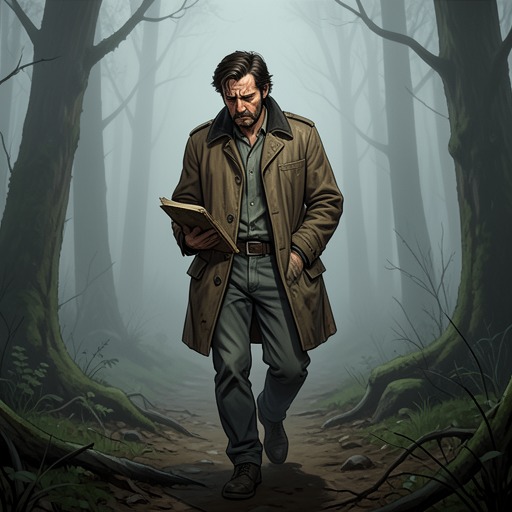
Miss Peregrine's Home of Peculiar ChildrenThe Emerson collection is a worn copy of The Selected Works of Ralph Waldo Emerson that Abraham Portman intended Jacob to receive. Given to Jacob after Abraham’s death, it becomes more than a family memento: an inscription and a hidden letter make the book a container for a history Jacob has not yet understood, while the photographs and letters elsewhere in the story complicate his earlier belief that Abraham’s accounts were fabricated.
A Gift from Abraham
At Jacob’s birthday gathering, Aunt Susie interrupts his opening of what he thinks is her present to explain that it is actually from his grandfather. The room falls quiet at Abraham’s name: Jacob’s father’s jaw tightens, and his mother drains the last of her wine. The book’s arrival thus carries a charge beyond the ordinary exchange of gifts, registering the family’s unease around Abraham even before Jacob sees what he has left behind.
The volume is an old hardback, dog-eared and missing its dust jacket. Jacob stares at it in disbelief, unable to understand how it came into his hands. Aunt Susie explains that she found it in Abraham’s desk while the family was clearing out his house. Abraham had written Jacob’s name in the front, and she believes he meant him to have it. The inscription confirms that the book was selected and addressed to Jacob, not simply passed on as an anonymous possession.
The gift unsettles Jacob because the secret it seems to answer has been shared with almost no one. Only Dr. Golan knows Abraham’s last words, and he had repeatedly assured Jacob that their conversations would remain confidential unless Jacob threatened to harm himself. The book therefore arrives at a moment when Jacob is already trying to make sense of his grandfather’s final message; its personal provenance gives it an importance that its plain, worn appearance might otherwise conceal.
The Hidden Letter
When Jacob opens the book, he finds Abraham’s shaky handwriting on the title page. As he gets up to leave, afraid he might cry in front of his family, something slips between the pages and falls to the floor. It is a letter—the Emerson letter. The hidden paper transforms the book from a keepsake into a carrier of information Abraham had deliberately placed where Jacob might find it.
Jacob’s reaction is immediate and physical: he feels the blood drain from his face. His mother leans toward him and asks in a tense whisper whether he needs water, a discreet appeal to keep composed while the family watches. Jacob manages to say that he feels unwell, puts one hand over his stomach, and bolts to his room. The discovery thus separates him from the gathering and sends him into private attention to the letter and its accompanying image.
The letter is written on fine, unlined paper in looping, almost calligraphic script. Its black ink varies in tone like writing made with an old fountain pen. It includes an old snapshot, which Jacob studies under his desk lamp. The photograph shows a woman smoking a curved, drooping pipe; her face is only a silhouette, offering no identifying detail. Jacob distinguishes it sharply from the pictures in Abraham’s cigar box: this image appears to him to contain no photographic trick. The book links Abraham’s apparently impossible history to a new piece of evidence, while the photograph itself leaves the woman’s identity unresolved at this point.
From Suspected Hoax to Archive
The Emerson collection matters against the background of Jacob’s childhood encounters with Abraham’s photographs. Abraham had once fetched an old cigar box and produced yellowing snapshots as proof of his stories: a headless-looking suit of clothes, a levitating girl, a child apparently lifting a boulder, and a man with a face painted on the back of his head. Later, after Abraham’s death and a bitter argument with his father, Jacob found that box beneath his bed. Looking again as an almost adult, he could readily imagine practical tricks behind some of the images: a little burning and dodging could erase a head, and the supposed giant rock might be plaster or foam.
That return to the cigar-box pictures had seemed to settle the matter in favor of fraud. Jacob also found five photographs Abraham had never shown him, several so conspicuously manipulated that they looked like jokes or nightmares: a girl apparently trapped in a bottle, a levitating child suspended by something hidden in a doorway, and a dog with a boy’s face pasted onto it. Two stranger images showed a contortionist in a frightening backbend and freakish twins in bizarre costumes. In that earlier moment of grief and distrust, Jacob interpreted Abraham’s last words as one more sleight of hand. The Emerson book complicates that judgment by delivering a different kind of evidence: a personally inscribed volume, a letter, and a photograph Jacob does not take for a trick.
The book also belongs to a wider chain of preserved images and documents. When Miss Peregrine shows Jacob her large photo album, he recognizes photographs from both Abraham’s cigar box and the trunk he has broken open in the ruined house. Miss Peregrine had collected the pictures and had shown them to Abraham when he was Jacob’s age; in presenting them now to Jacob, she makes the images part of an inherited history rather than an isolated set of family curiosities. The Emerson collection’s letter extends that archive from pictures to writing, joining an intimate family object to the larger record Jacob is beginning to encounter.
The Book’s Material Afterlife
The book is one element in a recurring pattern in which fragile objects survive their owners and redirect Jacob’s understanding. Abraham’s photos reappear after years in a cigar box; the much larger cache of photographs comes to light when Jacob’s attempt to destroy an old trunk sends it crashing through a floor into the basement. There, among the wreckage and broken boards, he sees not letters as he first expects but dozens of photographs. Like the Emerson volume, the trunk’s contents resist the role Jacob initially assigns them: each preserved object contains material that asks to be reconsidered rather than dismissed at a glance.
The visible wear of the book—its missing jacket, dog-eared pages, and shaky inscription—makes its custody legible. It has passed from Abraham’s desk to Aunt Susie’s hands and then to Jacob, who discovers that its pages hold more than the printed Emerson text. Its physical form matters because the letter is not delivered separately or announced in advance; it is concealed among the pages, and its fall interrupts Jacob’s attempt to leave the room. The object changes from a book to a threshold into Abraham’s private past through the concrete accident of something slipping out.
The closing photographic note gives the book’s role in a larger system of images an additional context: the photographs reproduced in the book are described as authentic vintage found photographs, largely unaltered, gathered by collectors who searched flea markets, antique malls, and yard sales to rescue striking images from obscurity. That statement concerns the book’s photographs, not a specific authentication of every image Abraham owned. It nevertheless sharpens the distinction the story makes between Jacob’s early suspicion that photographs can be manipulated and the later work of preserving, comparing, and interpreting images alongside letters and inscriptions. The Emerson collection is therefore both an inherited object and an instrument of reconsideration: it does not settle every mystery by itself, but it gives Jacob a tangible link between Abraham’s legacy and the evidence that will make that legacy harder to dismiss.