Enoch O’Connor
Miss Peregrine's Home of Peculiar ChildrenEnoch O’Connor is a peculiar who can take life from one thing and give it to another, animating clay figures or briefly restoring the dead. His skill is at once grotesque and practical: he imagines an army of living clay soldiers, but when the children need information from Martin, his ability becomes a costly, uncertain attempt to bring a dead person back for a moment.
Identity and Introduction
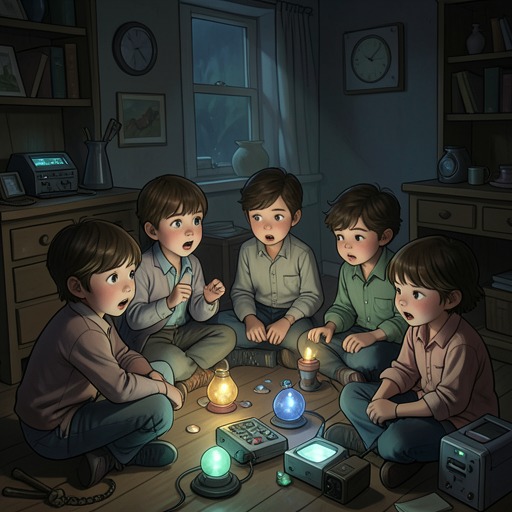
Enoch introduces himself to Jacob Portman in the yard, where a boy has summoned Jacob to meet him. Around Enoch, wind-up men stagger among the trees like damaged machines. One of the clay soldiers Jacob has been carrying jerks and squirms as if trying to escape; Enoch takes it back and explains that the figures have ideas of their own and are not properly trained. He has made them only the week before.
His appearance reinforces the unsettling mixture of the boy and the macabre craft. Enoch wears clay- and dirt-streaked overalls, the same clothes Jacob had seen in photographs, and dark circles ring his eyes. His speech carries a slight Cockney accent. The narrator likens his appearance, apart from his pudgy face, to a chimney sweep from Oliver Twist. His first exchange with Jacob is brusque and teasing, establishing a manner that can make explanation sound like an insult.
Ability and Ambition
When Jacob laughs at a remark Enoch meant seriously, Enoch calls him thick and demonstrates what he can do. He strips the clothes from a clay soldier, cracks its body open, and removes a tiny, convulsing heart from its chest. The figure immediately goes limp. Enoch identifies the heart as coming from a mouse and explains that he can transfer the life of one thing into another, including clay or something that was once alive but is now dead.
The demonstration makes his power concrete: the clay body is animated not by a mechanism but by a living heart, and taking that heart away ends its motion. Enoch keeps the mouse heart in his overalls. He is already thinking beyond the small, unruly figures, promising himself an army once he learns to train them properly; the soldiers, he says, will be massive, and he raises an arm high to indicate their intended scale. His ambition is not merely to make a single toy move but to turn a fragile experiment into a force.
Experimentation Under Lockdown
During the home’s near-lockdown, Enoch withdraws into his basement laboratory while the children chafe under Miss Peregrine’s restrictions. His work grows more extreme. He performs experimental surgeries on the clay soldiers, joining limbs from two figures to make a spider-like hybrid and forcing four chicken hearts into one clay chest in the hope of producing a soldier that will never run out of energy.
The experiments fail one by one. The small gray bodies cannot withstand the strain, and the basement comes to resemble a Civil War field hospital. This episode places Enoch’s inventive ambition beside its limits: life can be transferred, but combining more hearts does not make the creatures reliably stronger or more sustainable. His experiments remain improvised and materially costly, with the results of each attempt scattered around the space where he works.
The Attempt to Wake Victor
Enoch’s power is also connected to the children’s grief for Victor. When Bronwyn asks whether Enoch will wake her dead brother, he hesitates because he is running low on hearts and says that raising a human being, even for only a minute, takes a great many. Bronwyn smooths Victor’s hair and begs for the chance to speak with him again. Enoch considers using the cow hearts pickling in the basement, though he professes to dislike them as inferior ingredients and insists that fresh ones are better.
The exchange reveals both the limits of Enoch’s skill and the human need that draws it into use. Revival is no effortless command: it requires a supply of hearts, and even success would last only a minute. His affected complaint about ingredient quality sits against Bronwyn’s tenderness toward Victor, a contrast that makes his peculiar practice feel both grotesquely practical and intimately bound up with loss.
Martin’s Brief Return
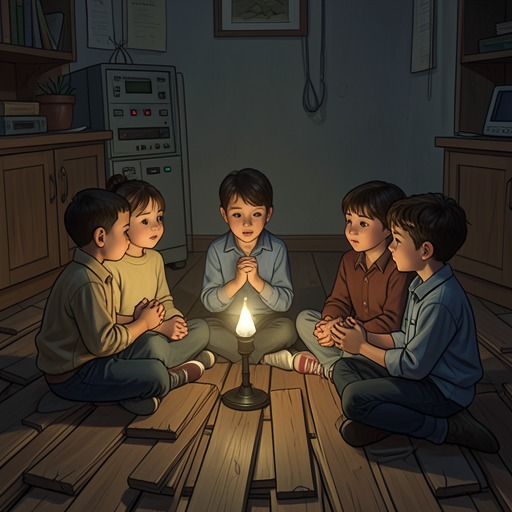
Later, the children make a collective attempt to wake Martin. Enoch opens his slicker and takes out a wrapped heart that resembles a folded maroon catcher’s mitt. He warns that Martin will not be happy if he wakes and tells the others to stand back. The others retreat; Enoch alone leans over the trough, plunges an arm into the ice packed in Martin’s chest, and searches inside it as if fishing in a cooler.
Enoch raises a sheep’s heart. His body convulses, and the heart begins beating, spraying pickling liquid as he takes quick, shallow breaths. Martin remains still. The heart then slows, shrinks, and turns blackish gray, and Enoch discards it. He tries again with a heart Jacob has kept in his pocket, then with the heart he had given Emma. Each beats and sputters before failing. With Bronwyn’s heart left as the final chance, Enoch raises it over Martin’s makeshift coffin and squeezes as it trembles; he shouts, “Rise up, dead man. Rise up!”
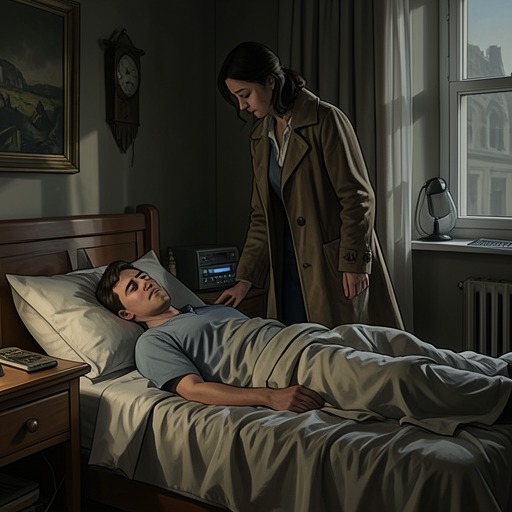
This time Martin moves beneath the ice. His body suddenly wrenches as if struck by an immense shock, making Emma scream and the group jump back. When Jacob looks again, Martin’s head has turned toward him. One clouded eye wheels before appearing to fix on Jacob, and Enoch cries that Martin can see him. Ice falls from Martin’s hand as it rises, trembles, and comes to rest on Jacob’s arm. The moment grants the children contact with Martin, but its physical signs remain disturbing and incomplete: the hand is blue and afflicted, and the scene offers no assurance of a lasting return. Across these episodes, Enoch’s defining paradox is clear: he can make life cross the boundary between living bodies, clay, and death, but every crossing depends on hearts that are used up, while the life he restores may last only briefly.