Intergenerational trauma
Miss Peregrine's Home of Peculiar ChildrenIntergenerational trauma is the novel’s account of how a catastrophe outlives its original victims, passing through family stories, silences, and strained relationships. The Portman family’s history links Abraham’s escape from wartime persecution and loss to his distance from his son Frank, and then to Jacob’s inherited stories, fear, and guilt. The transmission is not simple or inevitable: what Abraham concealed to protect Jacob becomes material Jacob must reinterpret, and Frank’s attempt to explain his father gives that inheritance a family shape.
War, loss, and the stories that survived
Abraham was twelve when his parents sent him from Poland to Britain, the only member of his family to escape before the Second World War. He travelled with a suitcase and the clothes he wore, and never saw his parents, older brothers, cousins, aunts, or uncles again. By the time he was sixteen, they had all been killed. The novel’s contrast between literal fantasy monsters and human perpetrators makes this history central to the family’s later difficulty: Abraham survived, but survival meant separation from almost everyone who had made up his first family.
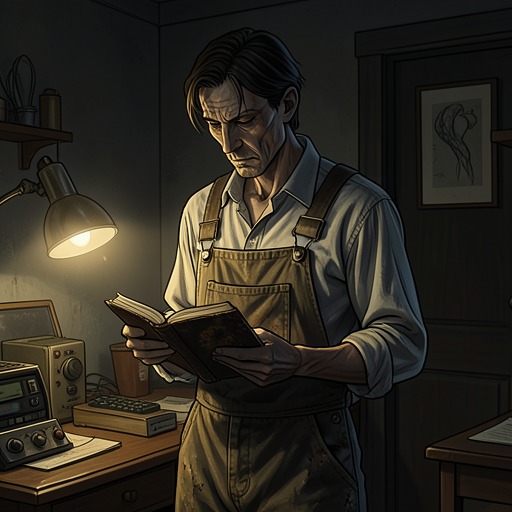
As a child, Jacob heard Abraham’s accounts of an enchanted island and extraordinary children as fairy tales. He eventually dismissed the stories as fabrications, and Abraham stopped telling them. Years later, Jacob learned from his father that the stories were not simply lies, but exaggerated versions of a truth too painful to deliver plainly. The children’s home had represented safety beside the horrors of mainland Europe; its apparently magical inhabitants and guardian-like protection had transformed wartime refuge into a story a child could hear.
The difference between the story and its historical basis is itself part of the inheritance. The children’s supposed peculiarities concealed the fact that they were Jewish, and their escape from persecution—not supernatural power—was the extraordinary survival at the story’s heart. Abraham’s fictions preserved the emotional truth of refuge while hiding the full account of danger and loss. When Jacob came to understand this, he also recognized why he had been wrong to envy the seemingly adventurous life his grandfather described.
Secrecy and distance between father and son
Abraham’s losses affected his relationship with Frank, who recalled that his father did not seem to know how to be a dad, yet felt obliged to be one because none of his siblings had survived the war. Frank described Abraham as frequently away on hunting or business trips, and emotionally absent even when he was home. He resisted the suggestion that he alone had given up on their relationship, but acknowledged that the distance was more than a single incident.
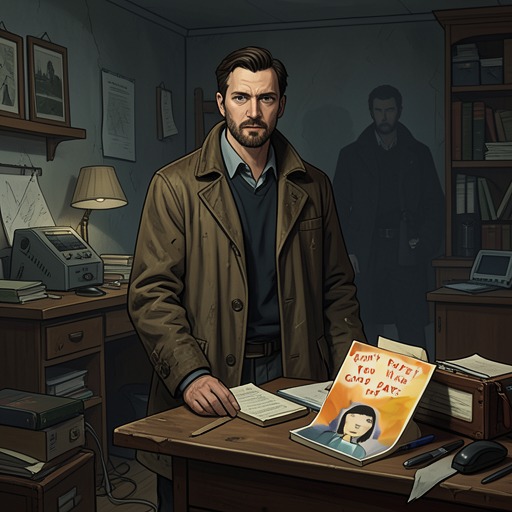
The family’s famous Halloween photograph gave that distance a concrete form. Frank, still a small child, waited in a pink rabbit costume for Abraham to take him trick-or-treating; Abraham did not come home in time, and Frank’s mother photographed him crying in the street. The episode became a source of family embarrassment and a lasting story, but Frank insisted that it represented a broader pattern. In contrast, he told Jacob that the boy had been closer to Abraham than he had ever been, with an unspoken bond between grandfather and grandson.
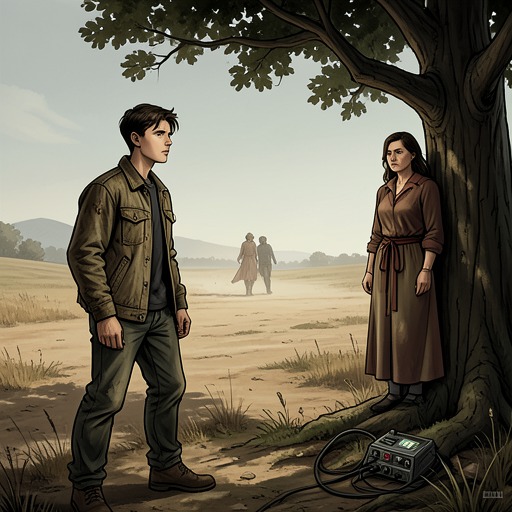
Frank and Jacob consider whether Abraham’s early losses could explain his later reserve, and whether fear of losing another family made him hesitant to form one. Frank does not claim that this explanation resolves everything. He suggests instead that Abraham took fifty years to get over his fear of having a family, and that Jacob arrived at the right time. That account offers a reason for the unusual closeness between grandfather and grandson without erasing the cost of Frank’s own experience of being kept at a distance.
The burden passed to Jacob
Jacob’s inheritance first appears as a conflict over whether Abraham’s stories were true. As a child, Jacob wanted to believe them, then felt deceived when he decided they were invented. After Abraham’s death, Jacob also blamed himself for failing to believe him. His own account of the creature he had seen sounded unbelievable when spoken aloud, and the adults around him treated his story as evidence that he needed professional help. The experience echoed the earlier family pattern: Abraham’s testimony had been dismissed by Jacob, and now Jacob found himself disbelieved by others.
When Jacob later discovered the old photographs, he initially read them as proof of fakery. The images of an apparently invisible boy, a levitating girl, and a child lifting a boulder looked easily explained by photographic tricks and props. This renewed his sense of betrayal: he assumed Abraham’s last words had likewise been a deceptive device, leaving him with nightmares and fear. The photographs therefore serve not only as family keepsakes but as unstable evidence, first reinforcing Jacob’s disbelief and later becoming part of his reassessment of what his grandfather had concealed.
That reassessment brings guilt as well as recognition. Jacob tells Miss Peregrine that he had seen one of the creatures and that he had not been crazy, yet he had not believed Abraham’s lifelong accounts. He wonders whether his disbelief contributed to his grandfather’s death. Miss Peregrine confirms that Abraham knew Jacob was peculiar and says that he may have kept the truth from him to protect him from a life of trials. She explains that Abraham faced persecution as a Jew and as a peculiar, and that the idea of remaining in safety while both groups were being killed tormented him. His secrecy, in this telling, is not proof that the stories were false; it is bound up with the danger and moral conflict Abraham had lived through.
A family history becomes Jacob’s present
Jacob’s distress gathers the separate generations into one account. He thinks of his great-grandparents’ deaths, the children killed in the bombing of their home, Abraham’s lost family, and Frank’s experience of growing up without a father who could be emotionally present. He understands his own acute stress and nightmares as connected to an old hurt passed down through the family, even though the original perpetrators are dead and beyond punishment. The inherited pain is therefore not presented as a literal transfer of memory, but as a chain of historical loss, silence, family estrangement, and later fear.
The novel also shows Jacob beginning to alter that chain by speaking more honestly. When Enoch accuses him of betraying the children by telling Abraham’s stories to a stranger, Jacob accepts responsibility for having led the enemy to them but rejects the idea that he was crazy. He explains that he had not known the stories were real, and that the stranger had deceived him. His apology does not undo the danger, but it marks a change from the earlier cycle of disbelief and concealment: Jacob can name both his mistake and the conditions under which it occurred.
Meaning and limits of inheritance
Intergenerational trauma in the novel works through narration as much as through family conduct. Abraham converted a history of persecution and refuge into stories of enchanted safety; Jacob first treated those accounts as childish inventions, then had to revise his judgment when their concealed truth became clear. Frank’s memories add another corrective, showing that the same family history could produce intimacy between grandfather and grandson alongside pain in the father-son relationship. No single explanation accounts for every silence or absence, and Frank himself cautions against reducing the past to a simple cause.
The account’s central tension is that protection and concealment can become difficult to distinguish. Abraham’s stories shielded Jacob from knowledge of an inherited danger, but the withheld truth later left Jacob unprepared to understand his own experience. At the same time, the novel does not present the family’s history as destiny: Jacob can question the stories, hear his father’s account, acknowledge his guilt, and decide what responsibility he will accept. The past remains beyond repair, but its transmission can be brought into speech rather than left as an unexplained family silence.