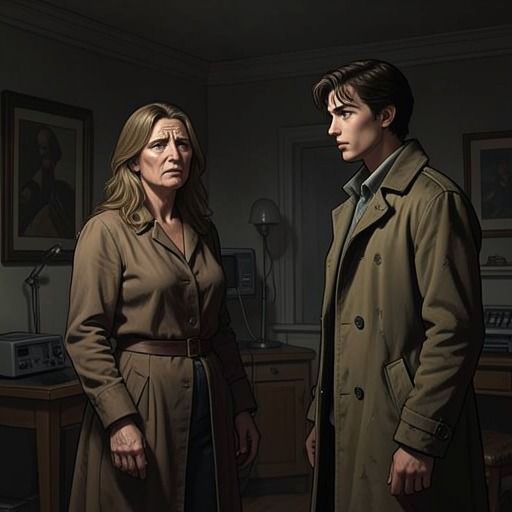
Jacob Portman and Emma Bloom
Miss Peregrine's Home of Peculiar ChildrenJacob Portman and Emma Bloom’s relationship moves from suspicion and captivity toward trust, affection, and a shared commitment to the children’s safety. Their first encounter makes the imbalance between them unmistakable: Emma believes Jacob may be an enemy, while he is trying to understand the strange house and the people connected to his grandfather. What begins as a dangerous interrogation gradually becomes a bond tested by Jacob’s accidental betrayal and the threat that follows.
First Meeting and Mutual Suspicion
Emma confronts Jacob in an alley after he has been near the old house. She seizes him from behind and holds a knife to his throat, demanding to know what he is and why he has been following her. Jacob identifies himself as an American named Jacob and says he wants to speak about the house and its former residents. Emma remains unconvinced: she suspects he is a wight, a hostile being capable of deception, and questions whether he is really connected to Abraham Portman.
Jacob tries to establish that his connection is genuine by naming his grandfather. Emma reacts with disbelief when he says that Abraham sent him, and challenges Jacob’s eyes, believing them to be artificial. He insists that both his identity and his eyes are real. The exchange shows that neither can yet interpret the other safely: Jacob does not understand the danger Emma fears, while Emma sees an apparent stranger who knows about her community and may be concealing his intentions.
Jacob offers Miss Peregrine’s letter and photograph as proof that he knows of the children and their headmistress, whom he calls the Bird. Emma does not immediately accept the documents as convincing evidence. When danger from the nearby crowd interrupts them, she changes her approach without abandoning her caution: she declares Jacob her prisoner and takes him away with her. Jacob submits, reasoning that Emma may at least lead him to answers. Their alliance therefore begins not with trust, but with a practical choice made under pressure.
From Captor to Guide
After Jacob is knocked unconscious, he wakes with his hands tied to a cooking range. Emma is still suspicious, arguing that he might be a wight pretending not to understand the time loop. She doubts that Abraham’s relative could be so unaware of the peculiar world around him, and continues to treat Jacob’s apparent confusion as potentially feigned. Her suspicion is not simply hostility; it reflects the danger of allowing an unknown person close to the children.
As Emma and Millard work out how to move Jacob without attracting attention, she tells him to take her arm, avoid running, and behave as though nothing is wrong. She puts away her knife but makes clear that escape would bring it back into play. When Jacob asks how he can know she will not harm him anyway, Emma answers honestly that he cannot know. This moment does not erase their distrust, but it replaces false reassurance with a frank acknowledgment of their position.
Emma escorts Jacob to the restored house and presents him as captured prey, tying his hands behind him before they go inside. The gesture preserves the appearance that she has brought in a captive, even as her actions increasingly make her his guide. Once inside, she tells him that the headmistress will see him. The movement from alley to house marks a decisive change in their relationship: Jacob remains under Emma’s control, but she has chosen to bring him into the community rather than leave him outside it.
Betrayal, Responsibility, and Reassurance
The danger surrounding the children later exposes Jacob’s unwitting role in bringing their enemy closer. During an argument with Enoch, Jacob acknowledges that he told his grandfather’s stories to a stranger and that this stranger, Golan, had learned how to find the children. He says plainly that he led Golan to them. Emma responds that Jacob could not have known the children were real; Jacob nevertheless apologizes, recognizing the consequences even though he had been deceived.
The difference between guilt and blame becomes important to their bond. Jacob accepts responsibility for the harm his actions helped make possible, while Emma refuses to treat his ignorance as deliberate betrayal. Her response is not a denial that the danger exists: Enoch warns that Golan remains a threat, and the children continue to face immediate peril. Instead, her reassurance allows Jacob to remain part of the group at the moment when his guilt might otherwise isolate him.
When Jacob and Emma take refuge during the creature’s search, Jacob tells her that if they survive he will stay. He explains that he cannot go home after what has happened and that he owes the children help because they had been safe before his arrival. Emma asks whether he means it and takes his hand. She answers that, if they survive, she will regret nothing. Their exchange turns Jacob’s earlier sense of debt into a mutual declaration: he offers to remain and help, and Emma affirms the relationship in which that promise is made.
Affection and the Promise to Stay
The danger interrupts their approach to a kiss, keeping the relationship bound to the crisis rather than separating romance from it. Later, after Jacob kills the creature, he speaks of the act as proof that he can defend himself. Emma hugs him and tells him that she knows his grandfather would have been proud. Her response connects Jacob’s new capacity for action with the family bond that first brought him to the children, while also offering him recognition from someone who has come to trust him.
They kiss, and Emma soon asks whether Jacob meant what he had said about staying. He confirms that he will stay if Miss Peregrine allows it; Emma promises to make certain the headmistress agrees. The qualification matters: Jacob’s commitment is sincere, but his place with the children remains subject to their community and its guardian. Their affection thus closes not with a completed resolution of the wider danger, but with a concrete intention to face what remains together.