Jacob Portman—Abraham Portman
Miss Peregrine's Home of Peculiar ChildrenThe relationship between Jacob Portman and Abraham Portman is a bond of love carried across a gap in knowledge. Abraham’s stories taught Jacob about a world he could not yet believe in, while Abraham’s final letter sent him to discover the truth for himself. The revelation that Abraham knew Jacob was peculiar reframes his long silence: he had kept his grandson ignorant not because their bond was weak, but because he wanted Jacob to have the ordinary life he himself had never managed to attain.
Identity and Background
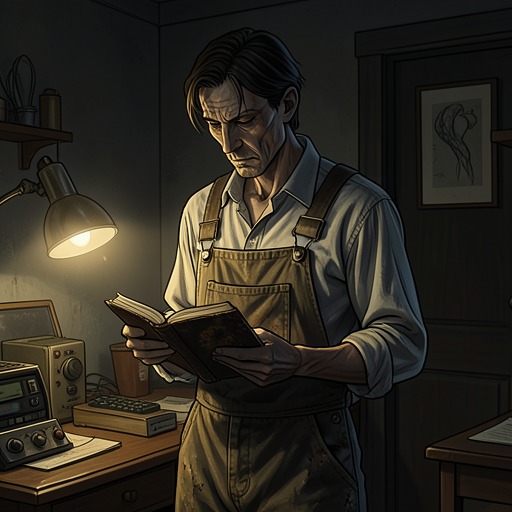
Abraham is Jacob’s grandfather, a figure whose influence reaches Jacob first through stories, memories, and the legacy of his death. Jacob arrives at Miss Peregrine’s home with a crumpled letter from Abraham, explaining that his grandfather had wanted to explain everything but waited too long; instead, he sent Jacob to find her. The letter is therefore both a message from Abraham and the means by which Jacob is drawn into the life his grandfather had kept hidden from him.
The relationship has always contained a mismatch between what Abraham knew and what Jacob understood. Abraham had recognized that Jacob was peculiar, but Jacob did not learn this from his grandfather while Abraham was alive. Jacob’s understanding changes only after he hears the people who shared Abraham’s earlier life explain the reason for his silence. The result is a bond that must be interpreted retrospectively: what seemed like a failure to tell the truth becomes a deliberate, if incomplete, effort to protect a child.
The Letter and the News of Abraham’s Death
When Jacob gives Miss Peregrine the letter, she smooths it over the arm of her chair and reads it carefully. Its contents recall a history of correspondence and separation: she remembers how desperate they had been for news of Abraham and how she had once worried that his decision to live openly would bring about his death. The letter makes the private connection between grandfather and grandson part of a longer history in which Abraham had remained away from the people who knew him best.
Jacob then tells Miss Peregrine that Abraham is dead. He recounts the explanation accepted by the police and, after counseling, by Jacob himself: Abraham had lived on the rural outskirts of town; following a drought, starving animals filled the woods, and he was in the wrong place at the wrong time. Jacob says that his grandfather should not have been living alone, but was stubborn. The explanation is delivered in broad strokes because Jacob is trying not to cry, and it reflects the account he had come to accept rather than the deeper truth he will learn about Abraham’s peculiar life.
Abraham’s death makes the cost of their silence immediate. Miss Peregrine is angry that he left and that his grandson had to carry the news back to her. Jacob recognizes that anger because he has experienced it himself. He tries to comfort her with the reassurances his parents and Dr. Golan had given him: Abraham was lonely, his mind was no longer sharp, and he had been forgetting things and getting confused. In this first account, Jacob repeats the explanations that helped him endure his loss; later revelations expose how little those explanations could tell him about the life Abraham had concealed.
Inheritance and Belated Recognition
Jacob’s arrival at the house turns the inherited bond into a public introduction. At dinner, Miss Peregrine presents him to the children as Abraham’s grandson, an honored guest who has come a long way. The children stare as he enters, and Miss Peregrine introduces the people around the table, though Jacob immediately forgets most of their names because he is nervous. He is not introduced simply as a visitor: his connection to Abraham is the fact that gives his presence meaning within the household.
That inherited connection is also a source of shame for Jacob. He recalls having seen a monster and having been told that he was crazy, and he admits that he had not believed either the creature or his grandfather’s stories. He wonders whether believing Abraham might have kept him alive. Miss Peregrine and Emma tell him that Abraham knew he was peculiar, and Miss Peregrine confirms that he had said so in a letter. Jacob’s question is not merely why Abraham failed to explain the stories; it is why he kept the truth from Jacob until the end of his life. The confirmation turns his grandfather’s old tales from implausible family lore into evidence of a concealed inheritance.
The answer is offered cautiously: Miss Peregrine can only imagine that Abraham wanted to protect Jacob. She explains that life as a peculiar could involve trials and deprivation, and that Abraham’s experience was especially fraught because he was born Jewish in a period of extreme persecution. During the war, Jews were being slaughtered by the Nazis and peculiars by the hollowgast. Abraham could not bear the thought that he was hidden away while both of the peoples to whom he belonged were being killed. Jacob’s inheritance is thus bound not only to a special ability, but to a history of danger and a burden of responsibility that Abraham had hoped to spare him.
The Life Abraham Wanted for Jacob
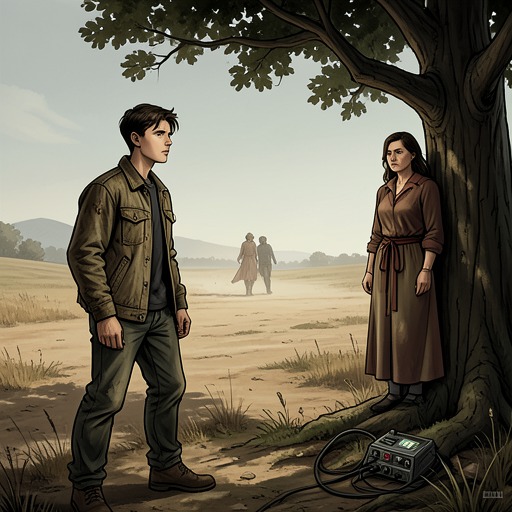
Abraham’s choice of America helps explain the future he tried to imagine for his grandson. Emma says that she and the others begged him not to go. Miss Peregrine explains that there were few hollowgast in America at the time, and that after the war there was a minor exodus of peculiars there. For a while, many could pass as common; Abraham did so, and his fondest wish was to live a common life. His letters repeatedly expressed that hope. Miss Peregrine connects that wish directly to his secrecy: Abraham wanted Jacob to have what he himself could never have.
The desire to be ordinary could not erase Abraham’s peculiarity or the demands others placed on him. His unique skill, combined with the ability he had honed as a hunter of hollows during the war, made him valuable. He was often called upon to help eradicate troublesome pockets of hollows, and his nature was such that he rarely refused. The contradiction defines the inheritance Jacob receives: Abraham longed to escape the exceptional life imposed on him, yet repeatedly returned to its dangers because he could help. His silence toward Jacob was an attempt to interrupt that inheritance, even as his letter ultimately directed Jacob toward the truth.
Change and Significance
For Jacob, understanding Abraham means revising both the stories he dismissed and the explanations he used to survive his grandfather’s death. Abraham had been telling the truth about monsters and about the world of peculiars; he had also known that Jacob shared that nature. Jacob’s regret that he did not believe him gives their relationship a painful counterfactual edge, while the explanation of Abraham’s secrecy replaces simple blame with a more difficult mixture of protection, longing, and historical fear.
The relationship is therefore a form of inheritance that arrives after its source can no longer explain itself. Abraham leaves Jacob a letter, stories Jacob had rejected, and a truth that becomes legible through other people’s memories. Those materials cannot undo his death or the years of silence, but they transform what the silence means. Abraham’s wish that Jacob might live as an ordinary person was an act of care; the same wish also left Jacob unprepared to understand his own identity until the final moment, when the grandfather who knew the truth was gone.