Jacob Portman—Dr. Golan
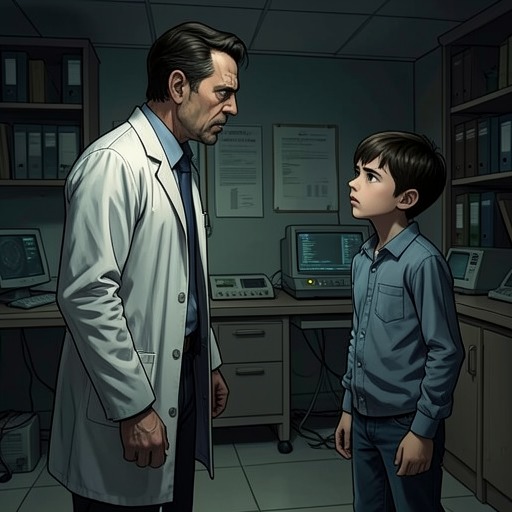
Miss Peregrine's Home of Peculiar ChildrenJacob Portman—Dr. Golan is a relationship that changes from therapist and troubled patient into a contest of trust, disclosure, and responsibility. Golan first appears to support Jacob’s need for independence, but is eventually revealed as an enemy who has used the confidence and knowledge gained through their sessions to approach the peculiar children. Jacob’s painful recognition that he told a stranger his grandfather’s stories makes their personal betrayal part of a larger danger: he has helped lead Golan to the children’s refuge.
Identity and Background
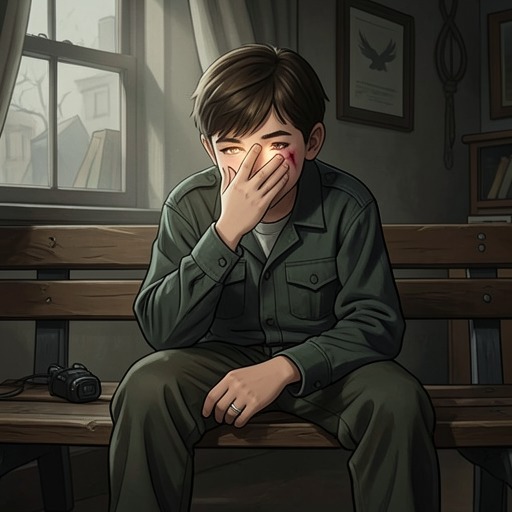
Dr. Golan is Jacob’s therapist, and his clinical role gives him access to Jacob’s account of the experiences that followed his grandfather’s death. Jacob’s distress is bound to the creature he believes killed his grandfather and to the fear that it may return. When a police officer hears his account and responds by asking Jacob’s parents whether he has seen anyone, Jacob experiences the encounter as another dismissal. He later describes his sessions with Golan as based on a lie, but also recognizes that he had trusted the therapist with information he did not understand the significance of at the time.
The photographs and stories associated with Jacob’s grandfather provide a second part of that history. Looking at the pictures as an almost adult, Jacob judges some of them to be obvious fakes and interprets his grandfather’s final warning as one more deception. He believes the stories have left him with nightmares and paranoia. Only later, after learning about the peculiar children, can he understand that Golan possessed knowledge of the stories while not yet knowing how to find the people they described.
Apparent Support and Concealed Purpose
During a telephone call from the island, Golan says he has spoken to Jacob’s father and that his father sounded upset. Jacob wants to keep his trip going, so he carefully explains what he has been doing while withholding the children and the time loop. He presents his account as if he is beginning to accept that neither the island nor his grandfather was extraordinary. The exchange feels to him like a small therapy session, but it is also a performance: Jacob is trying to preserve his freedom to investigate without revealing what he has discovered.
Golan tests that performance, saying he hopes Jacob is not merely telling him what he wants to hear. He raises the possibility of visiting the island, then says he is joking and that he believes Jacob sounds well. He tells Jacob’s father that the best course is to give him room to sort things out, and encourages Jacob to explore without worrying too much. The reassurance has an immediate practical effect: it eases the parental pressure that might otherwise end Jacob’s trip. Jacob consequently feels grateful, recalling that Golan has now defended him twice when his parents have not. The trust grows precisely where Golan’s hidden intentions remain undisclosed.
The Island Encounter and Revelation
When Golan eventually confronts Jacob and the children, he demonstrates that he knows their identities and peculiar abilities. He names Emma Bloom as a spark, Bronwyn Bruntley as a berserker, and Enoch O’Connor as a dead-riser, then addresses Jacob as someone keeping peculiar company. The children shrink away from his knowledge. To Jacob, the detailed recognition makes plain that Golan has not simply encountered them by chance: he has assembled information about them and knows enough to threaten their concealment.
Golan’s shifting accents prompt Jacob to connect the man before him with earlier encounters. When Golan reveals his face, Jacob identifies him as Dr. Golan and recalls their recent telephone conversation. The noise that Golan had attributed to being at an airport to collect his sister now takes on a different meaning: Jacob realizes he was not there for that reason, but was coming after him. He also recognizes Golan as the neighbor he remembers seeing watering a lawn on the night his grandfather died. The revelation joins what had seemed like separate episodes into a pattern of surveillance and deception.
Golan explains that he is a licensed therapist and says that his interest in ordinary minds is genuine, even though his sessions with Jacob rested on a lie. He claims that those sessions were not entirely wasted and proposes that they might continue helping one another. When Emma tells Jacob not to listen, Jacob answers that he trusted Golan once and will not make that mistake again. The shift is decisive: the confidence that once made the therapeutic relationship possible has become evidence of how Golan could manipulate and approach him.
Betrayal, Responsibility, and Conflict
Golan makes his intentions explicit by offering Jacob safety, money, and the possibility of getting his life back in exchange for working with him. Asked who “we” means, he names Malthus and himself. The offer frames Jacob not merely as someone to be deceived or silenced, but as a person Golan hopes to recruit. Jacob refuses the premise of renewed trust; Golan’s earlier assurances cannot be separated from the concealed purpose that has now become visible.
The confrontation also exposes Jacob’s own part in the danger. After Enoch calls him a traitor and accuses him of betraying the group to a wight, Jacob intervenes when Enoch and Emma turn against each other. He says that Golan let him believe he was crazy, although Golan must have known that he was peculiar. Jacob then acknowledges the truth in Enoch’s accusation: he did betray the children by telling a stranger his grandfather’s stories. He understands that Golan had learned everything except how to locate them, and that Jacob led him directly to their refuge.
The children’s responses distinguish culpability from condemnation. Emma tells Jacob that he could not have known they were real, and Bronwyn points out that Golan tricked him. Jacob nevertheless says he is sorry. Emma hugs him and says they are alive, offering reassurance without denying what has happened; Enoch remains wary, warning that Golan may have worked out how to enter the loop himself. Their disagreement leaves the danger unresolved, even as Jacob’s admission and apology restore a basis for solidarity.
Change and Narrative Significance
Jacob’s understanding of Golan changes alongside his understanding of his grandfather’s stories. At first, he treats those stories as a source of frightening falsehoods, and Golan’s therapeutic authority seems to belong to the ordinary adult world that might help him recover. Once Golan is exposed, the same history looks different: Jacob’s disclosure was real, but the knowledge Golan gained from it was turned against the people Jacob was trying to find. The revelation does not erase Jacob’s mistake; it lets him name both Golan’s deception and his own consequential choice.
The relationship therefore connects private trust to collective vulnerability. Golan’s professional access allows him to appear as a sympathetic advocate for Jacob’s independence, while his knowledge of the peculiar children makes that support instrumental to a concealed pursuit. Jacob’s final response is neither simple self-exoneration nor acceptance of Enoch’s outright blame: he rejects Golan, admits that his disclosure helped bring the threat, and apologizes to the children. Their exchange makes the betrayal a turning point in which his responsibility becomes a reason to stand with the group, rather than proof that he belongs outside it.