Miss Peregrine’s emergency lockdown protocol
Miss Peregrine's Home of Peculiar ChildrenMiss Peregrine’s emergency lockdown protocol is a sequence of escalating movement restrictions imposed at the children’s home as danger appears to approach from beyond the loop. It makes the house a defended refuge, but its strict boundary around whom that refuge protects becomes a source of conflict: when Jacob fears for his father, Miss Peregrine demands that he choose between obeying her rules and returning to the home.
Initial Restrictions and Watch
After learning what happened to Miss Avocet, Miss Peregrine ordered the children to remain calm and warned that the tragedy must not be repeated. From then on, they could go beyond the house only with her consent and in pairs; anyone who saw a stranger, even someone who seemed peculiar, had to report it to her immediately. She put off discussion of further precautions until morning and ended the meeting, refusing to entertain Enoch’s attempt to speak again.
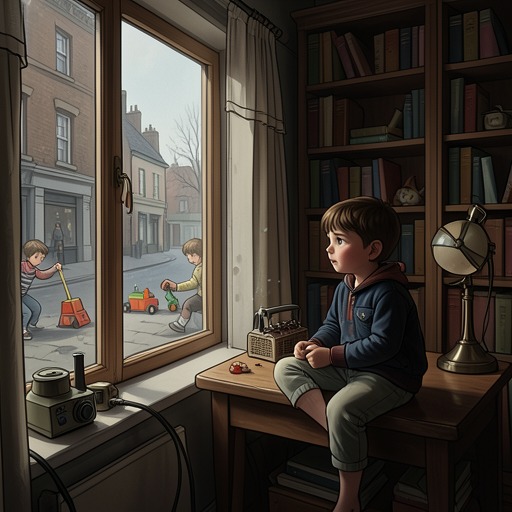
The policy became a near-lockdown. Younger children could not go anywhere without an escort, older ones had to travel in pairs, and even permission to step outside became an ordeal. Miss Peregrine required constant knowledge of everyone’s whereabouts. Sentries took rotating shifts at the front and rear of the house, watching from its windows; if someone approached, they pulled a chain that rang a bell in Miss Peregrine’s room. When Jacob arrived, she was waiting to question him about what was happening outside the loop, whether he had noticed anything strange, and whether anyone had followed him.
The House Under Confinement
The precautions altered daily life as well as movement. The children became restless under the rules: the younger ones grew rambunctious, while the older ones complained just loudly enough to be overheard. Millard’s movements registered through the sudden dramatic sighs of an invisible presence; Hugh’s insects stung people until they were sent out of the house, and afterward his bees screened the window from the other side. Olive, claiming she had misplaced her leaden shoes, crawled across the ceiling and dropped rice on people until her laughter made her levitation falter and she had to catch a chandelier or curtain rod.
Enoch’s response turned the restriction inward. He retreated to his basement laboratory and performed experimental surgeries on his clay soldiers: combining limbs from two figures to make a spider-like creature, and putting four chicken hearts into one chest in the hope of making a tireless soldier. The little gray bodies failed under the strain, leaving the basement like a field hospital. The lockdown thus protected the children by keeping them close, while confinement intensified their boredom and gave their peculiar abilities and impulses new, sometimes destructive outlets.
A Threat Beyond the Loop
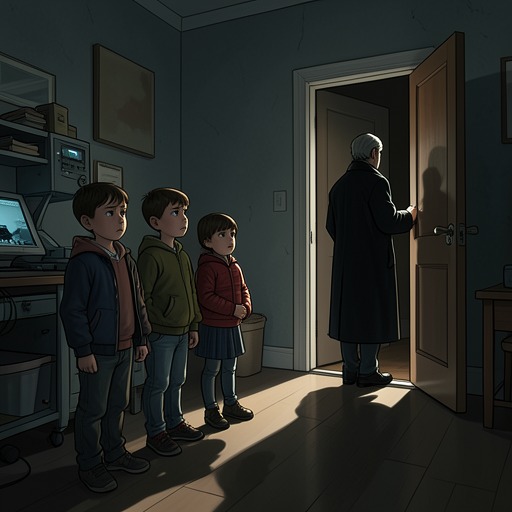
Miss Peregrine tightened the rules after receiving word that a man outside the loop had died under suspicious circumstances. She could not establish the cause or know whether it signaled a genuine threat to the home’s security, but ordered the children to act as though it did. No one was to leave the house, not even to collect vegetables or bring in a goose for dinner. When questions rose around the room, she refused to answer them and went to secure the doors.
Jacob pursued her because he faced a danger the policy did not resolve. Boats were not running, leaving his father stranded in town; Jacob feared that the suspected wight might be the person he had in mind and that, after feeding a stranger to a hollow, the same threat could turn on his father. Miss Peregrine pulled him into an empty room and told him that the order applied to him too. She reminded him that she had previously allowed him unusual freedom because of his unique position, but argued that he might have been followed and could thereby endanger her wards as well as himself.
The Boundary of Protection
The confrontation made the protocol’s priorities explicit. Jacob argued that his father was at risk and that locked doors would not stop him from leaving. Miss Peregrine answered that the welfare of the townspeople was not her concern and that she would not endanger her wards for anyone. Her refusal placed the inhabitants of the home inside the circle of her responsibility while leaving the island’s residents—and Jacob’s father—outside it.
She gave Jacob a stark choice: if he insisted on leaving, he could never return. Jacob reacted with shocked laughter and pointed out that she needed him; she acknowledged that they needed him very much. The exchange reveals the strain between his value to the group and the danger his freedom might bring to it. The banishment threat is not merely a rule about movement: it makes belonging to the home conditional on accepting the boundary Miss Peregrine has drawn.
Evasion and the Protocol’s Limits
The children’s later expedition shows that the lockdown does not end the impulse to act outside it. Emma refused to let Jacob go alone; Bronwyn joined despite not wanting to anger Miss Peregrine, because the group needed her protection; and Enoch supplied the plan. Millard, whose invisibility might have helped, declined to go and had to be bribed not to reveal the scheme. Emma reasoned that Miss Peregrine could not banish Jacob without also banishing all four companions, and that they might return before lights-out without her noticing.
Their proposed escape depended on Olive’s levitation: Emma told Jacob to hold on to her and jump from the roof. When Jacob feared the jump would shatter his pelvis, Emma reassured him that they had done it before—then corrected herself that it had happened once. The small discrepancy captures the improvisation beneath the group’s confidence. The protocol remains an active force, but the children answer its control not with formal permission, but with mutual protection, concealment, and a risky attempt to leave together.