Renegade peculiar faction
Miss Peregrine's Home of Peculiar ChildrenThe Renegade peculiar faction was a splinter movement whose attempt to escape aging and death transformed its members into the first Hollowgasts. Its history marks the catastrophic cost of trying to make time loops serve as a means of immortality rather than as a limited refuge from time.
Origins and Aims
Around the turn of the twentieth century, a group of disaffected peculiars proposed that time loops could be manipulated to grant more than suspended aging. They imagined reversing age, remaining young outside loops, and moving between past and future without the usual consequences of leaving a loop. Their ambition was mastery over time without submission to death.
The faction’s theory challenged the established limits of loop use. Long-term residents could only make brief excursions into the present before they began to wither and die; loops delayed mortality but did not abolish it. The proposed experiment therefore sought not merely to extend the existing arrangement but to overturn it.
Leadership and Preparation
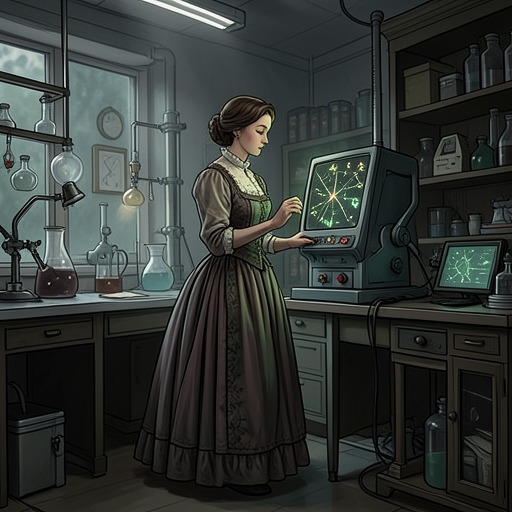
Among the faction were two technically brilliant brothers of Miss Alma LeFay Peregrine. They asked her to assist their project, but she rejected the plan as impossible and wrong. Their upbringing among Miss Avocet’s ymbrynes-in-training had given them more knowledge of the art of loop-making than most peculiar men, knowledge that helped make their ambitions practicable but, in Miss Peregrine’s view, dangerous.
The Ymbryne Council warned and threatened the group, but the warnings failed. In the summer of 1908, the brothers and several hundred faction members travelled to the Siberian tundra. Powerful ymbrynes were among them, making the expedition not only a challenge to the Council’s authority but a rupture within the community charged with maintaining and protecting loops.
The Siberian Experiment
The faction chose a nameless, centuries-unused loop as the site of its attempt. Those who expected the group to return humbled by the limits of nature instead heard of a catastrophic explosion. The blast rattled windows as far away as the Azores; people within five hundred kilometres could have taken it for the end of the world. The peculiars who remained behind assumed that everyone at the site had died.
That assumption proved wrong. Weeks later, attacks on peculiars began, carried out by creatures visible only to peculiars. These were the first clashes with the Hollowgasts. The creatures were eventually recognized as the wayward brothers and their fellow experimenters, who had emerged from the crater left by the explosion. The faction’s bid to become godlike had instead produced creatures regarded as monstrous.
Transformation and Consequences
The precise cause of the transformation remains disputed. One theory holds that the experiment reversed the participants’ ages to a point before their souls had been conceived, leaving them spiritually empty; this account explains the name Hollowgast. The experiment thus appears to have achieved a distorted version of its goal: the creatures may live for thousands of years, but their existence is described as a form of damnation, marked by isolation and an insatiable hunger for the flesh of their former kin.
That hunger links the faction’s failed experiment to a continuing danger for peculiars. Hollowgasts seek peculiar blood as their only hope of salvation, and a Hollowgast that consumes enough peculiars becomes a wight. The faction’s history is therefore not confined to the original disaster: its transformation created a threat that persists beyond the expedition and turns the pursuit of survival into a source of peril for the wider community.