September 3, 1940
Miss Peregrine's Home of Peculiar ChildrenSeptember 3, 1940 is both a historical date and the repeated day of the time loop on Cairnholm. The date first reaches Jacob Portman as a cryptic instruction from his dying grandfather, Abraham Portman, and becomes the key to finding Miss Peregrine and the peculiar children. Its recurrence gives the loop its protective, suspended rhythm, but also defines a life in which tomorrow ordinarily never arrives. When the loop fails to hold after the house is bombed, September 4 brings the children back into moving time.
The date as Abraham’s clue
As he is dying, Abraham tells Jacob he had thought he could protect him and regrets not having spoken sooner. He cannot explain further. Instead, he gives Jacob directions: find the bird in the loop, on the other side of the old man’s grave, on September 3, 1940. He also urges Jacob to consult the Emerson letter and tell the others what happened. The date is therefore not merely a historical detail: it is part of a practical message Abraham has left for his grandson, though Jacob initially cannot make sense of it.
Jacob later hears Oggie identify the exact day of the bombing of the orphan home as September 3, 1940. The date jolts him because he recognizes it as the one Abraham had spoken at the end of his life. Oggie’s certainty connects Jacob’s private family memory to Cairnholm’s wartime past, turning a seemingly obscure phrase into a clue that can be checked against the place and its history.
Recognition at the cairn
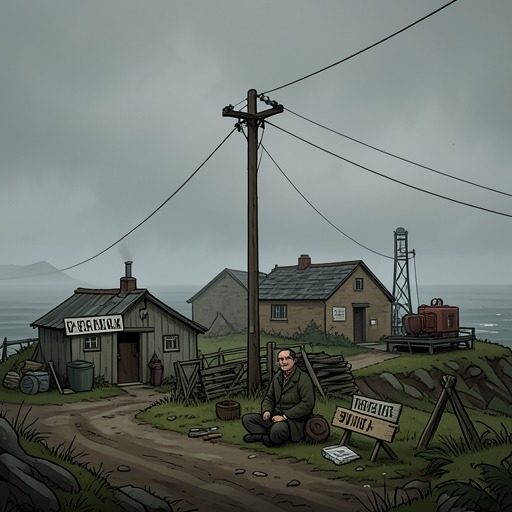
At the ruined home, Jacob finds a calendar marked September 1940, with the first and second days crossed out. The mismatch between that date and the unfamiliar world around him makes the calendar an explanation for his disorientation. He then reconsiders Abraham’s direction about the old man’s grave. The locals call the bog boy the Old Man, and the cairn is his grave; Jacob had already entered it and emerged somewhere else. The pieces fit: the far side of the cairn is not simply another location but September 3, 1940.
This recognition closes the gap between Abraham’s unfinished warning and Jacob’s own experience. What had sounded like a reference to ghosts or a metaphorical search proves to be literal guidance to a passage into the loop. The date joins place, family memory, and discovery: Jacob reaches the children Abraham knew by following a clue preserved from his grandfather’s last moments.
The loop’s repeated day
Miss Peregrine confirms that the place is a temporal loop and names its date: September 3, 1940. The day repeats over and over, but the inhabitants’ experience remains continuous, allowing them to remember the decades they have spent there. For most of the loop’s twenty-four hours it is September 3; for a brief portion, it is September 2. The calendar date thus describes a reset cycle rather than a single day experienced once and left behind.
The repetition depends on upkeep. A ymbryne must periodically cross the loop’s entryway to keep it pliable; without an ingress or egress, the enclosed temporal system can become unstable. The date’s recurrence is therefore not simply an automatic miracle. It rests on a maintained passage and on the work of the ymbrynes, who protect their wards and ensure that the loops reset each day.
Safety, confinement, and interruption
The repeated day initially feels like an open expanse of possibility to Jacob. On returning through the cairn, he finds the day warm, sunny, and fogless, and Emma is waiting for him. Although its weather and events are familiar, his experience of the day is new. The children, too, live through each recurrence with continuing memory; the date remains fixed while their experience accumulates.
That arrangement has a cost. Jacob notices how the loop’s atmosphere seems to soften concern and encourage sleep, making the place feel both beautiful and like a prison. Its residents can live safely within the same day for decades, but the apparent comfort risks making departure difficult to contemplate. The contrast is central to the date’s meaning: September 3 protects the children from the violence of the historical day, yet holds them outside the onward movement of history.
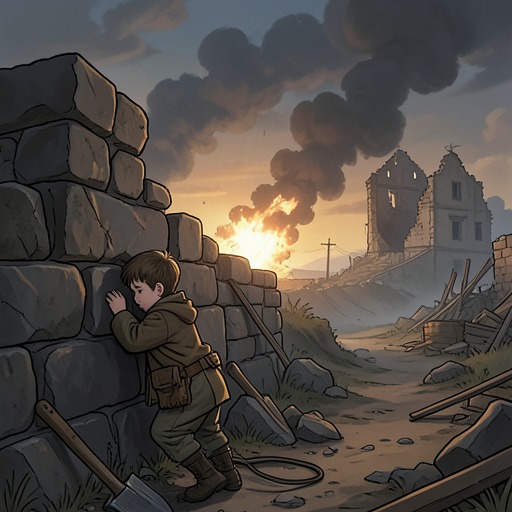
The date also carries the threat the loop is built around. On the night of September 3, 1940, the air-raid siren sounds and a bomb is about to strike the house. The children recognize the attack as a recurring part of their day, while Jacob understands that the bombing is about to happen. The day’s repetition can contain the danger through reset, but it does not make the bombing unreal; the attack remains the crisis around which the loop’s protection is organized.
From September 3 to September 4
After the house is destroyed and the children prepare to leave, they cross Cairnholm and pass through the damaged landscape and the town. It is September 4, and, for the first time in a very long time, the days are moving again. Some children say they can feel the change in their fuller breath and faster pulse; Jacob feels it too. The shift is more than a change on a calendar: the end of September 3 releases the group from the loop’s suspended routine and returns them to time that advances.
A separate account of time travel gives the fixed date a wider implication. Millard explains that travelers can reach vanished loops by leapfrogging from one loop to another, including a loop set a day fifty years in the past. Reaching one may provide access to others, expanding the possible routes through time. In this account, September 3 is a precise temporal setting and an entry into a larger network, rather than an isolated anomaly.
The date consequently holds together the novel’s discovery, refuge, and rupture. It is the answer hidden in Abraham’s last directions, the day Jacob finds beyond the cairn, and the recurring boundary within which Miss Peregrine’s wards have lived. Its end matters because it changes the children’s relation to the future: September 4 is not another reset of the same day, but the first day of movement beyond it.