Ymbryne guardianship and loop-keeping duty
Miss Peregrine's Home of Peculiar ChildrenYmbryne guardianship and loop-keeping duty is both a form of care and a demanding responsibility for maintaining time loops. Miss Peregrine describes ymbrynes as women who consciously manipulate time for themselves and others, creating loops where peculiar folk can live indefinitely. Their work is not merely to shelter their wards: they must keep those refuges functioning, and the obligation to protect them can bring them into conflict with people outside their care.
Identity and Responsibilities
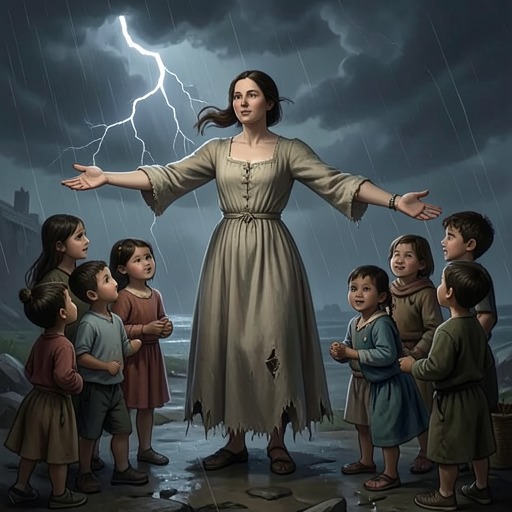
Miss Peregrine explains that only women are born ymbrynes, and that their distinctive ability is the conscious manipulation of time fields, including for other people. Through that power they create temporal loops in which peculiar folk can live indefinitely. In her account, the ymbryne’s role is a combination of caretaker, guide, and keeper of a protected community—not simply a time traveler.
The guardianship is practical as well as cultural. Ymbrynes must scour the countryside for young peculiars in need, avoid those who would harm them, and ensure their wards are fed, clothed, and hidden. They must also steep the children in the lore of their people, sustaining a shared inheritance alongside the necessities of daily safety. Miss Peregrine presents these duties as a substantial burden, not an ornamental title.
Maintaining the Loops
Protection depends on the loop’s continued stability. Miss Peregrine says that each loop must reset every day, and that an ymbryne has to cross its entryway from time to time to keep the ingress point pliable. She compares that point to a hole in fresh dough: without occasional passage through it, it may close. The passage also serves as a valve for pressures that accumulate in a closed temporal system; without ingress or egress, the loop becomes unstable.
The explanation makes maintenance inseparable from guardianship. A loop can shelter its inhabitants only while its threshold remains usable and its daily reset continues. The ymbryne’s movement across that boundary is therefore not incidental travel but upkeep: a recurring act that helps preserve the temporal refuge on which the wards depend. Miss Peregrine illustrates the principle with a photograph of Miss Finch and one of her wards at the entrance to Miss Finch’s loop, a tunnel in a little-used portion of the London Underground. When that loop resets, the tunnel fills with a glow; Miss Peregrine contrasts its dramatic entrance with her own more modest one.
Protection and Its Limits
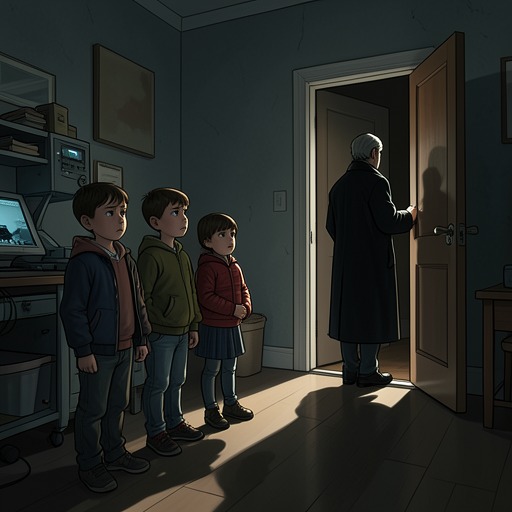
The protective priority becomes stark when Jacob asks Miss Peregrine to consider the people trapped in town, including his father, and warns that the suspected wight may target them. She answers that the townspeople’s welfare is not her concern and that she will not endanger her wards for anyone. Her position is not a general denial that outsiders matter; in the immediate conflict, it establishes that her first obligation is to the children entrusted to her, even when refusing assistance leaves others exposed.
That boundary sharpens the ethical cost of the role. Miss Peregrine has responsibility for vulnerable children and for the refuge that keeps them safe, while Jacob’s appeal arises from an imminent danger to people beyond it. The rule of guardianship thus operates as both protection and exclusion: the same insistence that preserves the wards can prevent their guardian from acting for those outside the loop.
The Duty Across Generations
The account of Abraham Portman gives this protective obligation a painful historical dimension. Miss Peregrine says she can only imagine that Abraham kept his knowledge from Jacob because he wanted to protect him. She describes Abraham as facing a double genocide: Jews targeted by the Nazis and peculiars hunted by hollowgasts. His choice to remain hidden among the peculiars was tormented by the thought that both communities were being slaughtered while he stayed safe.
Jacob’s own response echoes the difficulty of protection and disclosure. After Dr. Golan exploits Jacob’s trust and Jacob recognizes that he led him to the children, Jacob admits his responsibility and apologizes; Emma answers that they are alive, while Enoch warns that the danger remains. Together, these scenes show the duty’s wider stakes: protection can require concealment, but secrecy may leave the next generation unprepared, and a guardian’s refuge is never wholly insulated from threats beyond its threshold.