
The Marriage’s Hidden Combat
Mr. & Mrs. SmithThe Smiths’ domestic disagreements become a low-grade battle that foreshadows the literal combat they later bring into their home.
increasing Bearing strength in each event
 decreasing
Bearing strength in each eventdecreasingThe Butter Dispute
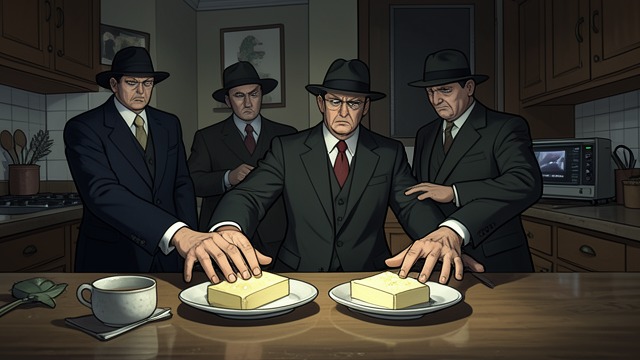
The Butter Dispute
A small mistake
John brings salted butter although Jane requested unsalted. Each could correct the mistake easily, yet both experience the exchange as evidence that the other is not listening.
A larger pattern
The butter becomes a miniature version of their marriage: Jane feels that her effort is ignored, while John feels that no attempt can satisfy her. Their ordinary irritations carry the weight of unspoken needs.
The Curtain Argument
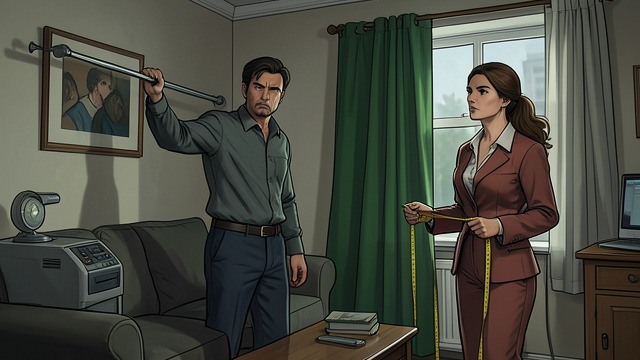
The Curtain Argument
A domestic proposal
Jane presents new green curtains as a change that might refresh their home. John objects to the expense and the further decorating decisions the purchase may require.
A proxy battle
Neither is really arguing about fabric. Jane wants attention and shared investment; John wants to avoid a project that feels imposed. Their disagreement turns the living room into a small battlefield for larger frustrations.
The Salt at Dinner
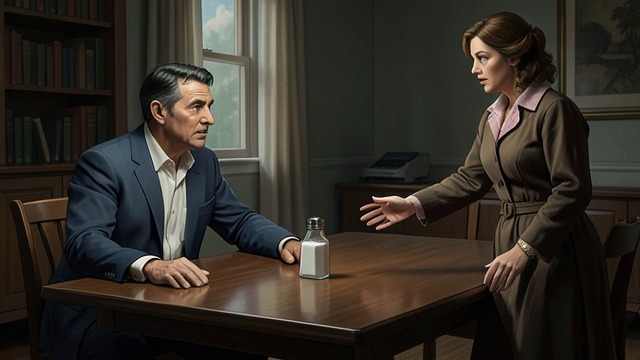
The Salt at Dinner
A contested center
John asks Jane to pass the salt, then challenges whether it is truly in the middle of the table. The brief exchange becomes a contest over who must make the first small accommodation.
Winning without repair
John salts his meal excessively, feeling that he has won. The victory does not settle the underlying resentment; it only makes their habit of turning requests into tests more visible.
The Dish Left Dirty
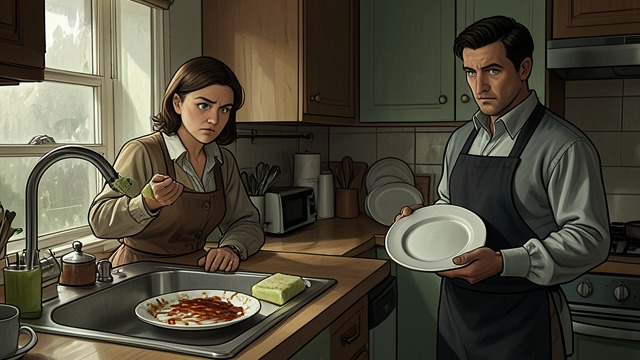
The Dish Left Dirty
A rejected routine
While doing the dishes, John passes Jane a plate with food still stuck to it. She cleans it before loading it, and he resents what he reads as needless correction.
Separate worlds
A work call gives Jane an excuse to leave the kitchen, while John deliberately loads another dirty dish. The small act of defiance reveals how both spouses have stopped treating routine tasks as shared cooperation.
Domestic Objects as Weapons
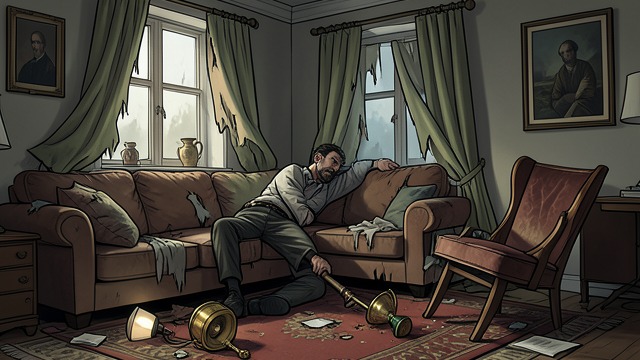
Domestic Objects as Weapons
The old arguments return
The Smiths turn curtains, lamps, trophies, and household equipment into weapons during their gunfight. What once expressed minor dissatisfaction now appears in literal, destructive form.
Conflict made honest
Their fight is dangerous, but unlike their earlier polite exchanges, it cannot hide behind empty phrases. The destruction forces both to recognize that their anger is personal and that their connection has not disappeared.
During John’s account of an ordinary evening
The evening Jane buys new curtains
During a routine dinner
A few evenings later
During the final fight in the house
