“Escape the Dance” (Om de dans te ontspringen)
Mr. & Mrs. Smith“Escape the Dance” (Om de dans te ontspringen) is a phrase that changes meaning as it moves through the relationship and adventures of Jane Smith and John Smith. First spoken together over tequila, it becomes a personal inscription on Jane’s silver flask; later, as she drinks from the flask during her escape, it names survival as a recurring pattern rather than a one-time reprieve.
A Toast Shared
At a drink stop, Jane pours two shots and raises her glass. She offers a toast to escaping the dance, and John laughs and echoes the words as their glasses meet. The phrase belongs to both of them in that moment: it is not a private motto delivered to an audience, but a small ritual of mutual recognition.
The toast is followed by a precise sequence of shared gestures. They lick salt from their hands, drink the tequila, and bite into a sharp lime while keeping their eyes on each other. Jane experiences the drink as intensely sexy. The phrase therefore enters the story in a scene where danger, play, and attraction are held together: the couple drink to getting through something, but the immediate effect is intimacy.
An Inscription on the Flask
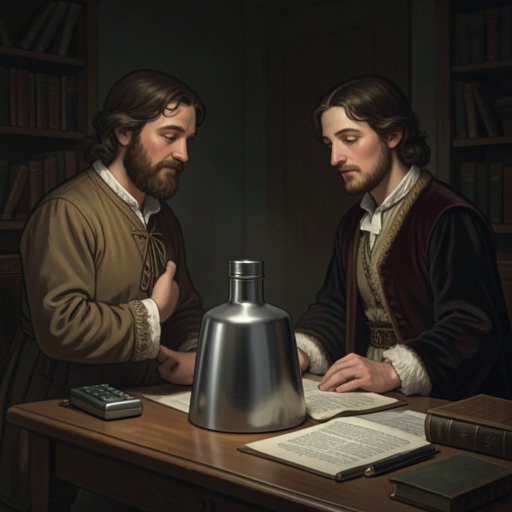
Later, Jane rides in Yousef’s taxi, whose shortcomings include a broken window and an inadequately stocked bar. She has brought her own remedy: a silver flask filled with first-rate whiskey. When the taxi jolts over something in the road, she looks at the engraving on the flask and registers the words again: “OM DE DANS TE ONTSPRINGEN. LIEFS, JANE.” The inscription makes the earlier toast material and personal. Jane has given the phrase a durable place on an object she carries with her.
The engraved message also preserves a trace of her relationship with John even when he is not part of the immediate scene. Jane recognizes the sentiment as familiar, responding inwardly that it is the same as ever before taking a long drink. The wording’s affectionate sign-off, together with the remembered toast, makes the flask more than a container for whiskey: it bears a compact record of shared language and attachment.
The Phrase During Escape
The phrase returns when Jane slips out through the back exit to avoid the party guests in front. Outside, she notices the rats in the shadows and the moonlight between the derelict buildings; the sky still holds stars, an image of beauty amid a threatening setting. She takes out the flask, catches the moonlight on its smooth silver surface, and drinks deeply. She reflects that it has helped her escape the dance again.
That return alters the phrase’s emphasis. At the toast, escaping the dance is something Jane and John celebrate together in a charged, flirtatious exchange. With the flask in hand during the later flight, Jane is alone, and the language becomes a private way of recognizing that she has got through danger once more. The movement from shared words to carried inscription to repeated use makes the phrase both a bond with John and a survival refrain of Jane’s own.
A Motif of Intimacy and Survival
The phrase links three distinct forms of continuity: a remembered exchange between spouses, an inscription fixed on an object, and Jane’s present-tense act of drinking while escaping. Its recurrence does not erase the difference between the scenes. The tequila toast is reciprocal and sensual; the whiskey flask is associated with Jane’s solitary movement through danger. The same words can thus retain their intimacy while acquiring a harder, more practical force.
The flask gives that change a visible form. Its silver surface catches moonlight in the alley, while its inscription carries the earlier toast into a later crisis. Jane’s final remark that it has helped her escape again makes the phrase cyclical: survival is not presented as a permanent release from danger, but as something she has to achieve repeatedly. “Escape the Dance” consequently names both the attraction and complicity once shared by Jane and John and Jane’s continuing effort to make it through the next peril.