Communication and Honesty in Marriage
Mr. & Mrs. SmithCommunication and Honesty in Marriage is not a settled virtue that Jane Smith and John Smith simply possess, but a practice they learn to undertake: putting hidden feelings into words, listening to what those words disclose, and talking about the story they have made together. Framed first by Dr. Wexler’s recorded sessions and later by the couple’s own account of their shared past, the novel makes narration itself part of marital repair. Their reconciliation begins not with a return to a perfect house, but with the recognition that they can speak honestly even after the house is gone.
The Therapy Frame and the Work of Writing
Dr. Wexler introduces the Smiths through a record of sessions that he has had transcribed and supplemented with notes on their expressions and body language. The clinical framing makes the reader encounter the couple as both people in distress and subjects of a story being assembled: spoken answers, pauses, gestures, and the therapist’s interpretations all shape what can be understood about their marriage. His opening impression is of a strikingly composed pair—young, attractive, polite, and intelligent—whose outward ease does not explain the difficulty that has brought them to his office.
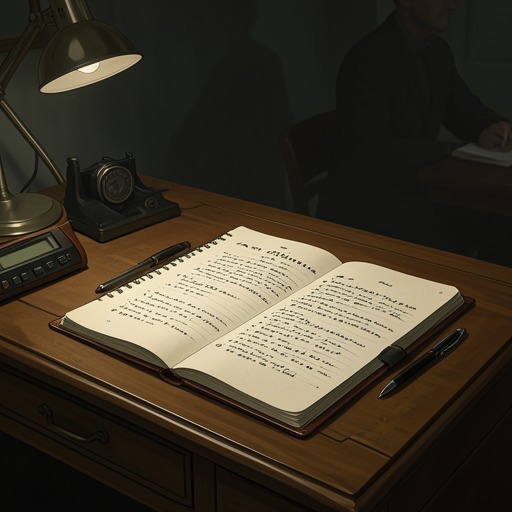
When Mrs. Smith says that she and her husband may each have secrets, Dr. Wexler suspects that she is concealing something important. Rather than demand a confession, he assigns her a private writing exercise: she should put her feelings on paper, without worrying about literary quality or even complete sentences, and without any obligation to show the result to him. The point is self-understanding, not performance for a reader. His premise is that people may not know what their own story is until they tell it to themselves.
The exercise turns an indistinct unease into an invitation to find a beginning. When Jane asks how to start, Dr. Wexler directs her toward the couple’s first meeting and the reasons she fell in love with John. Her expression changes as she remembers something pleasurable, and she begins with Bogotá, six years earlier. The prompt does more than elicit background: it shifts attention from the marriage as a present problem to the history and attachment that the problem threatens to obscure.
Secrecy, Performance, and Domestic Friction
The book sets that therapeutic appeal to candor against the couple’s habit of keeping important parts of themselves private. Their polished manners and apparently ideal life are not proof of intimacy. Jane’s admission that each may have secrets remains guarded, while the reader’s knowledge of the couple’s covert professional lives gives that guardedness a sharper meaning: openness cannot be assumed merely because the spouses share a home or a name.
Even ordinary household exchanges show how much feeling can hide inside apparently trivial complaints. When John brings salted butter instead of the unsalted kind Jane requested, he experiences her correction as another impossible assignment from an ice princess to a suffering knight. He starts to apologize, but Jane dismisses the matter and turns brightly to new living-room curtains. Neither response resolves the underlying frustration. The comic mismatch between the small shopping error and John’s sense of recurring failure shows how domestic tasks can become a language for grievances the couple has not stated directly.
Jane’s investment in domestic perfection has a related emotional cost. She applies to the house, garden, and food the same ambition and energy she brings to work; she can plan an elaborate dinner for fifty, yet performs that effort every evening for two. The scale of the labor and the intimacy of its audience do not guarantee that it will be recognized as care. The ideal home becomes a carefully maintained image, while the marriage inside it remains difficult to speak about.
That divide is especially stark when domestic routine collides with the couple’s violent professional reality. John’s teasing question to a client about whether he has been a bad boy belongs to a different register from the careful menu Jane plans on her way home for a supposedly decisive dinner. Later, a small grenade drops through a vent and turns danger into grotesque farce. The shifts from household detail to lethal action expose how little the appearance of ordinary married life can tell either spouse—or the reader—about the realities under its surface.
Speaking Through Conflict
When the Smiths’ conflict erupts in the kitchen, communication initially takes the form of destruction rather than explanation. John fires as he moves toward the dining room, shattering glasses and striking Jane’s cherished teapot and kettle; cupboards and decorations are wrecked with them. Jane pauses to take in the destruction of her favorite room before turning back toward him. The room that had embodied her domestic effort becomes an unmistakable record of what their confrontation has cost. The scene makes physical what their earlier silences had kept diffuse: the home cannot remain a perfect shelter for a marriage in crisis.
The couple’s later escape through the home-goods store repeats the same collision of intimacy and danger in public. As agents enter, John signals Jane to go; they leap from a swing just as the lights go out. In the store’s back area, the life-sized mascot Homey rises from a box of teddy bears with a sawed-off shotgun, and they each shoot its oversized stuffed head. The supposed undercover-agent skirmish becomes a major public incident. Even in action, the two respond together, reading each other’s cues without pausing to explain. Their coordination shows a practical intimacy that survives where domestic performance has failed, but it is not identical to honest conversation: understanding one another under fire does not by itself resolve what has been left unsaid.
Reconciliation and a New Account of Home
After surviving the immediate crisis, Jane comes into John’s arms. They hold each other in silence for a moment, and he experiences the scene as waking from a nightmare to discover that nothing is wrong. The next day, however, is not a return to the old arrangement: they have the privilege of beginning again. The language of a new start gives their reconciliation a future, while the embrace supplies its bodily assurance before either can fully explain it.
The decisive change is that they have been able to talk about what happened—not only the violence of the immediate crisis but the events of their six-year marriage. Jane connects this change to an inscription she had placed on a flask: the words about escaping the dance had once been directed toward a future the couple could not imagine. Now she understands their shared escape more broadly, as surviving the recurrent struggle of marriage as well as the latest danger. The motif of getting through the dance turns a phrase on an object into a compact account of what conversation has made possible: not erasing the past, but facing it together.
Jane’s understanding of home changes with that account. They have lost their house, she realizes, but not their home. Having grown up without a home, she had tried to make the house look perfect and filled it with things she believed she loved, as though perfection could provide safety, stability, and love. Her realization does not deny the importance of what was lost; it distinguishes the building and its possessions from the relationship they had mistaken those things for. Starting again means giving up the claim that an immaculate home can substitute for emotional security.
The Story After the Sessions
The novel closes its therapeutic frame with Dr. Wexler’s report that the Smiths were a successful case. He has not seen them for some time when a change-of-address notice arrives; he recognizes Jane’s handwriting and reads the note signed by Jane and John Smith, thanking him. He sends a fruit basket to congratulate them on their new home and a card reminding them that they still have one session left. He doubts they will return.
The ending makes the couple’s progress visible through a small exchange of writing: the private exercise proposed in therapy has become a message from the pair, written in Jane’s hand and signed by both. Yet the story does not suggest that a therapist’s assignment alone repaired their marriage. Dr. Wexler’s frame offers a method for self-discovery; the couple’s own reckoning supplies the crucial change, as they talk through their history and distinguish a shared home from the lost house. His final joke that, if every married couple were like them, he could close his practice preserves the comic edge of a case that never fit neatly inside ordinary clinical expectations.