John and Jane's Home
Mr. & Mrs. SmithJohn and Jane's Home is the couple’s shared suburban house, painstakingly arranged as an image of security and domestic perfection before their violent confrontation reduces it to ruins. Its destruction is more than the loss of a building and its contents: it exposes the difference Jane had mistaken between possessing a perfect house and having a home, and ends with her recognizing that the latter can travel with her and John.
A Domestic Ideal Built from Things
The house takes shape through repeated attention to its objects and appearance. Jane wants the household to look right, and even an everyday shopping trip can become a small test of whether John has understood what she asked for. When he brings salted butter instead of the unsalted kind she requested, he inwardly compares himself to a knight sent on an impossible quest by an ice princess. Jane dismisses his apology and says she will improvise, then changes the subject to new living-room curtains. The exchange makes household goods part of the couple’s marital language: the shopping mistake is mundane, but John experiences it as another sign that he cannot satisfy her.
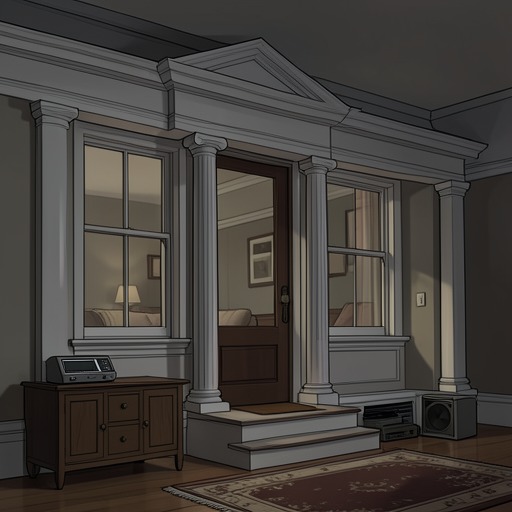
For Jane, the house’s polished order is tied to a past without a secure home. She later realizes that, having grown up without a home, she tried to make this one look perfect. She filled it with things she thought she loved and persuaded herself that perfection meant safety, stability, and love. In retrospect, the furnishings and decorations had offered the appearance of those qualities without supplying what mattered. The house had become a material project onto which she placed hopes that belongings could not fulfill.
John, too, participates in the performance of domestic care. On his way home, with his hands aching from gripping the steering wheel, he plans dinner in detail: the menu, the dishes, the tablecloth, and whether to buy flowers. He wants everything perfect for one last time, before it all falls apart. The plan’s tenderness and its fatalism occupy the same thought. In the house’s final hours, preparing a meal is not separate from the impending catastrophe; it is John’s attempt to hold a shared domestic scene together while expecting it to end.
The House as a Battleground
The home’s domestic objects become vulnerable to the violence the couple bring into it. During their confrontation, John fires as he moves toward the dining room. Glasses shatter, cabinets fly open, and shots strike Jane’s treasured teapot and its companion, the kettle. Jane pauses to look at the destruction of her favorite room: appliances, cupboards, and decorations are being ruined together. The kitchen is no longer a space kept in order through everyday care; it is part of the couple’s armed conflict, and its familiar contents make the damage personal.
The collision between domestic routine and lethal danger recurs in smaller, absurdly scaled forms. A small grenade drops from a ventilation opening and rolls across the floor. Jane recognizes that its toy-like appearance is misleading: it resembles a cheap toy from a Happy Meal, a Barbie grenade, but it is not a toy. The house’s ordinary expectations of safety fail at the level of perception as well as structure; an object that looks trivial is lethal, while the familiar rooms offer no refuge from the danger inside them.
The final public chaos likewise folds home and consumer spectacle together. In a store, a life-sized mascot called Homey springs up from a bin full of teddy bears, wearing a house-shaped hat and carrying a sawed-off shotgun. Jane and John each shoot it in the oversized stuffed head; as it falls back into the bin, its gun fires into the ceiling. What should have been a skirmish with an undercover agent has become a public event. The episode does not take place in their home, but its armed mascot and house-shaped costume echo the domestic imagery that has lost its promise of safety.
Ruins and Recognition
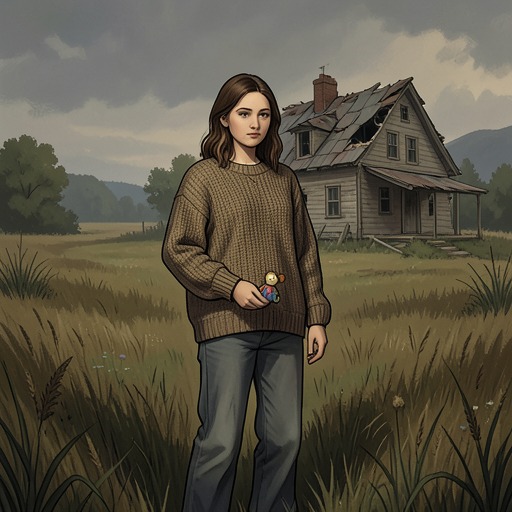
After the fighting, Jane drives away with John, whose head falls back and whose eyelids droop as he fights sleep. She is glad to take her wounded hero home, then realizes there is no home to return to. Their house lies in complete ruin. The recognition widens beyond the building: the furniture they bought, the ornaments and artworks, and the carefully grouped, alphabetized boxes of possessions in the basement are all gone. Jane understands that they have destroyed everything they built together, leaving nothing of the shared material world they had accumulated.
The question of where they can go follows directly from this loss. Then John murmurs Jane’s name in his sleep. She smiles at him, noticing a large bulge in his pocket, and her attention remains with the living, exhausted person beside her rather than with the vanished inventory. The contrast does not restore the house or erase what its destruction means; it shifts the focus from the things they lost to the bond that survives beside her.
Jane’s final distinction is between a home and a house. They no longer have a house, but she concludes that they still have a home: they can go anywhere and call it home as long as they are together. Her insight revises the meaning she had given the perfect rooms and carefully selected possessions. Those things were not love, safety, or stability in themselves; the relationship, and their ability to speak about what had happened during their six-year marriage, is what remains after the structure and its contents are gone.
What the House Leaves Behind
The ruined house marks both an ending and a change in how Jane understands domestic life. She is no longer the naive newlywed she once was, and she expects that she and John will have to escape danger again, at home as well as at work. Their future will be messy, dangerous, and unpredictable—not the controlled perfection she tried to build into the house. Yet the destruction has clarified what that perfection concealed: a home does not depend on preserving a particular collection of rooms and objects.
As a shared possession, the house once gave the couple a visible picture of the life they had made together. As rubble, it exposes how little that picture could guarantee. Its loss is real, including the furniture and personal belongings, but it does not settle the question of whether the couple still have a home. Jane’s answer depends on their remaining together, not on rebuilding the same perfect setting. The house ends as shelter and as an ideal; the possibility of home survives its destruction.