the novel’s opening
The Marriage Inspection
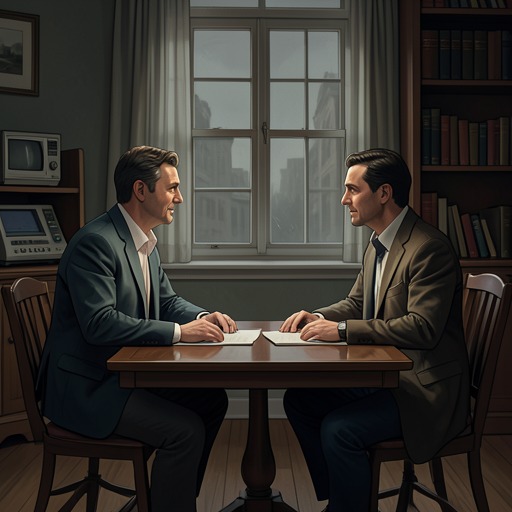
Dr. Wechsler introduced the recording consultation records of [Jane Smith](entity:character-recall-character-jane-smith-9c8f43913a78) and [John Smith](entity:character-recall-character-john-smith-c7be07591715). The two are a well-mannered, attractive couple, whose politeness and smiles make them seem particularly harmonious. Their composed exterior intrigued him, as there were few signs of the usual troubles that would prompt a
the first therapy session
The Number Eight
[Dr. Wexler](entity:character-recall-character-dr-wexler-e9dbbde65d65) asks the couple to rate their happiness and their estimate of each other’s happiness. They initially arrive at eight, a safe, carefully moderate answer, though their hesitation suggests that they are measuring their responses as much as their relationship.
When he asks how often they have sex, both retreat into comic arguments about what the scale means and whether zero counts. Their inability to answer plainly leads Dr. Wexler to guess that they have not had sex at all recently, and he realizes their marriage needs more than a routine inspection.
after the missed second appointment
Jane Returns Alone
Neither spouse appears for the next joint session. [Jane](entity:character-recall-character-jane-96c091dcd670) and [John](entity:character-recall-character-john-6bc68dc682c3) separately call with excuses and each says they must consult the other before rescheduling, but Jane eventually asks to come alone.
[Dr. Wexler](entity:character-recall-character-dr-wexler-e9dbbde65d65) sees a tired, emotionally depleted woman who fidgets with her wedding ring and smokes despite not having smoked during the first visit. She says she loves her husband and their life, yet describes an emotional distance made up of things they do not say and the sensation that John can be present in a room without really being there.
during the second round of sessions
Separate Secrets
[Jane](entity:character-recall-character-jane-96c091dcd670) admits that she and [John](entity:character-recall-character-john-6bc68dc682c3) each keep private things from the other. [Dr. Wexler](entity:character-recall-character-dr-wexler-e9dbbde65d65) asks her to write about her feelings, with no requirement to show the pages to anyone; the exercise is meant to help her discover what troubles her by telling her own story to herself.
John also returns alone, arriving with a silver flask and without his wedding ring. He says that the mystery he once loved in Jane has disappeared. He resists the writing assignment, then asks how to begin and agrees to try it, though he promises nothing.
six years before the present
The Bogotá Riots
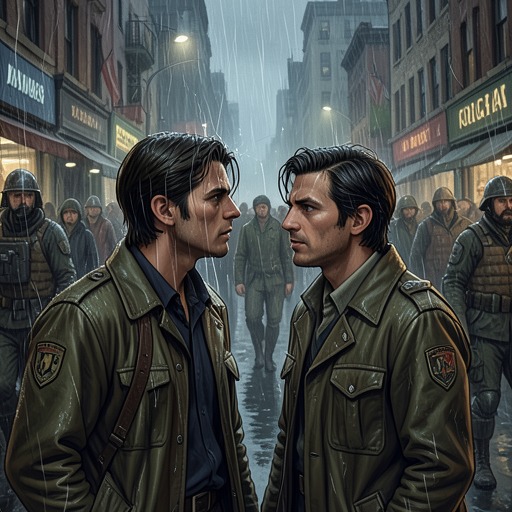
In her written account, [Jane](entity:character-recall-character-jane-96c091dcd670) recalls being in [Bogotá](entity:location-recall-location-b1e39a924ffd) on business when news spreads that local power broker Sancho Varrón, known as the Barracuda, has been shot. The killing sets off street violence, and a police captain begins rounding up tourists traveling alone.
At the [Americana Hotel](entity:location-recall-location-americana-hotel-f118f11222f9), Jane notices [John](entity:character-recall-character-john-6bc68dc682c3) calmly watching the unrest. When the police captain asks whether the two strangers are together, they exchange a look and instantly pretend to be a couple, using the improvised cover to evade arrest and escape the immediate danger.
the night they meet in Bogotá
A Night Together
[Jane](entity:character-recall-character-jane-96c091dcd670) and [John](entity:character-recall-character-john-6bc68dc682c3) reach her hotel room as gunfire and chaos erupt outside. Instead of panicking, Jane laughs at the danger, surprising John and drawing him toward her; when the violence eases, they slip out into the rainy city together.
John takes her to a crowded cellar bar where they drink tequila and dance salsa. Their shared appetite for danger and the present moment turns the meeting into an intense, spontaneous romance, and they spend the night together.
the morning after their first night
The Morning Flower
[Jane](entity:character-recall-character-jane-96c091dcd670) wakes alone and briefly assumes that [John](entity:character-recall-character-john-6bc68dc682c3) has vanished with the night. He returns with coffee and a newspaper, however, and she finds a wildflower tucked into the paper; its simple tenderness makes the morning feel unusually precious.
The two flirt about what they imagined while watching each other sleep, then kiss again. Jane recognizes the danger of becoming attached, but the encounter has already begun to feel like more than a brief escape.
weeks after Bogotá
The Shooting Gallery
Back in [New York City](entity:location-recall-location-7a11f2949ca3), [John](entity:character-recall-character-john-6bc68dc682c3) and [Jane](entity:character-recall-character-jane-96c091dcd670) continue seeing each other. At a street festival in [Little Italy](entity:location-recall-location-c9af2f953319), Jane surprises John by showing far greater skill with a toy rifle than she first lets on, while he tries to hide how naturally he handles a gun.
Their playful contest ends with Jane winning an oversized bear and kissing John. The scene hints that beneath their flirtation both possess abilities and instincts they have not disclosed.
six weeks into the courtship
The Proposal
[Jane](entity:character-recall-character-jane-96c091dcd670) expects [John](entity:character-recall-character-john-6bc68dc682c3)’s invitation to dinner to signal the end of their relationship, since her previous romances have rarely lasted beyond six weeks. Instead, at the [River Café](entity:location-recall-location-river-caf-460a4d086a57), he produces a Tiffany ring and asks her to marry him.
The proposal turns what Jane fears is their last night into the beginning of a shared life. Champagne becomes the emblem of celebration, and the couple commits to a future after only a brief, intense courtship.
the day after the proposal
Friends Warn Them
[John](entity:character-recall-character-john-6bc68dc682c3) tells his friend and colleague [Eddie](entity:character-recall-character-eddie-2cb6e2d36340) that he is in love and intends to marry [Jane](entity:character-recall-character-jane-96c091dcd670). Eddie doubts the decision, pointing to the couple’s short acquaintance, but John insists that Jane is strong, wild, and able to meet him as an equal.
Jane’s friend and colleague [Jasmine](entity:character-recall-character-jasmine-79d2b1fff339) voices similar doubts while climbing with her. Jane defends the relationship and accepts the complications their demanding jobs may bring, convinced that their shared life can accommodate them.
soon after the proposal
The City Hall Wedding
[Jane](entity:character-recall-character-jane-96c091dcd670) and [John](entity:character-recall-character-john-6bc68dc682c3) marry at City Hall, with [Jasmine](entity:character-recall-character-jasmine-79d2b1fff339) and [Eddie](entity:character-recall-character-eddie-2cb6e2d36340) as witnesses. Both friends seem angry and disapproving, but the couple is absorbed in the ceremony and in the promise represented by their rings.
They kiss so long after being pronounced husband and wife that the next couple waiting for their ceremony complains. John remembers how right their married name sounds, while Jane sees the wedding as the first time someone has made her a lasting promise.
six years into the marriage
The Perfect Dinner
[Jane](entity:character-recall-character-jane-96c091dcd670) tries to write about her present life and begins with an ordinary evening: she has prepared another elaborate dinner, hoping that a perfect home and meal can make their marriage feel perfect too. Her professional competence extends to domestic routines, but the effort cannot repair the growing distance.
[John](entity:character-recall-character-john-6bc68dc682c3) arrives tired and tense, carrying the wrong butter and reacting poorly to Jane’s new curtains. Each small disagreement becomes a proxy for larger frustrations, and both spouses retreat rather than explain what they need.
the same evening
A Dinner of Small Battles
[John](entity:character-recall-character-john-6bc68dc682c3) recalls their dinner as a sequence of careful politeness and minor provocations. [Jane](entity:character-recall-character-jane-96c091dcd670)’s questions about the meal, his drinking, and the salt turn into a contest over who controls the table, and he deliberately oversalts his food to claim a meaningless victory.
The exchange shows how thoroughly their intimacy has been displaced by coded conflict. Neither can identify what they have won, but both keep playing, making the ordinary rituals of marriage feel like hostile territory.
later that evening
The Empty Bedtime
[Jane](entity:character-recall-character-jane-96c091dcd670) hopes that [John](entity:character-recall-character-john-6bc68dc682c3) might talk to her when they go to bed, but he says he is exhausted and offers only a shortened “love you.” She answers automatically and wonders when their declaration of love lost its first-person intimacy.
John sees her laid-down book as an invitation, yet feels too tired and too disconnected to respond. Their matching accounts reveal that each interprets the other’s withdrawal as rejection while remaining unable to bridge the silence.
a few evenings later
The Penthouse Call
While washing dishes, [Jane](entity:character-recall-character-jane-96c091dcd670) receives a work call and goes upstairs to answer it privately. [John](entity:character-recall-character-john-6bc68dc682c3) hears her mention a penthouse suite and a hurried appointment, but she explains that a client’s computer server has failed and she must go into the city.
John remembers their plans with the Colemans, yet lets her leave. He watches her drive away and wonders where she goes and with whom, recognizing that they no longer ask each other questions that once would have mattered.
that night
Jane’s Hotel Assignment
Tian changed her car in the city, arriving at the [Hudson Hotel](entity:location-recall-location-hudson-hotel-901c8fd69dca) wearing a black leather dominator outfit under her coat. She called her job as a computer service just a cover; she was a professional killer, and this mission was to kill the arms dealer Marco Lassen. She entered the top
the same night
John’s Poker Ambush
john went to a notorious underground bar, deliberately acting drunk and wealthy to attract poker players' attention. he lost all his money, even betting his beloved glass of wine, and stayed at the scene, continuing to play poker, waiting for the dreaded lucky guy to arrive
later that night
The Coleman Party
[John](entity:character-recall-character-john-6bc68dc682c3) returned home and found [Jane](entity:character-recall-character-jane-96c091dcd670) getting ready for the party at the Coleman house. She hid her black leather work outfit under a pink dress, while he covered the bloodstained collar and lied about where he had been. They arrived at the next house, playing the role of ideal suburban couple. Someone
around three o’clock that night
The Midnight Calls
Jian and [John](entity:character-recall-character-john-6bc68dc682c3) stayed awake until their phones rang almost at the same time. Jian received a new urgent mission from W, while John got a call from his own organization, mentioning a job related to a dam project
the morning after the midnight calls
The Hidden Workplaces
[John](entity:character-recall-character-john-6bc68dc682c3) entered a secret arms depot through a hidden door under the floor of the tool shed, filled with weapons and cash. He selected the equipment needed for the mission, then drove to [Smith Construction](entity:organization-recall-organization-smith-constructi-c0b618a40101); seemingly a regular construction company, it actually concealed his spy work
later that day
The Desert Assignment
Tian set up a position in an abandoned mine in the desert north of the Mexican border. She laid minefields and timed explosives for the convoy transporting Benjamin Dantz, and coordinated with [Jasmine](entity:character-recall-character-jasmine-79d2b1fff339) and her team via remote control devices. [John](entity:character-recall-character-john-6bc68dc682c3) arrived alone on a hill overlooking the same route, carrying a jav
during the desert operation
The Cake Interruption
[John](entity:character-recall-character-john-6bc68dc682c3) and the team ate a lemon cake made by [Jane](entity:character-recall-character-jane-96c091dcd670), then raised the launcher and aimed at the approaching vehicles. Jane noticed the gun-holding stranger and realized he was not a harmless desert driver, but another professional killer hindering her operations. She shot at him, only wounding his ear and
minutes after the first shots
The Mission Collapses
The explosion and the gunfire of the agents startled the convoy, which then turned around. [Jane](entity:character-recall-character-jane-96c091dcd670) was unable to detonate the entire minefield. [John](entity:character-recall-character-john-6bc68dc682c3) also lost his chance to act, and both failed to complete their mission, so they had to leave the desert. John found a damaged laptop computer in the
the next day
The Two Targets
Tian checked the mission video and noticed another agent's silver wine and a lemon cake. These details, along with his posture and mouth movements, made her worry that the man who attacked her in the desert was [John](entity:character-recall-character-john-6bc68dc682c3). She hadn't had time to confirm when John called from the city, asking
that evening
The Dinner Standoff
[John](entity:character-recall-character-john-6bc68dc682c3) went home early, suspicious and armed, to find [Jane](entity:character-recall-character-jane-96c091dcd670) ready with a martini and an exceptionally lavish dinner. He noticed the bandage on her knee and observed her careful handling of the knife; she, in turn, noticed his alertness, as if he were a trained opponent watching her closely
during the dinner confrontation
The Wine Stain
[John](entity:character-recall-character-john-6bc68dc682c3) noticed that [Jane](entity:character-recall-character-jane-96c091dcd670) was injured, and the bottle in his hand slipped from his fingers, but she caught it with the reflex of a professional killer. At that moment, their eyes confirmed the unspoken truth between them: they both knew the other was a killer, and they both knew the other knew
immediately after the dinner
The First Flight
[John](entity:character-recall-character-john-6bc68dc682c3) pulled out the hidden gun. He saw [Jane](entity:character-recall-character-jane-96c091dcd670)'s car leaving the garage. He ran outside to stop her, but Jane drove through the low wall and escaped. John crossed through the neighbor's garden chasing her, colliding with playground equipment and fences along the way. John accidentally fired the gun
later that night
Two Allies Cry
[John](entity:character-recall-character-john-6bc68dc682c3) was injured, his clothes covered in mud, and he arrived at [Eddie](entity:character-recall-character-eddie-2cb6e2d36340)'s house, confessing that his wife had become an enemy. Eddie persuaded him to kill her, but John could not do it. In the end, he stayed overnight. [Jane](entity:character-recall-character-jane-96c091dcd670) hid in the three strikes headquarters and told [Jasmine](entity:character-recall-character-jasmine-79d2b1fff339)
the following day
The Forty-Eight-Hour Order
Weder accused [Jane](entity:character-recall-character-jane-96c091dcd670) of ruining the desert mission and reminded her that the three-strike rule leaves no witnesses. He gave her forty-eight hours to eliminate another agent, otherwise the secret would become a hazard. Jane accepted the deadline, beginning to prepare to investigate and track down the man who had sabotaged
after Jane receives the deadline
The House Search
Tian returned with her team to the house of the Smiths, ordered a forensic search, and looked for evidence related to the target. The women checked clothes, photos, records, and rooms, forcing Tian to watch helplessly as the private world she had built with [John](entity:character-recall-character-john-6bc68dc682c3) was searched as a crime
during the house search
The Armory Seizure
Tian discovered the gap under the tool shed floor and opened the hidden room where [John](entity:character-recall-character-john-6bc68dc682c3) was hiding. Inside there were weapons, ammunition, and stacks of foreign currency, proving that his construction company was covering up a large-scale secret operation. She ordered the team to take everything away and watched as the entire
soon after the armory seizure
The Invisible Address
[John](entity:character-recall-character-john-6bc68dc682c3) returns to the house with Martin Coleman, using his neighbor as a shield while he searches for [Jane](entity:character-recall-character-jane-96c091dcd670). In the bedroom, a note pad and invisible ink reveal an address for Lubetzky Realty, which John understands as a clue to [Triple Click](entity:character-recall-character-triple-click-b0ac40222f25)’s new location.
He reaches the shed and discovers that Jane’s team has taken his entire arsenal. The loss hardens his resolve: sentiment gives way to the knowledge that the conflict is now a professional war.
the next stage of the pursuit
The Elevator Trap
[John](entity:character-recall-character-john-6bc68dc682c3) infiltrates [Triple Click](entity:character-recall-character-triple-click-b0ac40222f25)’s new skyscraper disguised as a construction worker. [Jane](entity:character-recall-character-jane-96c091dcd670) recognizes him on the security feed and stops his elevator between floors, warning him that explosives have been placed on its cables and braking systems.
They taunt one another over the intercom, turning their work rivalry into a personal contest. Jane activates the charges despite John’s confidence that she will not actually kill him, and the elevator plunges down the shaft.
moments after the elevator trap
John Survives the Fall
[John](entity:character-recall-character-john-6bc68dc682c3) is thrown onto the roof of the falling elevator and uses a wrench to slow its descent. The car finally stops, then drops again, but he escapes the worst of the impact and survives amid the wreckage.
[Jane](entity:character-recall-character-jane-96c091dcd670) watches the apparent destruction from a safe location and believes John is dead. She leaves the scene emotionally numb, telling herself that the outcome was inevitable and that he would have killed her if she had not acted first.
later that night
The Restaurant Reunion
[Jane](entity:character-recall-character-jane-96c091dcd670) goes alone to a restaurant where she and [John](entity:character-recall-character-john-6bc68dc682c3) once celebrated their engagement. She orders champagne and tries to treat herself as a widow, but the familiar table and the empty place beside her make the loss impossible to contain.
John appears disguised as a waiter, alive after the elevator fall. He sits across from her and says that he wants a divorce, converting their first romantic restaurant into the setting for a new negotiation over what remains of their relationship.
during the restaurant reunion
The Last Dance
[John](entity:character-recall-character-john-6bc68dc682c3) and [Jane](entity:character-recall-character-jane-96c091dcd670) put their weapons aside and dance, using the intimacy of their first night in [Bogotá](entity:location-recall-location-b1e39a924ffd) to test whether any affection survives beneath the lies. They accuse one another of having killed the marriage through distance, work, drinking, and emotional avoidance.
John says Jane treated their marriage like a job; Jane counters that John ran from it. Their embrace briefly makes them imagine reconciliation, but neither can say the words that would make the hope mutual, and the dance ends with them believing the relationship is over.
immediately after the dance
The Toilet Escape
[Jane](entity:character-recall-character-jane-96c091dcd670) retreats to the women’s restroom, hurt by the silence that follows their dance and angry at herself for exposing her feelings. She improvises an explosive distraction from the restroom’s toiletries and uses the restaurant’s evacuation to slip away.
[John](entity:character-recall-character-john-6bc68dc682c3) follows her through the panic but cannot catch her before she escapes in the Mercedes. A small device Jane has planted in his jacket begins ticking; he throws the coat away just before it explodes, destroying his favorite jacket and deepening his fury.
during Jane’s drive from the restaurant
The Radio Advice
Alone in the Mercedes, [Jane](entity:character-recall-character-jane-96c091dcd670) reflects on the carefully divided lives she has tried to manage: assassin, capable professional, ideal wife, and maker of a perfect home. A radio caller describes a marriage emptied of its magic, and the host urges her to abandon perfection and embrace risk and disorder.
The advice lands because it gives language to Jane’s feeling that her life has become a polished imitation. [John](entity:character-recall-character-john-6bc68dc682c3) calls, threatening to destroy the things she bought, and Jane answers by challenging him to a race home, accepting the danger of seeing him again.
on the drive home
Christmas Morning
[John](entity:character-recall-character-john-6bc68dc682c3) calls [Jane](entity:character-recall-character-jane-96c091dcd670) again and asks what she thought when they first met. He tells her that she looked like Christmas morning, a tender truth that cuts through the professional masks they have worn.
Jane begins to answer honestly, saying that she thought he was the most handsome target she had ever seen, then retreats into the old claim that it was only work. The call leaves both exposed but uncertain whether the other’s emotion is genuine or another calculated move.
that night
The House Gunfight
[Jane](entity:character-recall-character-jane-96c091dcd670) reaches the house first and bars [John](entity:character-recall-character-john-6bc68dc682c3) from entering. He breaks in through the basement, while she waits with a rifle; their confrontation becomes a chaotic fight through the rooms, with household objects and weapons turned against one another.
They destroy curtains, lamps, trophies, photographs, and the carefully arranged rooms that once represented their ideal life. The fight strips away the polite performance and exposes the anger and desire beneath it, until they face one another with guns raised and the wreckage of their marriage around them.
at the climax of the house fight
The Reconciliation
At the moment when either could fire, [John](entity:character-recall-character-john-6bc68dc682c3) lowers his weapon and steps into the line of [Jane](entity:character-recall-character-jane-96c091dcd670)’s gun. He challenges her to say that their marriage was merely cold, hard, and calculating, while guiding her hand to the trigger rather than forcing a shot.
Jane cannot kill him. She drops the weapon, and they fall into a fierce embrace and make love amid the wreckage. The surrender does not erase their deception, but it breaks the pattern of concealment and restores the desire they had mistaken for something dead.
before dawn the next morning
A New Morning
[John](entity:character-recall-character-john-6bc68dc682c3) makes a fruit salad from what remains in the damaged kitchen, recalling their first morning together in [Bogotá](entity:location-recall-location-b1e39a924ffd). [Jane](entity:character-recall-character-jane-96c091dcd670) joins him, and they begin trading truths about injuries, missions, and the habits they had kept hidden.
Their confessions are imperfect and often comic, but they now face one another with curiosity rather than practiced indifference. Their attempt at a renewed domestic life is interrupted when laser sights appear on Jane and gunfire erupts into the house.
that morning
The Home Under Siege
Armed attackers burst into the house from the front and rear, trapping [Jane](entity:character-recall-character-jane-96c091dcd670) and [John](entity:character-recall-character-john-6bc68dc682c3) with their usual weapons out of reach. They communicate in urgent hand signals and head for the basement, but quickly realize the route is compromised and retrieve weapons hidden in the kitchen.
A gunman throws grenades down the basement stairs. John kicks them beneath the boiler, and the couple escape through the door just before the blast demolishes the basement and sets off destruction throughout the house.
minutes after the basement explosion
The Home Destroyed
[Jane](entity:character-recall-character-jane-96c091dcd670) and [John](entity:character-recall-character-john-6bc68dc682c3) flee the collapsing house and watch it become a burning ruin. They have lost the carefully furnished home and the objects that once seemed to guarantee a stable life, while a surviving attacker continues to pursue them.
They steal the Colemans’ minivan and escape. On the way, they begin confessing smaller lies about their education, family, and preferences, discovering that even their ordinary shared memories require re-examination.
during their escape from the neighborhood
The Highway Chase
Several cars pursue the couple on the highway. [Jane](entity:character-recall-character-jane-96c091dcd670) takes the wheel while [John](entity:character-recall-character-john-6bc68dc682c3) uses the minivan’s cargo and improvised weapons to fight back; the pair exchange accusations and disclosures even as they evade gunmen, collisions, and explosives.
John admits to a previous marriage, and Jane reveals that her supposed parents were actors because she was orphaned young. The revelations sting, but their coordinated driving and fighting demonstrate how naturally they work together under pressure, even while they struggle to trust one another.
after the highway chase
The Diner Decision
this exhausted couple stopped at a small restaurant and found eddy there. he warned them that the two agencies they belonged to were likely both pursuing them; if they acted separately, their chances were already slim, and if they worked together, the situation would only get worse. jane and john left without deciding
later that day
The Prison Raid
Tian and [John](entity:character-recall-character-john-6bc68dc682c3) prepared to attack the facility holding Benjamin Dantz. Tian coordinated the surveillance operation and disabled the security system from a mobile command vehicle, while John infiltrated the building through the ventilation system. John did not fully follow Tian's carefully planned steps, creating a diversion by detonating explosives
after the prison raid
Danz Reveals the Trap
At a roadside motel, john and jane tried to force danz to explain why two agencies had listed them as death targets. danz mocked their interrogation until jane hit him with her phone, at which point he showed a photo of the two of them shopping together. danz said he was just
moments after Danz’s revelation
The Helicopter Escape
The couple had not yet finished asking Dantz when [Jane](entity:character-recall-character-jane-96c091dcd670) heard the helicopter approaching. [John](entity:character-recall-character-john-6bc68dc682c3) found the launcher in Dantz's belt clip and turned it off, but the plane was already approaching the motel. They ran to a parking garage and found that both had prepared separate escape routes: Jane had hidden
after they leave the parking garage
The Laundry Arsenal
[John](entity:character-recall-character-john-6bc68dc682c3) took Jian to a Chinese laundry shop, retrieving several large bags of heavy weapons disguised as laundry items using the stored take-away slips. Jian laughed, saying the bags were too noticeable with their clinking sounds; the two shared a relaxed period of cooperation during their escape. They drove to a home goods
the following morning
The Home-Made Plan
Tian and [John](entity:character-recall-character-john-6bc68dc682c3) arrived at the home goods store, wearing bulletproof vests under their regular clothes and hiding weapons in their shopping bags. They pretended to browse the store, placing guns and ammunition throughout the store, then taking positions in the meadow room; the scene, set as a suburban house
when the agencies attack Home-Made
The Store Battle
Armed agents entered the store. [Jane](entity:character-recall-character-jane-96c091dcd670) and [John](entity:character-recall-character-john-6bc68dc682c3) turned off the lights and left the entrance hall. They used hidden weapons, smoke, shelves, and ordinary items inside the store for cover, fighting between the products. Jane climbed up the ceiling, while John moved through the lower corridor. The battle became
near the end of the store battle
The Last Stand
Chen and [John](entity:character-recall-character-john-6bc68dc682c3) arrived at a reinforced shed, preparing for what they thought would be their final defense. Both were injured, outnumbered, and they split up to watch each entrance, admitting that they both wanted to stay here, companionship in each other. They rushed out together, exchanging magazines and
immediately after the battle
A Child and a Future
Tian and [John](entity:character-recall-character-john-6bc68dc682c3) stepped out of the ruined store, seeing frightened customers, crying infants, and the gradually approaching siren. After confirming that the danger had passed, Tian told John that she wanted a child; he agreed and understood that love had begun to change his view of life and death. They
some time after the escape
The Therapist’s Coda
Dr. Wechsler called the Smiths a successful case and believed their writing exercises helped them rediscover their own story. Later, he received a touching message from [Jane](entity:character-recall-character-jane-96c091dcd670) and [John](entity:character-recall-character-john-6bc68dc682c3), informing him that they had moved into a new home and thanking him for his help. He sent a basket of fruit