“Happy endings are only for stories that aren’t over yet”
Mr. & Mrs. Smith“Happy endings are only for stories that aren’t over yet” is the expression at the center of Jane and John Smith’s dance, where an imagined happy ending gives way to the recognition that their relationship may already be over. First spoken as a whispered question about the story they are living, the thought returns in Jane’s answer and then, stripped of its conditional hope, in the silence between them. The phrase turns a dance into a test of whether intimacy can survive what they know about each other.
The phrase in the dance
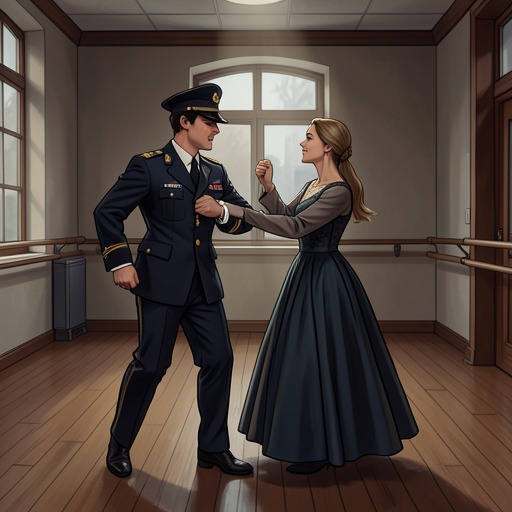
John asks Jane whether she thinks their story will have a happy ending as they begin moving to the music. Jane resists the pleasure of feeling his breath against her neck and answers that a happy ending appears only in a story that is not over yet. Her response does not promise reconciliation: it makes the possibility depend on whether their story remains unfinished.
The exchange takes place while their bodies are close and the dance is in motion. John turns Jane across the floor in a hot embrace, and they continue dancing. The contrast gives the line its charge: physical closeness persists, but neither character can treat that closeness as proof that the marriage has a future. The phrase holds desire and doubt together without resolving either.
From possibility to verdict
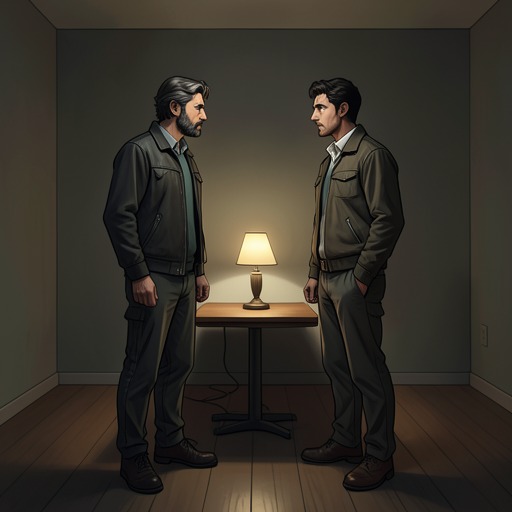
As the silence between them lengthens, each second in which John says nothing prompts Jane to add another second of silence of her own. The silence drives them apart; the truth between them is described as a sword severing their bonds without either needing to speak. Jane reads the answer in John’s eyes, and the earlier line’s open condition contracts into the blunt conclusion that there will be no happy ending.
That reversal gives the expression two distinct functions. During the dance, it frames an unresolved question about whether the relationship’s story is still in progress. After the silence has made the truth legible, it becomes an answer. The passage does not explain the underlying truth in this moment, but it establishes that Jane and John both recognize its force and that it has broken the intimacy the dance briefly sustained.
The dance ends
Jane cannot bear to remain in John’s arms, yet cannot free herself from them; John, too, seems unable to let her go. Their physical entanglement outlasts the words they can share. When the music stops, the people around them applaud and return to their tables, and the spell of the dance breaks. The narration marks their dance as finished, then insists on its finality: it is over forever.
John then tells Jane, in a cold, hard voice, that they can end it there or outside, but that, as far as he is concerned, this is it. Jane answers by demanding that he let her go. The exchange converts the dance’s uncertainty into an immediate confrontation: the line’s conditional distinction between a story still underway and one already finished has become a separation enacted between the two characters.
Meaning and narrative role
The expression is powerful because its form changes with the scene. It begins as a question, receives an answer that leaves room for continuation, and returns as a compressed negative verdict. The movement from a possible happy ending to no happy ending mirrors the scene’s movement from embrace to silence, and from shared motion to the dance’s abrupt end.
Yet the passage confines that finality to the moment it depicts. It establishes that Jane and John see no happy ending in the truth separating them and that John declares their relationship over; it does not, by itself, disclose what that truth is or settle what may happen beyond the scene. The phrase therefore holds a carefully bounded tension: it sounds like a definitive ending while retaining the larger story’s unanswered question of whether the couple’s story has, in fact, reached its end.