Bogotá
Mr. & Mrs. SmithBogotá is the setting of Jane Smith and John Smith’s first meeting, a city where political upheaval makes their chance encounter inseparable from danger. The violence that drives them indoors also creates the conditions for their romance; years later, the city returns in their memories as both the beginning of their life together and a measure of how much they risked by allowing themselves to love.
Setting and political violence
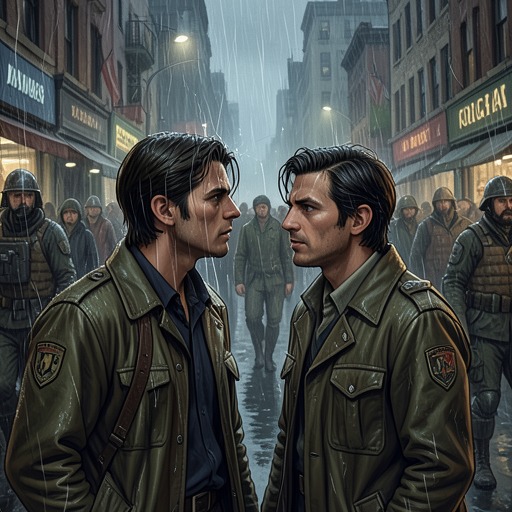
Six years before the later marital crisis, Jane was staying at the Americana Hotel in Bogotá on what she described as a routine work assignment. The city was already in turmoil: politicians were being killed, soldiers regularly stormed buildings, and police ransacked rooms. Jane knew that Sancho Varrón, known locally as the Barracuda, was a powerful politician who had controlled the region. When news spread that he had been shot, the streets erupted into panic. Jane made her way through the frightened crowd toward the hotel, wary of standing out as an American tourist despite her dark hair and fluent Spanish.
John’s account places him in the same hotel, there on business for his engineering firm. From the lobby bar, he watched the city’s upheaval as a bellboy rushed over with the news that the Barracuda had been shot. The accounts present the political crisis through both future spouses’ separate perspectives: Jane experiences the crowd as a threat to navigate, while John is initially sitting inside, watching events unfold. The Americana Hotel’s lobby becomes their point of convergence, a sheltered threshold between the violence outside and the encounter that will change their lives.
First meeting and escape
Jane noticed John at the bar as her eyes adjusted to the cool darkness of the lobby. He appeared calm as he watched the disorder outside, and she took him for an American businessman or tourist. His dog-eared copy of Let’s Go: South America, serving as a coaster, gave her another reason to imagine him as a traveler. The danger beyond the hotel gave their first encounter its unusual setting: they met not in a place insulated from events, but in a temporary refuge within a city in crisis.
That night, after the day’s unrest had given way to relative quiet, Jane and John slipped out of the humid hotel and ran through the streets in the rain. They held Spanish newspapers over their heads and hurried to a place Jane knew in a back street. There, John explained that Varrón had controlled the province for years; Jane observed that his killing made three murders that week. Their attempt to find shelter took them deeper into the city rather than away from it, and their conversation framed the violence as part of a larger pattern of danger.
A romance shaped by danger
Bogotá’s peril became part of the attraction neither Jane nor John could easily separate from the other. Jane later described herself as having been swept up by the danger and romance of the city, and by the intensity of the moment she let the enemy win what she had sworn never to surrender: her heart. John’s account of their first meeting likewise connects the city’s upheaval to the beginning of their relationship. The political crisis is not merely background; it gives their brief encounter the pressure of a shared escape and makes intimacy grow alongside risk.
The city’s violence also gave way, in their recollections, to moments of tenderness and play. Jane remembered a flower tucked behind her ear and understood how short-lived good things could be; the newspaper before her was filled with photographs of the previous day’s massacre, and she knew the place was no longer safe. John later recalled Jane laughing in her hotel room while shots rang out and agents crowded the corridors. That memory resurfaced during the couple’s later armed confrontation at home, when he watched her laugh amid the wreckage and could not look away. Bogotá thus persists less as a stable geographical portrait than as a store of sharply contrasting memories: beauty beside massacre, laughter beside gunfire, attraction beside the knowledge that danger was closing in.
Leaving the city, carrying its memory
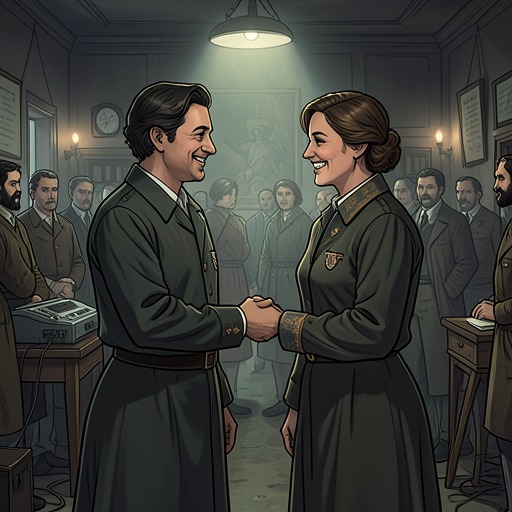
Jane’s work was finished, and she knew she should already have left. She and John eventually left Bogotá and flew home, but their departure did not end their connection: they kept in touch, frequently. A later account of their courtship shifts from escaping gunfire to wandering together through a crowd, sharing pink cotton candy and passing stalls selling food, crafts, games, and other diversions. The contrast gives their time after Bogotá a distinct shape: the city’s violence recedes, while the companionship first formed under pressure continues in ordinary pleasures.
Yet the city never becomes a closed chapter. Jane’s recollection of their meeting explains why falling in love complicated the life she had chosen, and John’s memory of her laughter there returns when their marriage is at its most violent and vulnerable. A teddy bear she won at a Bogotá fair also turns up in John’s house after an attack, its belly ripped open. The object links their shared past to the danger of their present: an affectionate souvenir is found damaged amid the consequences of their hidden lives.
Narrative significance
The novel gives Bogotá two related functions: it is the literal setting of the couple’s meeting and a remembered origin that later scenes repeatedly reactivate. Their separate accounts do not offer one detached overview of the city. Instead, Jane and John remember it through the circumstances that mattered to each of them—the political chaos, the hotel, the escape, and the beginning of a connection that neither could leave behind. This divided perspective makes the city part of the novel’s account of marriage: shared history exists, but it is carried in distinct, personal memories.
Bogotá also establishes an enduring contrast between the Smiths’ dangerous professional lives and their longing for ordinary intimacy. The memories move from a murdered politician and frightened streets to cotton candy and market stalls, then return to laughter under fire and a broken fairground bear. In this pattern, the city is at once a place they escaped and the place that made their later attachment imaginable. Its decisive significance lies in that double meaning: Bogotá begins their life together through danger, and remains the emotional landscape through which they understand both the tenderness and the threat in their relationship.