
The Crays at the Job Fair
Mr. MercedesThis thread follows Janice Cray and Patti from a desperate night in the City Center line to the brief acts of care that make their loss personal rather than statistical.
increasing Bearing strength in each event
 decreasing
Bearing strength in each eventdecreasingThe Early Birds
The Early Birds
Waiting for a Chance
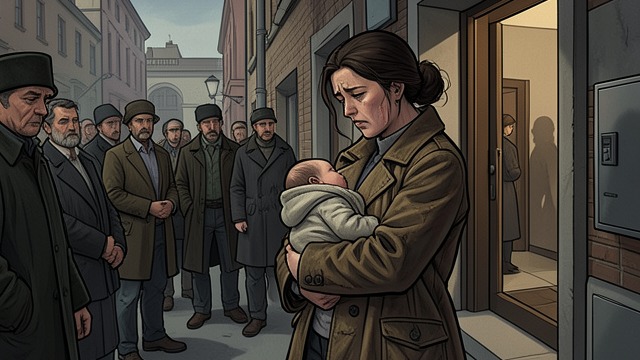
Janice Cray joins the overnight line outside City Center with her infant daughter, Patti, hoping to reach the promised jobs before the doors open. The recession has left her without housekeeping work, savings, or reliable childcare; bringing Patti is not a tactic but the only option she has.
Exposure and Shame
As the line grows, Janice worries that employers will see the baby and judge her as irresponsible. Her anxious jokes about apologizing for everything reveal how deeply she has absorbed the blame and suspicion directed at people who have fallen on hard times.
Augie Odenkirk hears her explanation and recognizes that her predicament is not a personal failing. The fair’s slogan promises solidarity and guaranteed jobs, while the people waiting outside must manage cold, exhaustion, and insecurity on their own.
A Shared Sleeping Bag
A Shared Sleeping Bag
Cold and Exhaustion
The damp grows heavier during the night. Janice falls asleep standing, and when Patti wakes crying, Janice discovers that the baby is wet and needs to be changed. The line offers no shelter, privacy, or practical support.
An Ordinary Act of Care
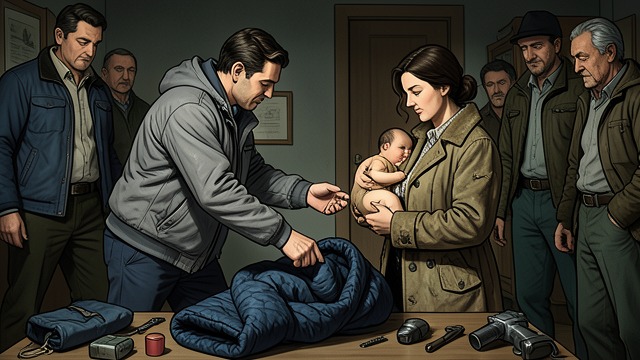
Augie opens his sleeping bag and gives it to Janice so she and Patti can get warm while he finds the diapers and lotion. His help is direct and unshowy: he does not promise that everything will be fine, but he makes the immediate situation safer.
Other applicants complain about the crying and suggest calling Social Services. Augie rebukes the men staring at Janice and stays beside her as she feeds Patti. For a few hours, a small act of kindness counters the humiliation surrounding them.
The Crowded Switchbacks

The Crowded Switchbacks
A Line Without Hope
At dawn, the crowd stretches beyond the taped switchbacks, and conversation gradually replaces the silence of the night. Augie imagines presenting himself and Janice as partners at the hiring tables, hoping that a united front might keep Patti from being read as evidence of irresponsibility.
The Car in the Fog
A gray Mercedes appears through the thick fog as the job seekers wait close together beside the auditorium doors. The driver accelerates toward the densest part of the crowd, turning a line formed by people seeking work into a space with almost no room to escape.
Augie tries to shield Janice and Patti with his own body. His last thoughts hold on to the ordinary breakfast he had imagined buying for Janice, a future that the attack removes before it can begin.
A Killer's Cruel Message
A Killer's Cruel Message
The Victims Reduced to Taunts
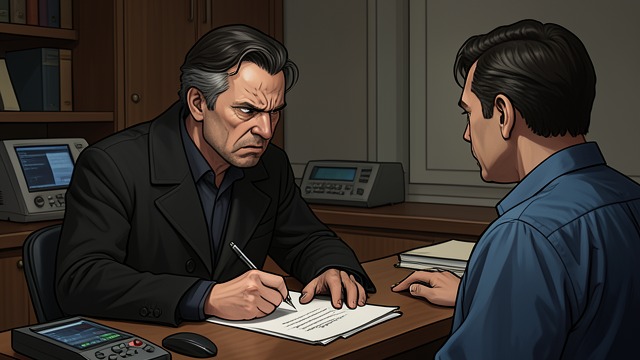
After the massacre, Brady Hartsfield writes to K. William Hodges and describes the deaths with deliberate contempt. He singles out Patti and Janice, turning the mother and baby into material for a boast about his own excitement and power.
Human Cost Behind the Headlines
The letter makes clear that the attack did not end with the immediate deaths and injuries. For the survivors and families, the victims remain people whose lives were interrupted; to Brady, their pain is proof of how completely he believes he can disregard others.
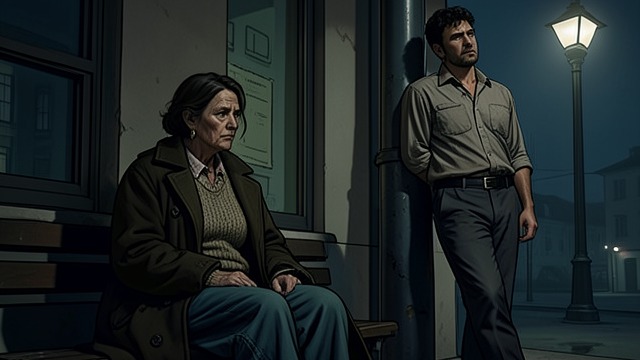
Hodges's later investigation repeatedly returns to the Crays. Remembering their names rather than treating them as anonymous casualties becomes part of his effort to reconsider both his past assumptions and the harm caused by the killer.
Names Behind the Numbers
Names Behind the Numbers
The Case Reopens
When K. William Hodges revisits the City Center case, the Crays are among the people whose deaths give the investigation its moral weight. He remembers his earlier assumptions about Olivia Trelawney and recognizes how quickly investigators can convert a complicated person into a convenient explanation.
A Measure of Responsibility
Hodges cannot undo the deaths of Janice Cray and Patti Cray, but he can refuse to let the perpetrator's account define them. Their story remains inseparable from the desperate job seekers who arrived that night hoping for ordinary work and a more secure life.
The thread therefore gives the case a human scale: the crime is not only a mystery to solve, but a deliberate destruction of people whose needs were already made more precarious by economic hardship.
Late night, April 9, 2009
About 2:45 a.m., April 10, 2009
Shortly before 5:30 a.m., April 10, 2009
In the months after April 10, 2009
After Hodges resumes investigating in 2010
