Mercedes Killer’s taunting letter to Hodges
Mr. MercedesThe Mercedes Killer’s taunting letter to Hodges is both a boast about the City Center massacre and the first decisive lead in Hodges’s renewed pursuit of the killer. Addressed to the retired detective at his home, it converts a private provocation into an investigation: the writer claims the identity of the Mercedes Killer, discloses facts the newspapers had not reported, and directs his attention toward suicide. Hodges’s response moves from recognition and suspicion to a firm conclusion that the letter is genuine. Its effect is consequentially double-edged: it threatens him, but also gives a former detective a renewed sense of purpose.
Delivery and Form
The letter arrives among ordinary mail at Hodges’s home, addressed to Det. K. William Hodges (Ret.) at 63 Harper Road. Its business-sized envelope is unusually thick, and it has no return address. Instead, the upper-left corner bears a grinning emoticon wearing dark glasses, a visual signature that distinguishes the message from the day’s routine circulars and makes the delivery feel deliberately personal.
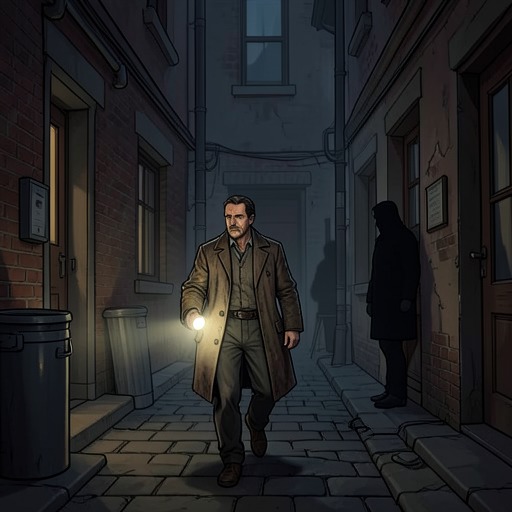
Hodges recognizes the significance of that mark before he has read the pages. He tears open the envelope so forcefully that it rips, spilling four pages printed in a computer font designed to resemble typewriting. The salutation identifies him directly as Detective Hodges. He silences the television to concentrate on the letter, shutting out the ordinary noise of the living room as the killer claims his attention.
The epistolary form brings the antagonist’s self-presentation directly into Hodges’s private space. The letter is not a neutral account: its author chooses what to confess, what to mock, and how to frame the crimes. Its apparent candor therefore has to be tested against the evidence. That tension between confession and manipulation drives Hodges’s reading, and gives the document force beyond its contents as a simple threat.
The Killer’s Claims
The writer begins by invoking Hodges’s career and reputation. He refers to the detective’s record of solving hundreds of cases and to praise from his longtime partner, Pete Huntley, who described him as a combination of methodical police work and intuition. The compliment is a calculated prelude: the writer argues that, if Hodges deserves that reputation, he will already have understood that the sender is one of the few criminals who escaped him.
He then claims the names used for the culprit, including the Joker and the Clown, but says he prefers the press’s label, the Mercedes Killer. He connects himself to the deliberate attack on the job-fair crowd at City Center, which killed eight people and injured many others, and taunts Hodges with the possibility that the unsolved crime remained on the detective’s mind at his retirement ceremony. The letter thus turns Hodges’s professional failure into a point of personal leverage.
The account also supplies details about the attack that distinguish it from a general boast. The writer says he wore a hairnet beneath the clown mask and used bleach, and describes remembering the collision and the Mercedes passing over victims. He treats the deaths and lasting injuries as sources of gratification, presenting himself as someone who lacks the conscience that restrains ordinary people. The account is the killer’s own version, shaped to shock and provoke; its assertions matter not as detached testimony but as claims Hodges must compare with what investigators know.
A Confession Tested Against Evidence
Hodges initially considers whether details in the letter could have been invented or gleaned from public reporting. The writer’s references to a condom, the seatbelt locking, and the car’s movement might be accurate, but accuracy alone does not establish that the sender was present. The letter even anticipates doubt by asserting the power of its author’s imagination, leaving Hodges to separate plausible performance from information only the killer could possess.
Two particulars change the balance. Hodges knows that investigators withheld the hairnet and the use of bleach from the news media. The hairnet helps explain why forensic examination of the abandoned clown mask found no hairs, while the bleach is consistent with the investigators’ knowledge that it had been used. These details are more than colorful additions to the boast: together, they connect the writer’s narrative to nonpublic facts of the case.
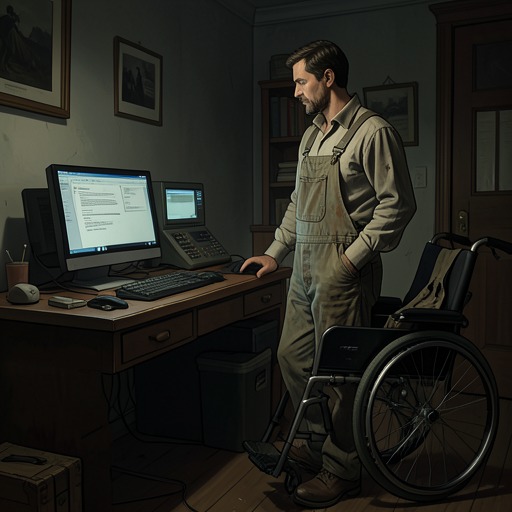
Hodges writes the two clues on a yellow legal pad beneath the question of whether the letter is real. After considering them, he records his conclusion and revises its wording from a neutral identification to an angry description of the culprit. That small change marks a shift from assessment to commitment. He no longer treats the letter as merely a possible hoax: he believes the Mercedes Killer has contacted him directly.
Threat and Consequences
The letter’s challenge is not confined to the original massacre. Hodges recognizes an implied invitation to kill himself, aimed at a man the writer understands to be already vulnerable to suicidal thoughts. He wonders whether the sender has watched him handling his father’s .38 revolver, including putting it in his mouth. Hodges acknowledges that he has not drawn the shades and could have been observed, though he also thinks that Jerome Robinson would have been alarmed and spoken up if he had witnessed it.
The letter’s attack on Hodges’s state of mind does not produce the outcome its writer appears to desire. Before falling asleep, Hodges reflects that the message has given him a reason to live, at least for a while. He sleeps well and wakes to a morning in which he cooks a full breakfast. The contrast gives the letter an unexpected consequence: a communication designed to unsettle and possibly destroy its recipient instead reawakens his capacity for action.
That renewed purpose develops into investigation. Hodges considers the possibility that Olivia Trelawney’s personal papers may contain correspondence from the man who contacted him, and he pursues the lead despite knowing that he is no longer a police officer and that withholding evidence carries legal consequences. He thinks of turning any progress over to Pete Huntley, but initially continues on his own. When Janelle Patterson offers him an eight-week private-investigation job at five thousand dollars a week plus expenses, he sees work beyond the passivity of retirement; the killer’s letter is central to the reason he wants to take it.
The correspondence also establishes a continuing connection between the killer and Hodges. Later, while logged on to Debbie’s Blue Umbrella, the killer sends Hodges the explicit threat, “I’m going to kill you. You won’t see me coming.” The threat intensifies the personal conflict first initiated by the mailed letter. After a woman is killed and Hodges’s car is blown up, Hodges is questioned by Pete Huntley in Interrogation Room 4 about whether the events are connected to the Mercedes Killer; the investigation begun by the letter has moved into consequences that affect his personal life as well as his former professional identity.
Narrative Significance
The letter functions as a plot catalyst because it supplies both a personal summons and a testable lead. Its author tries to control the terms of the encounter, presenting himself as triumphant, remorseless, and beyond ordinary restraint. Yet the deliberate inclusion of the hairnet and bleach gives Hodges a way to challenge that performance with evidence. The killer’s display of power therefore contains the means by which the detective recognizes him as a credible suspect.
Its emotional pressure is similarly unstable. The sender’s apparent effort to exploit Hodges’s despair instead interrupts the aimlessness of retirement and calls his investigative skills back into use. The letter cannot resolve the mystery or end the danger; it begins a contest in which the killer has made himself known, but not yet reachable. Its decisive consequence is that Hodges, no longer content to sit apart from unfinished cases, starts moving toward the man who wanted him to give up.