Event 1
Ren成为Caleb的管家
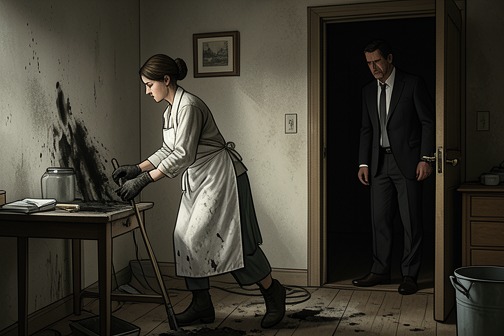
[Ren Sheppard Chase](entity:character-recall-character-ren-sheppard-chase-0dac65e85033) becoming [Caleb Chase](entity:character-recall-character-caleb-chase-ade666a306b4)'s housekeeper is the first sustained bond between them and the practical arrangement that redirects both their lives. Ren needs work to remain in the [Walker Pack](entity:organization-recall-organization-walker-pack-dff1b832b518), while Caleb needs someone willing to confront the disorder of his isolated house; Alpha Walker turns those needs into an assignment. The job initially looks like a protective compromise and an unwanted intrusion, but Ren's cleaning, cooking, emotional steadiness, and insistence on treating Caleb as a person gradually convert a hostile workplace into a shared home and the beginning of their relationship.
## Causes and Background
Ren approaches the job under extreme pressure. After [Shane Sheppard](entity:character-recall-character-shane-sheppard-e189bdddda3a)'s death in [the cliff](entity:location-recall-location-c0cf92839dca) incident, the community assumes that Ren caused it, although her account is that Shane stalked and terrorized her, followed her to her trailer, and threw himself at her when she ran from him. She therefore arrives at Caleb's house carrying both the danger of homelessness and the stigma of being treated as a killer. Alpha Walker has warned that failure to obtain the position will mean banishment, leaving Ren without Walker's protection and vulnerable to the Sheppard family. The assignment is consequently not ordinary domestic employment: it is a condition of Ren's continued safety and pack membership.
Ren's situation is complicated by her Baneblood background. When Caleb asks what pack she comes from, Walker identifies the Banebloods but immediately insists that Ren is unlike them, describing her as sweet and innocent. The distinction matters because Ren is being judged through both family reputation and the accusation surrounding Shane's death. She needs the position to establish a place in the Walker Pack, while the pack needs a controlled way to keep her out of town and away from those who might harm her.
Caleb is an unwilling employer. He has recently returned from the feral state and is still struggling to bring his mind under control. His house is filthy, badly scented, and neglected, while his studio is a private space he resents Ren entering. Alpha Walker nevertheless refuses to let Caleb cancel the arrangement: the house needs cleaning, Ren needs a job, and Walker is paying her. Walker also makes clear that Caleb cannot fire her. The job is thus imposed through Alpha authority, but it is justified by an immediate practical need and by Walker's protection of Ren.
## The First Appointment
Ren reaches the farm-style house at twelve-oh-eight for an interview scheduled at noon. She knocks repeatedly, calls for Mr. Chase, and refuses to leave before securing the job because she promised Alpha Walker she would persist. Her fear is visible in her private effort to calm herself, yet she continues up the steps and presents herself as determined rather than helpless. The closed door and silence make the appointment feel like another test of whether she will be allowed a place in the community.
When Caleb finally confronts her, Ren introduces herself as his new housekeeper and explains that Alpha Walker sent her to discuss his schedule. Caleb does not accept her offered hand, and his suspicion is sharpened by finding her in his studio. Ren responds by refusing to retreat into embarrassment. She comments on the paintings, the bathroom, and the house, then announces that she understands artists' need for privacy and will stay out of the studio unless invited. Her bright chatter is partly a defense against fear, but it also becomes her method of taking control of an encounter Caleb expects to dominate.
Ren immediately outlines a work plan rather than waiting for Caleb's approval. She will clear the house, organize the laundry, sort the dishes, clean the kitchen, and proceed to the bedrooms, bathrooms, and study. When Caleb gives only a nonverbal affirmative, she takes his hand herself, overcoming the awkwardness of his earlier refusal. She then explains that she cooks for her grandmother, [Lacy Baneblood](entity:character-recall-character-lacy-baneblood-b967c13d1e72), on Thursdays, Sundays, and Tuesdays, with Yolanda covering the other days. Her rapid account joins paid labor to family care and shows that housekeeping is already part of how she sustains the people around her.
## Caleb's Resistance and the House's Transformation
Caleb initially tells Walker to call Ren and cancel the job. His stated objection is that he does not want her in the house, but his reaction is more complicated than simple irritation. He had been amused by her determination and by the way she pasted on a smile and pushed through his hostility. Her presence also unsettles him physically and emotionally, especially after she takes his hand. The job exposes a disorder Caleb has been avoiding, including dirty underwear, an empty refrigerator, and a living space he has allowed to become uninhabitable.
Walker rejects Caleb's attempt to solve the problem by paying Ren not to come. The job is not primarily about money; it is about keeping Ren in the pack and safe. Walker has no other suitable work for her and cannot place her in town, where the pack will not accept her. Caleb is therefore made responsible for the arrangement even though he believes the answer should be no. His house becomes the point where pack protection, employment, and Caleb's own isolation intersect.
Ren's first day changes the meaning of the house. Caleb later notices that she has removed dust from the mantel, arranged old picture frames, placed flowers in a vase in the entryway, cleaned the stained throw rug, and made the rooms visibly cared for. The transformation is modest in physical scale but decisive in emotional effect: Caleb recognizes that Ren has made the place he built with his own hands into a home. Her labor does not merely erase dirt. It restores signs of habitation, memory, and welcome to a space that had reflected his withdrawal.
## Work as Care and the Growth of Trust
Ren's housekeeping is inseparable from emotional labor. She maintains a cheerful manner when Caleb is intimidating, fills silences with conversation, avoids judging his damaged condition, and keeps working even when her own fear is active. Her cooking and cleaning give her a concrete role, but the role also creates repeated, low-pressure contact in which Caleb can observe her steadiness. She does not demand immediate confession or intimacy; instead, she makes ordinary life possible around him.
The effect on Caleb is gradual. He discovers a calm he has not felt since his trauma and realizes that Ren's open kindness is partly responsible. She has shown him compassion without treating him as a monster, does not lose her temper unless he becomes aggressively unpleasant, and makes conversation easier. He still refuses to pour out his heart, but he likes listening to her view of life. Her history includes abuse, near-fatal danger, and continuing threats from other males, yet she remains easygoing and happy. The contrast makes her care an active strength rather than evidence of naivety.
Ren also faces the social consequences of her reputation while doing the work that is supposed to secure her place. At the grocery store, Mary Fen calls her a killer as a group of women surrounds her and traps her against the milk refrigerator. Ren denies the accusation but is visibly frightened and expects the confrontation to become physical. [Cole Chase](entity:character-recall-character-cole-chase-9b9ad646b1fc) intervenes, insults the women, invokes the possibility of Alpha Walker hearing about the incident, and positions Ren as someone worth defending. The housekeeping job therefore operates within a larger network of protection: Ren's work gives her a place, while Caleb's household and the Chase family help make that place survivable.
## From Employment to Shared Life
The job does not remain a simple employer-worker relationship. Ren eventually lives with Caleb, and their domestic routine expands beyond cleaning into shared meals, sleeping arrangements, showers, sex, and daily companionship. By the time Ren describes them as friends who have sex, the arrangement has become emotionally unstable for her precisely because Caleb cares for her and she likes being cared for too much. The house that began as Caleb's unwanted workplace has become the setting of mutual dependence, even while neither character is initially willing to name the bond fully.
Caleb's care becomes more visible in small acts. When Ren is exhausted and tense after returning with suitcases, he tells her to eat the dinner she cooked, take a bath, and sleep, then touches her cheek before locking the house behind him. The gesture retains his gruff manner but reveals a shift from merely tolerating her presence to monitoring her wellbeing. Later, when Ren connects with Lacy during Lacy's final moments, Caleb gathers Ren into his arms, comforts her, and accepts that Ren's Knowing is loving and peaceful rather than intrusive. He concludes that Ren is his and that he owes her a part of himself, indicating that domestic care has become a moral obligation in his understanding of their bond.
Ren's labor is eventually recognized as more than service. Caleb praises her cooking, baking, knitting, quilting, cleaning, gun maintenance, and peach pie, while Ren insists that she is not merely a cook, maid service, or sexual partner but a person with feelings. His response marks an important correction: the relationship must acknowledge her capacities and emotional claims rather than absorbing them into the convenience of the household. The original job gives Ren access to Caleb, but her insistence on being fully seen prevents the arrangement from reducing her to useful labor.
## Consequences and Significance
The housekeeper assignment produces a chain of reversals. Ren begins as a threatened outsider who may be banished, stigmatized, and left at the mercy of the Sheppard family. Caleb begins as a traumatized, isolated man who rejects both visitors and domestic order. Through repeated work and contact, Ren gains practical safety, while Caleb regains a sense of peace and discovers that his house can hold affection rather than only grief and disorder.
The arrangement also complicates the novel's treatment of fate. Ren later realizes that Caleb's previous relationship did not possess the same complete bond she feels; Caleb has two animals, and the absent bear had not recognized his former mate in the same way. Ren's housekeeping therefore precedes the revelation of their fated connection and gives the bond a material foundation. Before mating language, possessive claims, or formal ceremony, there are clean rooms, organized laundry, food, protection, conversation, and the difficult practice of making space for another person.
By the formal mating ceremony, Ren's happiness is attached not only to the lavish event, her white dress, or the presence of the pack. She understands that Caleb is giving her something she did not know she needed: a publicly affirmed life in which she is loved and belongs. The domestic employment that began as Alpha Walker's coercive solution has consequently become the first structure of that belonging. It joins survival to care, care to trust, and trust to the chosen household Ren and Caleb ultimately make together.
Event 2
Tully Graves失踪与暴风雨救援

The disappearance of [Tully Graves](entity:character-recall-character-tully-graves-8ce7e459328f) and his rescue during the approaching storm is a crisis that tests both [Caleb Chase](entity:character-recall-character-caleb-chase-ade666a306b4)'s damaged abilities and Ren Sheppard's courage. What begins as a request for Caleb's tracking help becomes a rescue led by Ren: despite fear, traumatic memories, and dangerous weather, she follows a child's whimper, finds Tully clinging to a tree, and brings him back alive. The event also marks a change in Caleb, whose decision to take part in the search and whose immediate care for Ren reveal that he is beginning to live and protect others again.
## The Missing Child and the Approaching Storm
The emergency is introduced through [Cole Chase](entity:character-recall-character-cole-chase-9b9ad646b1fc), who arrives seeking help because a four-year-old boy, Tully Graves, is missing while a severe storm is approaching. Caleb Chase understands the danger but initially refuses to track. Cole's wolf is the stronger scent-tracker, and Caleb believes that Cole already has most of the Enforcers and much of the pack searching, creating too much interference for an effective effort.
Caleb's refusal is not simple indifference. He can use his bear to track, but his wolf is only weakly present, and he feels stirrings that make relying on both animals unsafe. The request therefore touches the condition that has kept him withdrawn: helping would require him to place his damaged dual-animal nature in the forefront. He tells Cole that he cannot do it anymore, even while the approaching storm and the thought of a frightened child produce guilt.
Ren's response changes the pressure of the scene. She reminds Caleb of their agreement that he will try harder with people, presenting Tully's danger as the exact chance to act on that promise. Her appeal combines personal disappointment with practical compassion: shifter children may be strong, but a small child exposed to the storm can still be hurt. She also invokes Caleb's reputation as an exceptional tracker, urging him to become the person others already believe him to be. Caleb finally agrees to try for two hours, establishing a limited commitment that nevertheless moves him toward the search.
## Ren Enters the Search
The rescue becomes Ren's ordeal when she leaves Caleb's house and encounters the storm directly. Thunder, heavy rain, and the darkness of the weather intensify her fear, while the wrong path causes panic to nearly overwhelm her. She regrets leaving Caleb's house because she knows that her memories are beginning to flood back and that she may lose control. The storm is therefore both an external threat to Tully and a pressure that threatens to reopen Ren's own anguish.
A crucial turn comes when Ren hears a whimper to her right and recognizes that it is not her own. That distinction interrupts her panic. She calls out and moves toward the sound, becoming suddenly focused rather than running blindly from fear. Her wolf's presence helps calm her as she crosses the rain-soaked ground, leaps over a fallen log, and continues despite being drenched and struggling to hear through the pounding storm.
At the base of a huge tree, Ren finds Tully: a tiny, huddled figure clinging to the trunk. Recognition brings shock and relief at once. The child is terrified, with wide, unblinking blue eyes, and initially snaps at Ren when she reaches for him. Ren does not retreat. She begins planning how to get him to safety, realizing that Caleb's house is closer and that she can reach it quickly if she runs at full speed.
## The Return to Safety
Ren carries the rescue from discovery to action by bringing Tully through the storm toward Caleb's house. She reaches the steps as Walker is arriving at the door and calls to him, then rushes inside with the child. Her first words concern Tully's immediate condition: he is freezing and needs to be warmed. The urgency of that response shows that Ren's attention has shifted completely from her own fear to the child's physical safety.
Inside, Ren works almost automatically. She wraps Tully in an afghan and concentrates on warming him, no longer thinking about Shane, the storm, or her anguish. The rescue does not erase her fear; rather, it gives that fear a direction and prevents it from controlling her. The child survives because Ren converts a moment of terror into practical care, while Walker and the wider search effort can take over once she has brought Tully to shelter.
The aftermath reveals the cost of the effort. Ren is so exhausted that her adrenaline crashes, and she later realizes that she is in Walker's truck. Walker takes her home, orders her to have a hot shower and go immediately to bed, and explicitly thanks her for saving the boy. Ren is too shocked and exhausted to respond. Only after reaching her trailer and lying down does the enormity of what happened begin to affect her.
## Consequences for Caleb and Ren
The immediate consequence is Tully's recovery, but the event's deeper effect falls on Caleb and Ren. Ren has acted successfully while exposed to the storm, disorientation, and returning memories. She does not win by becoming fearless; she succeeds while afraid, and her focus arrives through hearing that the cry belongs to someone else. Her rescue demonstrates a capacity for decisive protection that she had not been able to access at the beginning of the crisis.
Caleb's development is equally important. Ren later reflects that the lonely, gloomy, angry man she first met is changing and trying to live again. His agreement to search, his concern about the approaching weather, and his protective response after Ren returns all distinguish him from the man who initially refused to help. The event consequently becomes evidence that his recovery is relational rather than private: Ren's challenge draws him outward, and his care for her after the rescue confirms that he is learning to protect rather than remain isolated.
The rescue also strengthens the bond between Ren and the pack. Walker recognizes the magnitude of her action and expresses gratitude on behalf of the pack, while Ren's return with Tully transforms her from a frightened outsider facing her own history into someone whose courage directly preserves a child's life. The storm threatens to destroy, confuse, and expose; Ren's movement through it produces the opposite result, bringing the missing child back into human and pack protection.
## Narrative Significance
Structurally, the event follows a compressed ordeal pattern: a call for help, a refusal rooted in damaged power, an emotional summons from Ren, entry into hostile conditions, recognition of the endangered child, and a return carrying life back to shelter. Its decisive value shift is from fear and threatened loss to rescue and renewed connection. The search therefore matters not only because Tully is found, but because the crisis changes what Caleb and Ren can do for one another and for the community around them.
The event also makes vulnerability the source of action. Tully is small, freezing, and terrified; Ren is frightened, exhausted, and at risk of being overwhelmed by memory; Caleb is physically and emotionally uncertain about the abilities that once defined him. None of them is presented as untouched by danger. Protection emerges instead through cooperation, insistence, and attention: Cole asks for help, Ren forces Caleb to reconsider, Ren hears Tully's cry, Walker receives them, and Caleb's household becomes the nearest place of safety.
By the time Ren lies in her trailer, the rescue has become a private revelation as well as a public success. She knows she has saved a little boy, but what moves her most is what Caleb's conduct signifies. The child has been recovered from the storm, while Caleb has taken a further step back toward life. In that parallel, the rescue becomes a hinge in their relationship: an external emergency exposes an internal transformation, and Ren's courage helps make Caleb's change visible.
Event 3
Ren与Caleb成为朋友
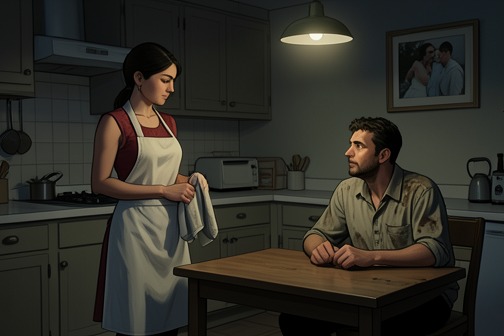
Ren and Caleb become friends through a wary, uneven process in which domestic care becomes the first language of trust. Ren arrives as Caleb’s new housekeeper, but her insistence on treating him as a person rather than an inaccessible artist gradually changes both the atmosphere of his house and Caleb’s understanding of what companionship can offer. The friendship is therefore more than a pleasant improvement in their routine: it is the first movement from guarded survival toward mutual recognition, and it later becomes the emotional foundation for their sexual relationship and love.
## A Difficult First Meeting
Ren introduces herself with determined brightness, identifying herself as Caleb’s new housekeeper and explaining that Alpha Walker sent her to discuss his schedule. Caleb responds with suspicion and refuses her offered hand, while Ren continues speaking, promising that she will respect his artistic space and enter it only when necessary. Her outward ease is deliberate; beneath it, she recognizes that he will require patience and resolves not to be intimidated by his hostility.
Her first plan is practical and specific. She intends to clear the house, organize the laundry, sort the dishes, clean the kitchen, and then move through the bedrooms, bathrooms, and study. The work gives her a legitimate reason to remain near Caleb without demanding emotional access from him. At the same time, her rapid conversation and cheerful observations about his paintings, bathroom, and home prevent the meeting from becoming a silent confrontation. Ren performs confidence as a form of emotional labor, using movement, talk, and courtesy to make contact possible before Caleb is ready to reciprocate.
## Care That Makes a House a Home
The decisive shift begins in the physical environment. Ren’s cleaning does not merely remove dirt; it restores visible signs of inhabitation. She places old picture frames on the mantle, sets flowers in a vase in the entryway, and cleans a stained throw rug that Caleb had planned to discard, then drapes it across the sofa. Caleb recognizes that she has made the house he built with his own hands feel like a home, achieving something his former mate never had.
That transformation changes the value of Ren’s labor. It remains paid domestic work, but it also becomes an intervention in Caleb’s emotional world. The ordered rooms, preserved photographs, flowers, and rescued rug confront the deadened space produced by his withdrawal. Ren’s care does not erase his grief, and she does not initially understand how deep that grief runs, but it gives him a reason to notice the present. Her household labor becomes the material form of an invitation: life can still be arranged, shared, and inhabited.
## The Conversation That Establishes Friendship
The friendship is explicitly negotiated after Caleb discovers Ren cleaning among portraits of his former mate. Furious, he demands to know what she is doing, and Ren answers that she is doing her job before nervously asking whether they can be friends. Caleb’s response is reluctant rather than sentimental. He says that he is not nice and would never cry, mocks her habit of talking to herself, and points out that she reveals too much about herself. Yet he eventually agrees, acknowledging that Walker and Cole told him about her abusive ex and expressing regret for what happened to her.
Ren then makes friendship reciprocal by refusing to flatter Caleb’s self-destruction. She tells him that his former mate has moved on and that obsessively painting her is neither mentally nor emotionally healthy. Her proposed rules are direct: he must stop painting the former mate, leave the studio more often, and talk more. Caleb understands the logic well enough to finish her sentence when she calls his isolation unhealthy. The exchange matters because Ren does not approach him solely as a wounded man who must be handled gently; she treats him as a friend who can be told an uncomfortable truth.
Caleb finally explains why ordinary advice about moving on has failed. He says that he and his former mate were bonded mentally, emotionally, and spiritually, so losing her felt like having part of himself ripped away and left bleeding. Ren compares that loss to someone dying, and Caleb accepts the comparison. He also reveals that his wolf once became uncontrollable after the bond was broken, but that Walker found him and his wolf has since remained weak and silent. Caleb is surviving by suppressing part of himself rather than risking another feral state. Ren responds with understanding, recognizing the sadness of a recovery that requires him to kill off a portion of his own nature.
The scene closes with an ordinary offer that carries unusual weight. Ren asks whether Caleb wants cookies and milk or coffee; he chooses milk and jokes that he is a growing shifter. The exchange converts a painful confession into shared domestic routine. Ren identifies Caleb as her first friend, while Caleb’s small smile and willingness to remain with her show that the bond has become mutual even though he cannot yet express it easily.
## From Friendship to Intimacy
The friendship produces a noticeable change in Caleb’s daily life. He wakes with an unfamiliar sense of peace, makes his bed for the first time in more than a year, and takes a long hot shower. He concludes that the calm is connected to Ren and to her open, easy kindness. She has shown him compassion without judgment, does not lose her temper unless he becomes deliberately difficult, and makes conversation easier. Caleb still refuses the vulnerability of pouring out his heart, but he likes listening to Ren and hearing her view of life.
Ren’s presence also alters the structure of their relationship. They eventually live together, sleep together, share showers, and have sex after agreeing to be friends who have sex. The arrangement gives Ren happiness because Caleb is attentive, protective, sweet at times, and capable of meeting her sexually, but it also creates pain because she likes him too much for the arrangement to remain emotionally neutral. Friendship thus functions as both shelter and delay: it permits closeness while allowing Caleb and Ren to postpone naming the love that has begun to organize their lives.
## Recognition, Dignity, and the Friendship’s Legacy
The friendship’s deepest test comes when Ren fears that Caleb compares her unfavorably with another woman. She insists that she is happy to be herself and that failing to love her would be his loss. Caleb rejects the comparison with unusual urgency, telling her that she is wonderful, gorgeous, funny, and intelligent. He names the concrete abilities that make her valuable to him: she can cook nearly every dish, bake, knit, quilt, clean a gun, and make an exceptional peach pie.
Ren immediately insists that she is more than cooking, maid service, or a sexual convenience and reminds him that she has feelings. Caleb answers that he knows this. The exchange exposes the tension already present in their friendship: Ren’s care has made her indispensable, but she still needs to be recognized as a full person rather than valued only for what she does. Caleb’s defense begins to supply that recognition, even if his emotional speech remains incomplete.
As an event, Ren and Caleb becoming friends marks a positive value shift from isolation and distrust to companionship and tentative healing. Ren’s persistence gives Caleb access to ordinary life, while Caleb’s acceptance gives Ren a relationship in which her openness and practical skills can be received rather than exploited. Their friendship does not solve grief, trauma, or fear, but it creates the conditions in which both can change. The first shared drink of milk, the cleaned rooms, the difficult rules, and the later demand for emotional recognition all belong to the same arc: care becomes trust, trust becomes intimacy, and intimacy makes a more honest love possible.
Event 4
Caleb重返执法队伍
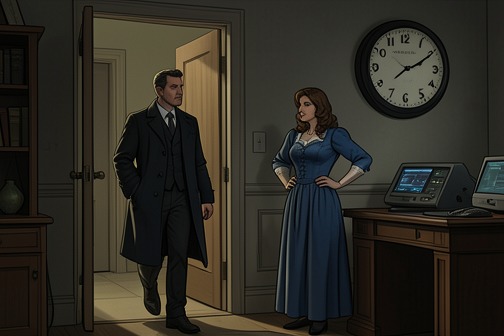
[Caleb Chase](entity:character-recall-character-caleb-chase-ade666a306b4)’s return to the [Enforcer headquarters](entity:location-recall-location-enforcer-fc5d0cc4bb60) is the moment when his concern for [Ren Sheppard Chase](entity:character-recall-character-ren-sheppard-chase-0dac65e85033) becomes an organized act of protection. He does not come back because his own recovery is complete or because he has decided to resume his former life. He comes because Ren is vulnerable, the [Sheppard brothers](entity:character-recall-character-sheppard-brothers-e1ba130dc417) remain a threat, and the people responsible for protecting the pack are not doing enough. His intervention restores neither his title nor his old routine, but it reactivates the authority, loyalty, and moral purpose he had once associated with the Enforcers.
## Causes and Background
Caleb’s decision follows an unexpected morning of emotional relief. He wakes smiling, happy, and relaxed, feelings so unfamiliar that he spends nearly an hour wondering whether he might finally be healing. The peace does not remain private for long. His thoughts turn to Ren, and the happiness becomes anxiety when he imagines her alone in Ren’s trailer while the Sheppard brothers threaten her safety. The shift from contentment to anger is immediate: Caleb cannot accept that a female in the pack should have to worry about being attacked when the pack’s males are expected to protect them.
That expectation is framed as a communal duty rather than merely Caleb’s personal jealousy. Caleb recognizes Ren’s strength; she has already demonstrated it by running through a storm to save [Tully Graves](entity:character-recall-character-tully-graves-8ce7e459328f). Yet he also knows that her strength cannot guarantee her safety against four male attackers. His reasoning combines affection, pack law, and a practical imbalance of physical power. Ren should be safe, he believes, not because she is helpless, but because the males who possess greater strength have an obligation to prevent that strength from becoming a threat.
The danger is intensified by Ren’s continuing trauma. The memory of [Shane Sheppard](entity:character-recall-character-shane-sheppard-e189bdddda3a) Chase pursuing her and falling over [the cliff](entity:location-recall-location-c0cf92839dca) remains an intrusive nightmare that leaves her panting and struggling to separate memory from distortion. Storms repeatedly return her to that night: she runs through rain without a car because she needs to reach home before the weather breaks, and later wakes terrified when something strikes the side of her trailer and howls outside. These episodes make the question of patrols concrete. Ren is not facing an abstract possibility of danger; her body and mind are already organized around the expectation that pursuit may begin again.
## What Happens at the Headquarters
Caleb drives toward the town and the Enforcer headquarters with his temper rising. The building is filled with more males than he expected, yet they are sitting at desks, chatting, and relaxing even though he remembers Walker complaining that the force needs recruits. The contrast between apparent manpower and inadequate protection enrages him. Caleb sees [Cole Chase](entity:character-recall-character-cole-chase-9b9ad646b1fc) emerge from his office and resists the urge to leave, reminding himself that he once belonged there and once led these males. Embarrassment and estrangement are present, but he pushes through them because his immediate purpose is to protect Ren.
He challenges Cole directly, asking why the Enforcers are relaxing instead of patrolling and why nobody is stationed near Ren’s home on a Saturday when she is alone. When Cullen dismisses the concern by saying that the Enforcers have already spoken to the Sheppard brothers, Caleb rejects conversation as a substitute for enforcement. His anger is directed not only at the threatened men but at institutional complacency: the Enforcers are supposed to be outside, making it impossible for people such as the Sheppard brothers to act without consequence.
Caleb’s former command voice returns in full force. He acknowledges that the unit is short-staffed, but insists that this cannot excuse leaving Ren exposed. He reminds the group that shifters can work longer and harder than human males and that he knows the demands of the job because he was once one of them. His threat to tear apart anyone whose negligence allows Ren to be hurt is extreme, yet it shows how completely his private fear has been translated into a public demand for accountability.
The decisive order comes when Caleb insists on regular patrols around Ren’s section, even if someone must work a triple shift. He specifically invokes Ren’s rescue of Tully Graves as something that has earned her the pack’s protection. More importantly, he declares that she is under his protection and therefore part of the pack, regardless of whether other members believe she belongs. He tells every Enforcer to protect her and warns that anyone who leaves her unguarded will answer to him. The language converts Ren from an outsider requiring exceptional attention into a recognized member whose safety is a collective obligation.
## Caleb’s Relationship to the Enforcers
The headquarters scene is shaped by a double movement of return and refusal. The Enforcers recognize Caleb, and Cole tells him that it is good to have him back. Halloran likewise insists that Caleb is still one of them. Their responses reveal that Caleb’s social bond with the group has survived the collapse of his former life. The old comrades do not treat him as a complete stranger; they still see the leader and friend he once was.
Caleb refuses the institutional interpretation of the encounter. He states that he is not back anywhere and that he is happy where he is. This denial matters because his actions look unmistakably like a return: he enters the headquarters, evaluates the unit, gives orders, invokes its standards, and threatens consequences for failure. The episode therefore distinguishes between returning to a place and recovering an identity. Caleb will not simply resume his former position, but he can still act according to the values and skills that position gave him.
His criticism also contains an unexpected acknowledgment of the Enforcers who are carrying the workload. He accepts that the unit is short-staffed and recognizes that Cole and [Trey Chase](entity:character-recall-character-trey-chase-eefb283e30cc) are doing more than their share. His anger is not blind contempt for his former colleagues; it is a demand that their responsibilities match the danger facing Ren. The force’s welcome and Caleb’s hostility coexist, producing a scene in which belonging is expressed through confrontation rather than comfort.
## Consequences and Aftermath
Caleb leaves without formally rejoining the Enforcers. He does not answer the friendly farewell shouted after him, and his departure preserves the boundary he has drawn between his present life and the institution he once served. Yet the encounter changes his relationship with that past. He has entered the headquarters he wanted to avoid, confronted the people who once worked beside him, and made them act on a duty he still considers sacred.
The immediate consequence is an expanded protective structure around Ren. Caleb’s demand places her home within more regular patrol coverage and makes her status explicit: she is under his protection and, through that protection, belongs to the [Walker Pack](entity:organization-recall-organization-walker-pack-dff1b832b518). His intervention also makes the Sheppard brothers’ threat a matter for the community rather than a danger Ren must manage alone. The protection order is both practical and symbolic, joining physical surveillance to social recognition.
The emotional consequence falls on Caleb himself. He drives away still claiming that he has not returned, but he is smiling, and the feeling is described as good. The smile signals a limited restoration. He has not recovered everything he lost, and he has not accepted the old job as his future, but he has recovered the capacity to act with conviction among people who once mattered to him. His return is thus a controlled reentry into a damaged identity: he refuses the institution’s claim on him while reclaiming the part of himself that can defend others.
## Narrative Significance
The event reverses the usual pattern in which institutional duty competes with intimate attachment. Caleb’s concern for Ren does not pull him away from public responsibility; it drives him back toward it. His private bond becomes the catalyst for communal action, while Ren’s earlier rescue of Tully Graves supplies the ethical justification for that action. Protection is not presented as a favor granted to a desirable outsider but as a reciprocal obligation owed to someone who has already risked herself for another member of the community.
The episode also places recovery beside responsibility. Caleb’s morning happiness suggests that he may be healing, but his first sustained movement toward the outside world is not self-focused. He tests his restored strength by confronting the Enforcers, and the confrontation gives that strength a purpose. His return follows the shape of a partial homecoming: he crosses back into the old headquarters, faces the shame and memories associated with it, and leaves with a renewed sense of efficacy, but he declines a simple restoration of the past.
Most significantly, Caleb’s command changes the meaning of Ren’s isolation. Her trailer, storms, nightmares, and fear of renewed pursuit have made safety feel like something she must reach by running or endure by hiding. Caleb answers that condition with patrols, pack authority, and a public declaration that she belongs. The return to the Enforcers therefore marks a transition from solitary survival toward collective protection, even as Caleb continues to insist that his own place in the institution has not been restored.
Event 5
Ren在杂货店遭受围堵

Ren’s grocery-store confrontation is a decisive social and emotional turning point: a routine shopping trip becomes an ambush in which the community labels her a killer, surrounds her, and threatens to make the accusation bodily real. The intervention of [Cole Chase](entity:character-recall-character-cole-chase-9b9ad646b1fc) and [Trey Chase](entity:character-recall-character-trey-chase-eefb283e30cc) does more than end the immediate danger. Their aggressive defense gives Ren her first convincing experience of being claimed and protected by people who act like family, transforming humiliation into hope.
## A Routine Errand Becomes a Public Trial
Ren arrives at the grocery store in an unusually buoyant mood, singing along to the radio after deciding not to dwell on her damaged car or the burdens of the past. She has no budget to restrict her and cheerfully fills the cart with what she wants for the house. That ordinary pleasure makes the reversal sharper: she initially fails to notice the stares and whispers gathering around her.
The threat becomes unmistakable when the hairs on Ren’s nape rise and she turns to find several women surrounding her. Mary Fen openly snarls that Ren is a killer. Ren flinches, moves the cart between them, and feels her body tighten and burn as her wolf growls. With her back against the milk refrigerator and the women closing in, she recognizes the pattern from a previous confrontation in the same store and expects that the taunting will become physical harm. Her quiet insistence that she is not a killer cannot compete with the crowd’s certainty.
## The Accusation Behind the Hostility
The women’s hostility is rooted in the story attached to [Shane Sheppard](entity:character-recall-character-shane-sheppard-e189bdddda3a)’s death. Ren has already been treated as responsible because Shane followed her to her trailer, pursued her toward [the cliff](entity:location-recall-location-c0cf92839dca), and went over the edge after she escaped his attack. Although Ren insists that she merely ran and did not cause his death, the community has converted survival into guilt. The grocery store therefore functions as an informal tribunal in which rumor, pack prejudice, and gendered hostility replace evidence.
The confrontation also draws on Shane’s earlier relationships and the resentment surrounding them. When one woman claims that Shane was hers, the accusation is answered by Cole Chase, who points out that Shane had avoided an arranged mating with her, left town, and later returned married. Trey Chase intensifies the humiliation by exposing that the woman’s father had offered Shane money to mate her. These revelations do not establish a fair legal judgment; instead, they turn the social weapons used against Ren back upon the attackers.
## Cole Chase and Trey Chase Intervene
Cole Chase and Trey Chase force their way through the women and stop beside Ren, immediately changing the balance of power. Ren responds with relief and tries to ask Cole to leave, but he refuses because he intends to confront the women rather than quietly withdraw. His defense is deliberately cruel and theatrical: he declares that Ren is above them and threatens further trouble if they do not leave before Walker hears about it.
Trey Chase supports the intervention by challenging the claim that Shane wanted the woman confronting Ren. He and Cole Chase use the woman’s concealed history to make the group retreat from its certainty. Their method is not gentle, but it is effective. The crowd that had surrounded Ren and made her feel trapped is forced into the position of defending itself, while Ren is no longer standing alone behind a shopping cart.
## From Stigma to Belonging
Ren’s emotional response is more important than the immediate dispersal of the confrontation. She feels pity for the woman even while admitting that the reversal makes her feel good. As Cole Chase and Trey Chase continue their blistering rebukes, Ren suppresses laughter and watches the attackers squirm. The conflicting response—compassion alongside satisfaction—shows how badly she has needed protection and how deeply the public accusation has wounded her.
The scene gives Ren a new model of social attachment. She understands the intervention as what it might feel like to have family: people who care enough to stand beside her, answer cruelty with force, and make her safety their concern. The text marks that realization as an inward unfurling of hope. Ren now believes that she has people, and her first impulse is to rush home and tell [Caleb Chase](entity:character-recall-character-caleb-chase-ade666a306b4) about what happened. The event thus connects public acceptance to private intimacy: protection by Cole Chase and Trey Chase becomes something she wants to share with Caleb Chase, her developing emotional center.
## Narrative Significance
The confrontation contrasts Ren’s earlier isolation with the communal protection she gradually acquires. At the beginning of the episode, the grocery store’s everyday abundance briefly allows her to imagine an ordinary domestic life; within moments, that promise collapses under the word killer. The cart, the milk refrigerator, and the encircling women make the danger concrete, while Ren’s returning wolf response shows that the accusation is not merely verbal for her body.
The intervention produces a value reversal. Ren enters with freedom, pleasure, and a sense of control, then loses safety and dignity when the women surround her. Cole Chase and Trey Chase restore physical security, but the deeper gain is belonging: Ren leaves not simply uninjured, but newly convinced that she is no longer without allies. In the larger arc of her recovery from Shane Sheppard’s abuse, the event matters because it relocates responsibility for the violence. Ren is not the killer the crowd names; she is a survivor whose community has finally begun to witness that distinction.
Event 6
Ren与Trey的约会及Caleb冲突
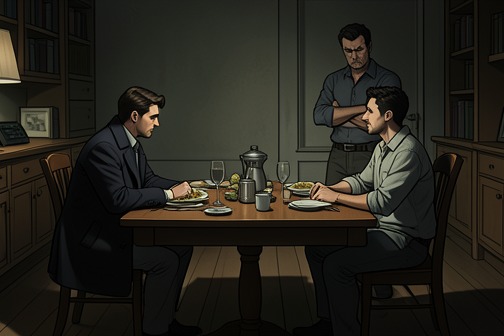
Ren and Trey’s date and Caleb’s confrontation form a decisive turning point in the relationship triangle surrounding Ren, [Caleb Chase](entity:character-recall-character-caleb-chase-ade666a306b4), and [Trey Chase](entity:character-recall-character-trey-chase-eefb283e30cc). What begins as a deliberately limited dinner between friends becomes a public declaration of Ren’s desirability and autonomy, then collapses into violence when Caleb arrives consumed by jealousy. The episode shifts Caleb from guarded indifference into unmistakable possessiveness, while also showing how Ren’s social stigma and Trey’s willingness to stand beside her make romantic choice inseparable from pack judgment.
## The Invitation and Its Boundaries
Trey offers Ren dinner at a moment when she is upset about Caleb’s behavior. He affirms that she has every reason to be angry because Caleb has treated her badly, then says that Ren deserves to be wanted and cared for. His invitation is direct but initially framed as companionship: he emphasizes that they are friends, admits that he likes her, and describes her as beautiful, sweet, and funny. He also acknowledges the awkwardness of approaching his brother’s household and treats the possibility of irritating Caleb as part of the invitation’s mischievous appeal.
Ren does not immediately interpret the offer as a serious romantic beginning. She considers Trey attractive, but dating him seems disloyal because he and Caleb are brothers. She therefore accepts only on the condition that they remain friends. That boundary matters because the date is not presented as Ren abandoning her attachment to Caleb; it is her attempt to accept care without claiming a relationship she believes Caleb has refused to offer. Her laughter with Trey and her willingness to participate in the joke about Caleb’s reaction give the evening a playful surface, but the arrangement also establishes that Ren is allowed to seek pleasure and attention outside Caleb’s emotional silence.
## Caleb Learns About the Date
Caleb’s reaction begins before he sees Ren and Trey together. When Cole tells him that Ren went on a date, Caleb’s ease turns into tension at the thought of her being with another male. Cole challenges the assumption that Ren should remain alone simply because Caleb is uninterested. He argues that she deserves happiness and openly supports her right to pursue it, while Trey’s involvement surprises him because he had believed Ren and Trey were only friends.
Caleb asks slowly whether Ren is on a date with Trey, and the question marks the moment when suspicion becomes personal knowledge. He does not pause to think through the consequences. A red haze covers his vision, and he runs for his truck, tears into town, and jumps out before the vehicle has fully stopped. The speed and loss of control reveal that Caleb’s stated indifference cannot contain his attachment. He has not confessed love or claimed Ren openly, but the possibility of her choosing Trey forces the feeling into action.
## The Confrontation in Town
When Caleb reaches Ren and Trey, he demands to know whether the date is with Trey. Ren answers softly that it is, smiling as Trey reaches over to pat her hand. Her calm confirmation makes the relationship public even within its stated limits: she and Trey are on a date, and Caleb must confront that Ren is not waiting passively for him to decide what she means to him.
Caleb responds by attacking the date’s possible effect on Trey’s future. He warns that Ren’s name could damage Trey’s prospects when Trey later runs for the Beta position, because the Walker pack dislikes her and she was not born into the Walker pack. His objection is therefore double-edged. It expresses genuine awareness of the hostility Ren faces, but it also converts her reputation into an argument against Trey’s choice. Caleb presents himself as realistic and protective, yet his timing and anger make the warning sound like an attempt to control Ren’s access to another male.
Trey rejects Caleb’s intervention and tells him he is out of line. Caleb continues, saying that the pack would tear Ren apart and that the situation would be unfair to her, while also invoking the women attracted to Trey. His reasoning exposes the social machinery surrounding the scene: Ren’s identity as an outsider is already treated as a liability, and Trey’s political ambitions are imagined as vulnerable to association with her. The conflict is not only between two brothers over a woman; it is also between pack prejudice and Trey’s insistence that Ren’s dignity cannot be reduced to a career calculation.
## Violence and Immediate Consequences
Caleb’s words hurt Ren. When he turns toward her after describing the hostility she faces, he realizes that she is no longer there. Before he can understand what has happened, Trey’s fist strikes his face and knocks him unconscious. Trey explains the blow as punishment for making Ren cry, ending the confrontation with physical force rather than resolution.
The punch produces a sharp reversal. Caleb arrives as the apparently powerful figure, driving into town in anger and attempting to define the risks of Ren’s date. He leaves the scene unconscious, while Trey becomes the person who visibly defends Ren. The action does not settle the emotional conflict; instead, it makes Caleb’s jealousy impossible to dismiss and makes Trey’s loyalty concrete. Ren’s pain becomes the immediate moral center of the encounter, and Trey’s response demonstrates that friendship, even under a deliberately limited label, can carry protective force.
## What the Event Reveals About the Relationship
The date exposes the contradiction at the heart of Ren and Caleb’s bond. Caleb has benefited from Ren’s presence in his home: her work turns the house he built into a home, and her kindness contributes to the calm and healing he begins to feel. He recognizes that she has shown him compassion and caring, that she does not judge him, and that conversation with her has become easier. Yet recognition does not immediately become commitment. Caleb can accept intimacy and emotional care while insisting, inwardly and outwardly, that he does not want more.
Ren therefore occupies an unstable position. She is valued in Caleb’s daily life but not securely acknowledged as a partner, and Trey’s invitation gives visible form to the possibility that someone else may offer her the attention Caleb withholds. The later arrangement in which Ren and Caleb live together, have sex, sleep together, and share showers while calling themselves friends with benefits intensifies this contradiction rather than resolving it. Ren is happier than she has ever been, yet miserable because she likes Caleb’s care too much and cannot make the arrangement emotionally neutral.
Caleb’s conduct during the confrontation also anticipates his later need to distinguish Ren from the people who have harmed or rejected her. Ren comes from the Banebloods, a fact Alpha Walker’s representative explicitly softens by insisting that Ren is sweet and innocent and unlike her pack. She is also publicly called a killer because of [Shane Sheppard](entity:character-recall-character-shane-sheppard-e189bdddda3a)’s death, although she maintains that Shane followed her to [the cliff](entity:location-recall-location-c0cf92839dca) and ran over the edge himself. At the grocery store, women surround her and Mary Fen snarls that she is a killer; Cole and Trey answer the harassment by defending and mocking the women. The date confrontation belongs to this same pattern of social pressure: Ren is never merely choosing whom to have dinner with, because her name carries inherited stigma and the accusation attached to Shane’s death.
## Narrative Significance
As a romance beat, the event converts concealed attachment into observable conflict. Trey’s invitation supplies Ren with an alternative source of care, while Caleb’s furious arrival supplies the proof that his emotional position is not the indifference he claims. The scene moves from playful friendship to jealousy, from jealousy to public argument, and from argument to a punch that leaves Caleb unconscious. Its value shift is therefore clear: Ren begins the episode needing comfort and ends it with her hurt recognized, while Caleb loses the control and emotional distance he has used to avoid naming what she means to him.
The event also clarifies the difference between protection and possession. Caleb’s concern about the Walker pack’s hostility contains a real danger, but his attempt to use that danger against Trey fails because Ren’s welfare cannot be separated from her right to choose. Trey’s defense is imperfectly playful and initially motivated partly by the desire to annoy Caleb, yet he still treats Ren’s feelings as more important than Caleb’s pride. Later, Caleb’s words to Ren become more affirming: he tells her that she is wonderful, gorgeous, funny, smart, skilled at cooking, baking, knitting, quilting, cleaning a gun, and making peach pie, and insists that she should never think she has to compete with anyone. The contrast shows the longer consequence of the confrontation: Caleb must move from reacting to the threat of losing Ren toward recognizing her as a whole person whose value is not limited to domestic labor, sex, or the approval of the pack.
The eventual mating ceremony confirms that the date did not end Ren’s connection with Caleb, but it does not make the earlier conflict irrelevant. At the ceremony, Ren is happy not simply because of the lavish gathering, her white dress, or the presence of every pack member, but because Caleb’s possessive love has finally become explicit and public. The date is one of the events that makes such recognition necessary: it forces Caleb to see that refusing to name the bond does not preserve his freedom or protect Ren. It only leaves her exposed to other choices, social hostility, and the possibility of being wanted by someone willing to say so.
Event 7
Ren拖车遭入侵并搬入Caleb家
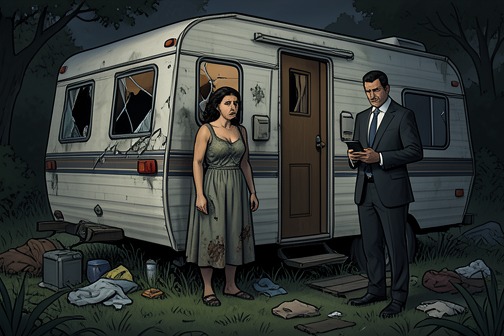
[Ren's trailer](entity:location-recall-location-ren-c060ee5567f0) invasion and subsequent move into [Caleb Chase's house](entity:location-recall-location-caleb-ef55b3a0a936) are the turning point at which danger breaches the fragile independence she has built after [Shane Sheppard](entity:character-recall-character-shane-sheppard-e189bdddda3a)'s death. The event begins with evidence of an unseen intruder, escalates through the destruction of everything Ren owns, and ends with Caleb taking responsibility for her immediate safety. What appears to be a practical relocation therefore becomes a relationship crisis: Ren is no longer merely Caleb's housekeeper or sexual companion, but someone whose vulnerability forces both of them to confront protection, dependence, and the meaning of home.
## Causes and Background
Ren has been trying to construct a manageable life through paid work, saving money, and the domestic routines that connect her to Caleb. She introduced herself as Caleb's new housekeeper after Alpha Walker sent her to discuss his schedule, and she approached the job with a concrete plan: organize the laundry, sort the dishes, clean the kitchen, then work through the bedrooms, bathrooms, and study. Her labor quickly altered Caleb's neglected house. She placed photographs on the dusty mantel, flowers in the entryway, and a cleaned throw rug across the sofa; Caleb recognized that she had made the house he built with his own hands feel like a home.
That domestic competence is inseparable from Ren's history of violence. She is still haunted by the night Shane tried to kill her and went over [the cliff](entity:location-recall-location-c0cf92839dca), a memory that intrudes with the force of a nightmare. Running, rain, thunder, the cliff edge, and enclosed spaces repeatedly return her to that ordeal. A storm once sends her running home in terror, while a later noise outside her trailer wakes her from sleep in panic. The invasion thus reaches a person already living with hypervigilance rather than confronting an ordinary tenant who merely loses property.
## Discovery of the Invasion
Returning exhausted, Ren notices that the small security devices she improvised around the trailer have been disturbed. A strand of dental floss stretched across the porch steps is broken; tracks mark the dirt; and the toothpick wedged into the door has also been broken. These details convert suspicion into physical proof. The objects that had been nearly invisible while functioning as safeguards suddenly become conspicuous evidence of failure: someone has crossed the boundary Ren created and entered despite her attempt to detect him.
The discovery immediately strips away the courage she had managed to summon. Her shotgun is inside, but she cannot go in alone because the prospect of being trapped there recalls what happened with Shane. She bends over while trying to suppress a panic attack, describing herself as alone, unprotected, and vulnerable. The event's danger is therefore both external and remembered; the intruder has not merely entered a trailer, but reopened the bodily fear attached to captivity and male violence.
[Trey Chase](entity:character-recall-character-trey-chase-eefb283e30cc) refuses to let Ren investigate by herself. He opens the door without hesitation and enters first, while Ren follows him into the wreckage. Her reaction to the sight is a stunned recognition that the damage extends to everything she owns, including possessions she cannot readily replace. She has been paid well by Caleb, but she has been saving toward a small house closer to work, Trey, and the life she hoped to make. The destruction attacks not only her current shelter but also the future represented by those savings.
The intruder has left no scent. Trey identifies that absence as a further threat, because it means the person who entered knows how to conceal his presence. The broken traps and scentless intrusion establish an adversary who is deliberate rather than accidental, while the ruined interior demonstrates that Ren's trailer can no longer serve as a secure boundary.
## The Move and Its Participants
Trey immediately turns the invasion into an evacuation. He tells Ren that she will not remain there alone, orders her to pack, and promises to bring people from his group, whose work now includes printing and crime-scene investigation as their database grows. His protective response reveals a side of Trey that Ren usually does not see beneath his polished suit, easygoing manner, and apparent nonchalance. His anger is so intense that she realizes he is not tame, only apparently so. Friendship becomes action: he hugs Ren, helps her pack, takes her suitcases, and tells her she is staying with him from then on.
The plan changes when Caleb arrives and sees Trey with Ren's cases. Caleb reacts with immediate force, puts Ren into his truck, and drives back to his property to collect the bags. Ren is caught between the safety Trey offers and the possessive, protective authority Caleb displays. She is too shocked and tired to control the decision, and Caleb deposits her suitcases in the hallway of his house before telling her to enter, eat, bathe, and sleep. His intervention is not presented as a calm negotiation; it is an abrupt assumption of responsibility prompted by the destruction of her home.
Yet Caleb's protection is not only command. Once inside, he notices how exhausted and strained Ren looks, softens, touches her cheek, and locks the house behind him before leaving. The gesture combines security with tenderness. Ren initially expects an argument and intends to insist on going with Trey, but Caleb's physical reassurance and practical instructions overwhelm her resistance. She follows his direction, taking a bath in the guest bathroom while recognizing that the two of them will need to talk soon.
## Consequences for Ren and Caleb
The move changes the material arrangement of their lives. Ren and Caleb already share sex, sleep, and domestic space, but their arrangement has been described as friendship with benefits rather than acknowledged romance. Once Ren's trailer is destroyed, cohabitation is no longer an intimate convenience she can pretend is temporary or emotionally neutral. Caleb's house becomes her refuge, while the invasion makes his capacity to provide safety impossible to ignore.
That safety also exposes a conflict in Ren's desires. She is relieved to be protected, but she does not want protection to erase her independence or reduce her to a dependent household role. Her work has always carried emotional weight: cleaning, cooking, and making a damaged house livable are ways she creates stability for other people. Caleb first responds to those acts by recognizing that she has made his house a home, and later praises the full range of her abilities, including cooking, baking, knitting, quilting, cleaning a gun, and making peach pie. The invasion makes the distinction between being useful and being loved especially urgent. Ren needs security, but she also needs Caleb to see her as a person with feelings rather than as housework, food, or sex.
Caleb's response also intensifies the relationship's pursuit-and-withdrawal pattern. He brings Ren into his home and tends to her immediate needs, yet his protectiveness can feel like control, particularly when she has not been allowed to choose the arrangement freely. Ren's fear of being alone makes his care necessary; her history of abuse makes any loss of agency dangerous. The event's value shift is consequently double-edged: Ren moves from exposed and vulnerable to sheltered, but the shelter creates a new pressure to define what Caleb's protection means.
## Narrative Significance
The invasion converts the idea of home from a decorative achievement into a contested condition. Ren had helped Caleb turn an impersonal, neglected building into a home through small domestic changes. Her own trailer, by contrast, is revealed as penetrable, damaged, and unable to protect her. Caleb's house offers locks, companionship, and immediate defense, but it also becomes the place where Ren must demand emotional recognition. The contrast links physical shelter with the harder question of whether intimacy can become safe without becoming possessive.
As an event, the move is therefore both a suspense sequence and a romance beat. The broken floss, tracks, and toothpick create a concrete breach; the trashed trailer produces the immediate crisis; Trey supplies an ally and an alternative refuge; and Caleb's arrival forces the relationship into closer proximity. The danger does not resolve Ren's trauma, but it prevents her from maintaining the old arrangement. She enters Caleb's house carrying the remains of her former independence, while Caleb is compelled to protect her in a way that makes their emotional interdependence visible.
The later shape of their relationship confirms the move's importance. Ren describes their shared life as happy and increasingly ordinary, with meals, sex, sleep, and showers becoming routine, even while admitting that she is miserable because she wants more than the agreed arrangement. Caleb eventually tells her that she is wonderful, gorgeous, funny, smart, and far more than domestic service or a sexual companion. The trailer invasion is the material crisis that places them together; its lasting consequence is the demand that this shared home become a place where Ren's safety, dignity, and desire are all acknowledged.
Event 8
Ren揭示两人的命定伴侣关系

Ren’s revelation that she and Caleb are fated mates is the decisive reversal in their relationship: an intimate encounter produces an involuntary mating bite, and Ren is forced to name the bond that Caleb has refused to acknowledge. The moment changes their connection from concealed love and physical closeness into an openly contested question of identity, consent, belonging, and emotional survival.
## Causes and Hidden Knowledge
Ren has known for some time that her wolf recognizes Caleb as her mate, but she initially interprets her feelings as love and tries to keep the truth unspoken. The pressure becomes harder to contain during her heat, when she loses control and feels her wolf taking over. She is relieved when Caleb leaves for a week to avoid being present during that period, believing she might manage the danger if the heat passes; instead, the wolf remains insistent.
The revelation therefore emerges from a conflict between Ren’s conscious restraint and her animal nature’s certainty. Ren explains to Trey that she had tried to ignore the bond because she feared Caleb’s response and did not want to impose a relationship he did not choose. Her account makes the disclosure less a calculated declaration than the belated release of knowledge she has carried alone. The bond is already emotionally consequential before Caleb accepts it: Ren loves him, wants him, and experiences resistance to the connection as a physical and psychological fracture.
## The Bite and the Disclosure
During sex, Ren’s wolf finally refuses further restraint. The bite is not planned by Ren’s conscious self; her wolf wants her mate and claims Caleb before Ren can stop it. Caleb experiences the bite as an abrupt violation of the fragile peace he had been maintaining. The intensity of the climax is immediately replaced by shock, distance, and anger when he realizes that Ren’s teeth have marked his shoulder.
Ren apologizes, insists that she did not mean for it to happen, and then explains why it happened. She tells Caleb that her wolf knows they are fated, revealing not only the existence of the bond but also the fact that Ren has been aware of it while trying not to tell him. Her confession joins love, bodily compulsion, and secret knowledge in one unstable moment: she loves Caleb, but she has also been struggling against an instinct that no longer permits silence.
Caleb responds with emphatic denial. Rather than treating the bite as confirmation, he turns away from Ren, leaving her cries behind him while his own roars of refusal define the immediate aftermath. The value of the encounter shifts sharply from intimacy to rejection. What Ren hoped might become recognition instead becomes evidence, in her mind, that Caleb does not want her.
## Rejection and Emotional Consequences
Ren carries the disclosure to Trey, describing the experience as worse than ordinary heartbreak. She feels as though she is breaking apart, not simply because Caleb is angry, but because his response appears to reject the bond and everything she has risked by naming it. Her shame is intensified by the contrast between her intention and the result: she tried to protect Caleb from an unwanted truth, yet the truth emerged through an act he experiences as an assault on his autonomy.
The event also reactivates Ren’s history with [Shane Sheppard](entity:character-recall-character-shane-sheppard-e189bdddda3a). Caleb’s disgusted and betrayed expression recalls the anger that preceded violence in her marriage, even though Ren knows Caleb would not hurt her in the same way. The comparison shows how the fated bond is filtered through trauma rather than received as uncomplicated romance. Caleb’s rejection becomes another form of danger because it touches Ren’s fear of being unwanted, blamed, or abandoned after surrendering trust.
Ren’s broader trauma is already organized around bodily panic, pursuit, and self-blame. She has intrusive memories of Shane Sheppard’s death, wakes from nightmares, fears storms, and repeatedly experiences running as a survival response. Against that background, the mating revelation does not erase her past; it places a new bodily imperative beside it. The wolf’s certainty promises belonging, while Caleb’s refusal threatens to reproduce the old pattern of being trapped in a relationship where Ren’s needs are treated as a problem.
## Recognition and Formal Claiming
The rejection does not remain final. Caleb eventually returns to Ren and approaches her with a transformed physical presence: both eyes are golden and glowing, signaling the emergence of his wolf. He kisses her with raw force, then bites her shoulder without gentleness. Unlike the earlier bite, which Ren’s wolf inflicted before conscious agreement could intervene, Caleb’s act functions as a deliberate reciprocal claiming and marks the beginning of his acceptance of the bond.
That later bite changes the meaning of the original disclosure. Ren’s revelation first exposes a relationship Caleb denies; Caleb’s answering mark converts the hidden bond into a mutual one. The transition is not presented as calm negotiation. Pain and pleasure remain inseparable, and the intensity of the marking emphasizes that recognition is embodied before it becomes socially secure. Yet the act also moves the couple from a private asymmetry—Ren knows and Caleb rejects—to a relationship in which Caleb publicly and physically acknowledges Ren as his mate.
The bond’s social meaning develops further through [Lacy Baneblood](entity:character-recall-character-lacy-baneblood-b967c13d1e72)’s final conversation with Ren and Caleb. Near death, Lacy is relieved that Ren is safe and that Caleb is caring for her. Caleb vows to protect Ren from her family, and Lacy declares that she can leave peacefully because Ren is no longer alone. Her blessing places the fated relationship within a wider network of family protection and farewell, turning Caleb’s role from reluctant partner into the person entrusted with Ren’s future.
## From Bond to Belonging
The revelation is ultimately absorbed into a larger reconciliation. Ren later confronts Caleb over his repeated rejection, his habit of leaving when she is in heat, and his refusal to see what she wants. She tells him that she does not require the world or grand possessions; she wants love and a family. Her demand gives the fated bond an ethical and emotional measure beyond instinct: being mates is insufficient unless Caleb chooses to remain, recognize her, and build a life with her.
Ren’s history makes that demand costly. She has lost a baby, lost herself with Shane Sheppard, nearly lost her life after being accused over Shane Sheppard’s death, and nevertheless continued to present courage and hope. Her insistence that she never gave up frames the mating revelation as part of a longer struggle to reclaim agency. She is not merely waiting for destiny to solve her life; she is asking Caleb to stop fleeing and meet her in the life the bond makes possible.
The later formal mating ceremony and marriage give the relationship public and legal recognition. Ren is not only Caleb’s fated mate but his wife, and the ceremony gives her a new name and a place within the community. Caleb’s insistence on marriage so that the human world would record her new name links supernatural claiming with ordinary social documentation. What began as a secret known only to Ren’s wolf becomes a publicly witnessed identity.
The final emotional consequence is belonging. Ren says that Caleb is not merely mating and marrying her; he is giving her something she did not know she needed. His love, rather than the biological fact of being fated, is what makes the outcome complete. The ceremony includes the wider community, [Cole Chase](entity:character-recall-character-cole-chase-9b9ad646b1fc), [Trey Chase](entity:character-recall-character-trey-chase-eefb283e30cc), and the [Sheppard brothers](entity:character-recall-character-sheppard-brothers-e1ba130dc417), while Caleb’s laughter and protective complicity show how rejection has been replaced by attachment. Ren’s pregnancy and the six-month gestation of a shifter baby extend that belonging into family continuity, even as the hormonal intensity of pregnancy prompts Caleb to lock away the guns after Ren once tries to shoot him.
## Narrative Significance
The event is the story’s central recognition crisis because it makes the invisible bond speak through the body before the characters are emotionally prepared to accept it. Ren’s wolf knows first, Ren confesses under pressure, Caleb rejects the knowledge, and Caleb later enacts acceptance through his own mating bite. The sequence turns destiny into an argument rather than a gift: the relationship must pass through fear, trauma, anger, and the possibility of abandonment before it can become chosen commitment.
Its structure also contrasts two kinds of survival. Ren survives Shane Sheppard’s pursuit and death by refusing to accept blame for his choice to attack her, yet she remains haunted by the event in storms, nightmares, and bodily panic. In the fated-mate conflict, she must similarly defend the legitimacy of her desires without surrendering responsibility for her own actions. Caleb’s eventual acceptance matters because it restores not only the bond but Ren’s sense that love can coexist with safety, family, and a future.
The revelation therefore changes the story’s governing question. At first, the issue is whether Ren and Caleb are fated; by the end, that fact is no longer in doubt. The deeper issue is whether a bond imposed by instinct can become a relationship sustained by mutual love and public belonging. The formal ceremony answers yes, but only after Caleb learns that loving Ren requires more than desire or protective force: it requires staying, acknowledging her, and choosing the life their bond has opened.
Event 9
Caleb正式咬印并宣称Ren为伴侣
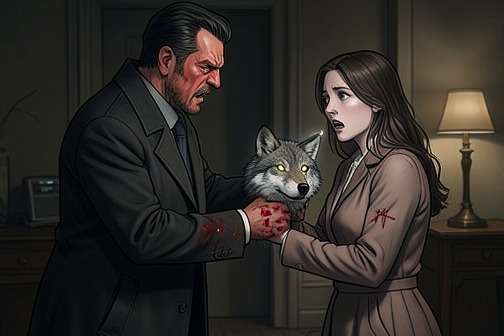
Caleb formally marks Ren as his mate in the decisive confrontation that turns their unstable bond into an acknowledged claim. Driven by jealousy, fear of losing her, and the discovery that Ren’s wolf regards him as hers, Caleb interrupts the possibility of her mating Trey, bites her shoulder, and declares her his. The act begins as an impulsive assertion of possession, but the story later tests and enlarges its meaning through protection, apology, emotional reciprocity, and a public ceremony that gives Ren the belonging she has long wanted.
## Causes and Background
Caleb’s declaration follows a painful misunderstanding rather than a calm agreement. After hearing that Trey may mate Ren, Caleb becomes increasingly angry, insisting internally that she cannot belong to his brother. He reaches Trey’s house in a state of barely controlled fury and finds Ren and Trey speaking quietly in the living room. The sight turns his jealousy into open aggression: he accuses Ren of professing love to him and then suddenly mating Trey, while exposing the mark she has already given him. His outburst also reveals that he knows the relationship is not emotionally neutral; Ren’s wolf considers Caleb hers, even though Caleb has repeatedly resisted the implications of that bond.
Ren answers the accusation by insisting that Caleb does not want her and that she cannot continue waiting for a man who keeps rejecting her. When she declares her love, her eyes turn bright blue and Caleb feels her presence in his mind. The mental connection confirms the depth of what he has tried to avoid, but it also frightens him. He closes his mind as far as he can because he does not want Ren to know what he feels. The scene therefore places the mark within a conflict between involuntary intimacy and deliberate withdrawal: the bond is already pressing toward recognition, while Caleb still treats emotional exposure as a threat.
## The Marking and Declaration
nRen’s despair briefly leads her to reject the idea of mating Trey, despite loving him as her best friend. She recognizes that Trey deserves a true mating, a melding of hearts, minds, and spirits, rather than a relationship formed from her grief over Caleb. That decision leaves the conflict unresolved until Caleb returns. He enters with a growl, ignores attempts to stop him, and walks directly to Ren. His sudden movement toward her makes the act feel less like a negotiated rite than an eruption of instinct and suppressed feeling.
Caleb pulls Ren close and kisses her with such raw force that she does not regard it as an ordinary kiss. He then turns her head to the right and bites her shoulder. His eyes have become golden and intensely bright, signaling the animal power behind the act. The bite hurts sharply, yet pleasure follows the pain, leaving Ren physically overwhelmed. The encounter compresses several changes into one bodily gesture: Caleb stops retreating, Ren receives an unmistakable claim, and the private uncertainty surrounding their bond becomes visible through an irreversible mark.
The declaration comes immediately afterward. Caleb turns toward Trey with murderous eyes and shouts that Ren is his, repeating the claim for emphasis. As a speech act, the word does more than describe his feelings: it publicly names Ren’s status and establishes Caleb’s intention before his brother. Its immediate effect is both intimate and confrontational. Ren is not merely the woman Caleb desires; she is the mate he claims, and Trey is forced to hear that claim as the boundary of their rivalry.
## Consequences and Emotional Reversal
The marking does not instantly repair the damage Caleb’s avoidance has caused. Ren has already concluded that the mating she wants with Caleb is impossible, and Caleb’s forceful action arrives after a period in which he repeatedly left her during her heat. The mark therefore carries a contradiction that remains central to the relationship: it offers certainty while also exposing how little communication preceded the decision. Ren later acknowledges that she should not have bitten Caleb without speaking to him first, making clear that the bond has been shaped by impulsive acts on both sides rather than by uncomplicated consent and understanding.
Caleb’s behavior afterward begins to give the declaration a broader ethical meaning. When Ren is exhausted, he tells her to eat, bathe, and sleep, touches her cheek gently, carries her luggage into the house, and locks up behind him. When Lacy is dying, he vows to protect Ren from the family that has harmed her. As Ren connects with Lacy at the older woman’s death, Caleb feels the peaceful quality of Ren’s Knowing and realizes that he had wrongly rejected an important part of her. He gathers Ren close, soothes her, and accepts that because she is his mate, he owes her a part of himself even though the connection frightens him.
The later conflict makes the cost of his earlier rejection explicit. Ren tells Caleb that being mated to a man who does not want her has wounded her, especially after she lost a baby, lost herself through Shane, and nearly lost her life when others accused her of killing him. Her demand is not for wealth or protection but for love and family. Caleb finally admits that he should have stayed instead of pulling away. He confesses that Ren has given him a home, smiles, and comfort, and that she is the first female he has loved who makes him happy. The original declaration thus changes from a possessive interruption into the beginning of a responsibility Caleb must learn to fulfill.
## Public Recognition and Lasting Significance
The private bite eventually receives a public and social completion through the formal mating ceremony and marriage. Caleb insists on marrying Ren so that the human world will record her new name, while the lavish ceremony gathers the pack and places their relationship before the community. Ren understands that the event gives her more than the status of a fated mate: it gives her belonging. The contrast is important. The bite marks her body and announces Caleb’s claim, but the ceremony recognizes her place among others and confirms that she is loved rather than merely possessed.
By the time of the ceremony, Caleb’s attachment is expressed through humor, defense, and shared life. He works with Cole, gives Ren more free time, and remains delighted by her sharpness even when her pregnancy makes her moods unpredictable. Her six-month shifter pregnancy is physically demanding, and Caleb locks away the guns after she tries to shoot him once, turning domestic danger into a sign of their familiar, comic intimacy. He also brings her down the aisle while declaring his love, with Cole, Trey, and the [Sheppard brothers](entity:character-recall-character-sheppard-brothers-e1ba130dc417) waiting behind them. The brother who once stood as the obstacle to Caleb’s jealousy is now part of the public scene in which Ren and Caleb are joined.
The event’s decisive significance lies in its movement from possession to belonging. Caleb’s bite is the violent midpoint of a relationship marked by pursuit and retreat; his later care, apology, and willingness to create a shared public identity make the claim durable. Ren does not end as someone simply taken by Caleb. She becomes Ren Chase, a loved partner with a home, a family, and a place that has been made visible both through the mating mark and through the ceremony that follows.
Event 10
Lacy Baneblood去世
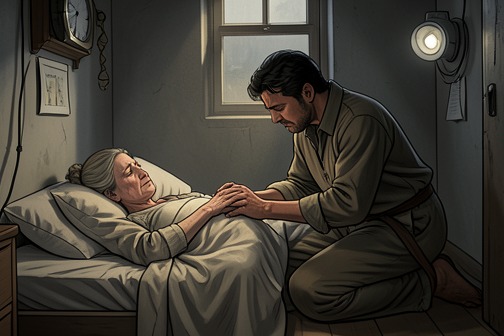
[Lacy Baneblood](entity:character-recall-character-lacy-baneblood-b967c13d1e72)'s death is both a private bereavement and a decisive turning point in [Ren Sheppard Chase](entity:character-recall-character-ren-sheppard-chase-0dac65e85033)'s relationship with [Caleb Chase](entity:character-recall-character-caleb-chase-ade666a306b4). As Ren's grandmother lies dying, she uses her final strength to confirm that Ren will not be alone, entrusts her safety to Caleb, and then dies after sharing a last connection with her granddaughter. The scene converts impending loss into a binding promise: Ren must survive beyond the family that failed her, while Caleb must learn to accept the part of Ren he has feared and rejected.
## Causes and Circumstances
Lacy's death occurs in the small house where Ren's grandmother lives. Caleb reaches the house after receiving an urgent call from Lacy Baneblood, who says that Ren needs to come immediately because there is not much time. He arrives quickly enough to find Ren rushing through the front door and then kneeling beside the bed, already sobbing over the frail older woman. The physical setting is narrow and domestic, but the emotional stakes are immense: Ren believes that Lacy is all she has and begs her not to leave her alone.
The scene is shaped by the contrast between Ren's panic and Lacy's acceptance. Lacy does not deny that she is dying. Instead, she responds to Ren's fear with calm reassurance, telling her that she is ready to go see Ren's grandfather and has been ready for some time. Her stated reason for remaining is Ren's future: she wanted to know that her granddaughter would be all right before she went. Death therefore arrives not as an unexplained interruption but as the culmination of Lacy's protective role in Ren's life.
## What Happens
Caleb's presence changes the meaning of Lacy's final conversation. When she notices him, she expresses relief that he has come and thanks him for looking after Ren and keeping her safe. She tells him that Ren will not be alone and asks him not to let Ren's family take advantage of her again, warning that Ren's mother would want something if she had returned and that this would not be good. Caleb answers with a vow that he will not allow it.
Lacy extends that trust beyond Caleb alone. She takes comfort in the fact that Ren has Caleb and his brothers around her, describing that protection as enough to let her leave in peace. Her final request is direct and intimate: she asks Ren to help her, to see her off, and then to go live her life. Clutching both Ren's and Caleb's hands, Lacy closes her eyes. The gesture joins the two people she is leaving behind at the exact moment she releases them into the future.
Lacy's death is followed by Ren's last connection with her. Caleb senses the moment when Ren reaches Lacy, and then sees Ren stiffen and slump as the older woman's peaceful presence disappears. The connection is important because it reveals that Ren's Knowing is not simply intrusive or predatory. Caleb recognizes that Ren's knowing can be loving and peaceful, and his earlier rejection of this part of her becomes morally and emotionally untenable. He gathers Ren into his arms, carries her, and tries to soothe her while deciding that he owes Lacy a part of himself, even though accepting that responsibility frightens him.
## Consequences and Aftermath
For Ren, Lacy's death removes the person she identifies as her sole remaining family. The loss intensifies an abandonment wound already connected to [Shane Sheppard](entity:character-recall-character-shane-sheppard-e189bdddda3a)'s attempt to kill her, the accusation that followed Shane's death, and the earlier loss of a baby. Ren's later anger toward Caleb makes clear that she does not experience the grief as an isolated sorrow: she also feels that she has repeatedly had to endure catastrophe while the life and family she wanted remained out of reach. Lacy's final reassurance that Ren should go live her life becomes a standard against which Ren measures Caleb's refusal to recognize what is already between them.
For Caleb, the death produces a change in obligation and understanding. He has already identified Ren as his mate, but Lacy's bedside trust forces that bond into a public and ethical form. He is asked to protect Ren from her family, to remain present rather than withdraw, and to accept Ren's Knowing rather than treat it as a threat. His response is not merely grief for Lacy; it is a decision to become the person she believes Ren can rely on.
The event also deepens the novel's recurring connection between physical crisis and emotional revelation. Ren's trauma repeatedly returns through storms, pursuit, cliffs, and sudden bodily panic, while Lacy's death reverses that pattern for a moment: the danger is quiet, contained in a bedroom, and met through touch, recognition, and farewell. Yet the result is no less transformative. Lacy leaves Ren with permission to continue, and leaves Caleb with a responsibility he can no longer evade.
## Narrative Significance
Lacy Baneblood's death functions as a threshold between Ren's life as a survivor attached to the past and the future she is being urged to claim. Lacy does not solve Ren's loneliness by remaining alive; she addresses it by naming Caleb's place beside Ren and by insisting that Ren's life cannot end with her grandmother's. The scene thus turns separation into a form of inheritance. What passes to Ren is not property or authority but permission to live, while what passes to Caleb is the duty to make that life safer.
The event's most consequential revelation concerns Ren's inner gift. Caleb experiences her final connection with Lacy directly enough to recognize its tenderness, and that recognition undermines his fear of the Knowing. In the immediate aftermath, he understands that Ren's ability is capable of intimacy rather than violation. Lacy's peaceful death therefore changes not only Ren's family circumstances but Caleb's interpretation of the bond between them.
Lacy's final presence also establishes a moral contrast with the relatives who have harmed or neglected Ren. She sees the danger posed by Ren's family and asks Caleb to prevent their return from becoming another source of exploitation. Her last act is consequently protective even as she dies. The farewell closes her personal arc while opening the next stage of Ren and Caleb's shared life: Ren is bereaved, Caleb is entrusted, and their relationship is made answerable to the promise Lacy extracts from him.
Event 11
Ren从坠落昏迷中苏醒
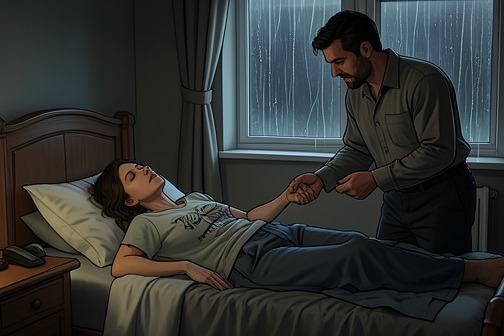
Ren from [Coma](entity:state-recall-state-coma-c9fd4d76e48c) After the Fall is the recovery event that reverses the apparent finality of Ren's flight from Shane and [the cliff](entity:location-recall-location-c0cf92839dca). Her return begins in confusion and bodily weakness, passes through a liminal encounter with her grandmother, and culminates in Caleb's mating bite and her awakening beside him. The event changes the central value at stake from death to the possibility of living—and, more specifically, from Ren's belief that she has little left to return to the difficult prospect of love, family, and a future with Caleb.
## Causes and Background
Ren's unconsciousness follows the traumatic pursuit in which Shane corners her near the cliff. The pattern of the fall is prepared by the novel's recurring bodily language of panic: a racing heart, lungs burning under pressure, rain striking like knives, and the conviction that stopping means death. The earlier memory of Shane plunging over the edge has already become an intrusive nightmare that Ren struggles to suppress. She identifies the event as the night her ex tried to kill her and died himself, while the repeated presence of storms, cliffs, enclosed shelter, and pursuit keeps the danger active in her body rather than safely contained in the past.
The fall therefore does not end the trauma when Ren loses consciousness. It suspends her between survival and death. When she opens her eyes, clarity arrives slowly, accompanied by a throb in her temples and the immediate recognition that something terrible has happened. Her first response is not triumph but bewilderment and moral self-questioning: she wonders why this is happening to her and whether the place around her might be hell. The language makes survival feel provisional, almost unbelievable, because Ren expected the fall to produce an irreversible physical end.
## What Happens
Ren's first discovery is that she is not dead. The blunt confirmation that she is alive forces her to reconstruct the fall from incomplete memory. She believes she passed out halfway down and cannot remember a final impact, leaving her suspended between what she feared and what actually occurred. Her body confirms that she has survived, but it does not offer an uncomplicated recovery: she is injured, weak, and disoriented, with the aftermath of immobility written into her stiffness.
During this liminal interval, Ren encounters her grandmother, the person she remembers as having always been there for her. Ren says that she misses her and sees little reason to return, because she feels she has so little waiting for her. Her grandmother rejects that surrender physically and verbally, reminding her that life is a gift and refusing to treat grief as a sufficient reason to abandon it. The exchange turns Ren's survival from an accident into a choice. Missing the dead is acknowledged as real, but it cannot become permission to join them.
The conversation also redirects Ren toward Caleb. When she describes Caleb as emotionally damaged, inconsistent, and difficult, her grandmother supplies the missing context: Caleb loved someone before, was nearly destroyed by that loss, and is now faced with being fated again while fearing another injury. Ren is told to be fair and give him a chance. The advice does not erase the history of Caleb's rejection, particularly his habit of leaving when Ren was in heat, but it alters the meaning Ren assigns to his withdrawal. His behavior can still hurt her while also revealing fear rather than simple indifference.
The grandmother's final message binds love to effort rather than fantasy. She tells Ren that love is two hearts meeting, that it requires work, and that its difficulty does not make it unworthy. She then disappears, leaving Ren to fall again. The disappearance preserves the scene's dreamlike, threshold quality: the grandmother cannot accompany Ren back into ordinary life, but she gives Ren a reason to return to it. Her departure is thus both another separation and a form of guidance.
At Ren's bedside, Caleb remains physically present and refuses to leave. He had expected a shifter's healing to make the recovery quick, but Ren's long separation from shifting, small stature, relative weakness, and apparent lack of a reason to live complicate that expectation. Caleb recognizes that the danger is not merely the damage caused by the fall. Ren's will to return has also been weakened by abandonment, grief, and the injuries he inflicted on her emotionally.
Caleb's response is the mating bite. When his bear urges him to bite Ren, he accepts the instinct instead of resisting it, leans over her, and sinks his teeth into her shoulder as gently as possible. The act is described as a last hope, but its meaning is more specific than a supernatural remedy. Caleb has given Ren the bite before; this time he gives it as an expression of his own love and need, rather than as an act performed only on behalf of his animals or the mating bond. He pours what he has into the bite, licks the wound, kisses her, and waits without knowing whether she will stir.
## Consequences and Aftermath
Ren wakes quickly after Caleb has spent the crisis beside her. For a moment she sees only darkness, then finds Caleb asleep in a chair next to the bed. His haggard appearance makes her smile, and her first private response combines affection with mischievous satisfaction: he has suffered while keeping watch. The emotional reversal is important. Ren is not simply a passive patient being restored by Caleb's action; consciousness returns with her humor, judgment, and ability to evaluate him.
Her physical condition remains serious but is no longer immediately fatal. She hurts and feels as though her muscles have been immobile for a long time, yet the pain is stiffness rather than the catastrophic sensation she associates with falling from a cliff. Survival has become tangible in the difference between these two kinds of pain. The body that seemed to be moving toward death is now beginning the slower work of reentering life.
The recovery does not resolve the relationship automatically. Ren still remembers every rejection and every time Caleb left her in heat, and she remains angry that he has repeatedly run from what binds them. When she later confronts him, she identifies the deeper injury: she is mated to a man who does not seem to want her, nearly died without receiving the love and family she imagined, and has been made to feel that her needs are excessive. Her demand is deliberately modest. She does not want the world or to be treated as a helpless big-city woman; she wants love and a family.
Ren also names the losses that make the awakening consequential rather than merely miraculous. She has lost a baby, lost herself with Shane, and nearly lost her life when others accused her of killing him. Yet she insists that she kept her chin up, maintained her smile, and never gave up. The statement reframes the entire event: the cliff fall is not the first time Ren has been forced to survive an imposed catastrophe, but it is the moment when survival finally requires her to admit what she wants from the life she keeps preserving.
## Narrative Significance
Structurally, the event functions as a resurrection beat after the darkest physical and emotional crisis in Ren's story. The fall creates the expectation of death; the awakening reverses it. The grandmother's intervention supplies the moral decision to return, while Caleb's mating bite supplies the intimate, embodied gesture that makes return possible. Together they join the dead past, the damaged present, and the hoped-for future without pretending that any of them can simply be erased.
The event also gives form to Ren's trauma. Storms and pursuit have repeatedly reduced her experience to breathlessness, terror, intrusive memory, and the instinct to hide. Here, the same pattern reaches the cliff, the place where escape appears impossible, but the aftermath introduces recognition and testimony. Ren remembers what she has endured, identifies the people and losses that shaped her, and speaks the desire that has been obscured by survival: love, family, and a life not organized entirely around danger.
Most decisively, the awakening changes the charge of Ren and Caleb's bond. Before it, the mating relationship is marked by rejection, avoidance, and uncertainty. During it, Caleb stays, acknowledges the depth of Ren's fragility and his own responsibility, and uses the mating bite as a fully personal declaration of need. After it, Ren is alive to challenge him rather than merely be rescued by him. The event therefore does not conclude their conflict; it restores the conditions under which that conflict can become an honest negotiation between two people who still want one another and must decide whether they are willing to do the work her grandmother described.
Event 12
Caleb发现Ren怀孕

Caleb discovering that Ren is pregnant is the decisive reversal that converts his troubled attachment to her into an explicit demand for responsibility. The revelation begins as a privacy violation: separated from Ren, Caleb enters the Pack clinic through a window, searches the filing cabinet, and finds her record under Sheppard rather than Chase. The word “Pregnant.” changes the meaning of his absence. What had been emotional avoidance becomes, in his mind, an intolerable failure to protect the woman and child he regards as his own.
## Causes and Background
Caleb’s reaction is shaped by a relationship already caught between attraction, rejection, and fear. Ren has been marked by loss and danger: Shane’s death left her accused by others, and her earlier life with Shane had already cost her a child and much of her sense of self. She has also endured Caleb’s repeated withdrawals, particularly when she was in Heat, and interprets his leaving as evidence that he does not want her. By the time he discovers the pregnancy, the bond between them is therefore not a secure domestic arrangement but a cycle in which Ren seeks acknowledgment while Caleb retreats from the obligations and emotional exposure that mating implies.
The contrast between Caleb’s private concern and his outward distance is visible in his ordinary acts of care. When Ren returns exhausted and tense, he touches her cheek, tells her to eat, bathe, and sleep, and locks the house behind him. He can perform protection in small, practical gestures while still refusing to confront what the relationship requires. The pregnancy exposes the insufficiency of that limited form of care: Ren is not merely someone he can shelter intermittently, but a mate whose health and future now demand sustained presence.
## What Happens
Caleb approaches the clinic through the trees, skirts the building, opens a window with a claw, and climbs inside after confirming that no one is present. He knows that reading Ren’s records violates her privacy, but he proceeds to the filing cabinet where Dr. Triss keeps patient files. The detail that the record is filed under “Ren Sheppard” rather than under Chase intensifies the scene’s conflict between Ren’s existing identity and Caleb’s claim upon her. Caleb crosses out the last name with a pen and writes Chase instead, turning a clinical document into an imagined assertion of belonging.
The written diagnosis first produces joy so powerful that it nearly chokes him, then combines with pride, fear, and panic. He imagines Ren carrying his seed and feels the physical force of the news in his chest. The pregnancy immediately becomes a question of proximity and care: Ren is away from him, staying with Trey, while Caleb fears that another male will feed her, look after her, and make sure she is happy. His response is not detached wonder but a possessive resolve that no one else will take the role he has refused to occupy.
That resolve culminates in his recognition that he is “a fool in love” and in his plan to steal his mate back for good. The discovery thus changes Caleb’s objective. Before it, he has repeatedly treated distance as a defense against mating and emotional dependence; afterward, he treats separation from Ren as an emergency that he must personally correct. The pregnancy does not erase his controlling instincts, but it forces those instincts into direct contact with responsibility.
## Immediate Consequences and Aftermath
Caleb soon acts on the information by carrying Ren away from Trey’s guest room. She wakes to find herself being carried, experiences immediate terror because of her previous kidnapping, identifies Caleb by scent, and becomes angry that he assumes she will accept being taken without discussion. Her reaction makes the rescue ethically complicated: Caleb’s intention is to bring his pregnant mate home, but the method reproduces the bodily helplessness and loss of control associated with her earlier trauma. The event therefore does not resolve their conflict through protection alone; it reopens the question of whether care can exist without respect for Ren’s agency.
Ren confronts him with the accumulated cost of his withdrawals. She says that what upsets her is being mated to a man who does not want her, nearly dying, and losing the life she imagined because he keeps running away. She identifies the things she actually wants as love and family, not status or the world’s material rewards, and connects that desire to the losses she has survived: losing a baby, losing herself with Shane, and nearly losing her life after people accused her of killing him. The pregnancy gives these words new stakes. It is not merely proof of Caleb’s desire or a promise of future happiness; it places Ren’s body, grief, and hopes at the center of the couple’s unresolved conflict.
Caleb’s later apology marks a shift from possession toward relational accountability. He admits that he should have stayed instead of pulling away and leaving her. Ren also accepts her share of the pattern, acknowledging that she bit him without first discussing it and that she tends to run away when hurt. Their exchange does not pretend that either partner has behaved perfectly. Instead, the pregnancy helps turn the chase into a negotiation: Ren promises not to flee when wounded if Caleb tries to be less angry, while Caleb says he wants her to be happy and recognizes that she has given him a home, smiles, and comfort.
## Family, Care, and Significance
The pregnancy also completes Ren’s movement from social isolation toward chosen family. When Cole and Trey defend her against others, she realizes that being cared for can feel like having family and experiences hope at the thought that she now has people. That new belonging matters to the pregnancy plot because Ren’s future is not secured by Caleb alone. Friendship, sibling solidarity, and practical support become part of the environment in which the unborn cub will be welcomed.
[Mandy](entity:character-recall-character-mandy-e8f20ab4a559) becomes an important source of support during the pregnancy. Ren makes a female friend, establishes time away from the men, and receives guidance about the intense hormonal changes of carrying a shifter baby. The six-month gestation period, sudden bodily changes, increased appetite, and rapidly shifting moods make pregnancy physically demanding. Caleb responds by locking away the guns after Ren tries to shoot him once, a comic domestic detail that also shows the household adapting concretely to her altered condition rather than treating pregnancy as an abstract symbol.
By the ending, the pregnancy is associated with a stable emotional future that Ren once believed had been denied to her. Caleb is her acknowledged mate, their cub is coming, and she understands herself as wanted rather than rejected, hated, or poor. Her animal and the turmoil in her mind are finally calmed by the bear and wolf she shares with her mate. The discovery therefore functions as more than a plot revelation: it compels Caleb to move from surveillance and ownership toward apology, presence, and shared domestic life, while giving Ren a future in which love, family, and survival can coexist.