
The Queen’s Craft and Clientele
My Tender MatadorThis flow follows the Queen’s embroidery from a survival skill to artistic labor and a source of dignity in the face of class and political power.
increasing Bearing strength in each event
 decreasing
Bearing strength in each eventdecreasingLearning the Stitches
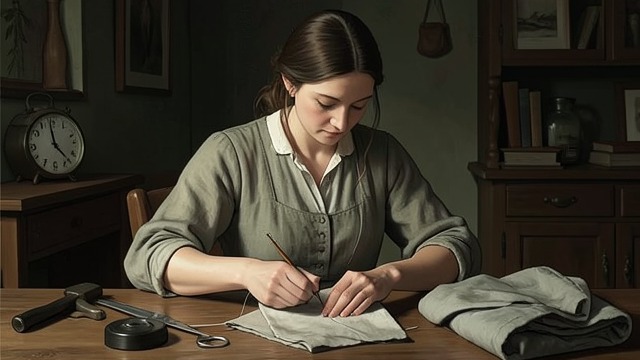
Work Learned by Hand
Rana’s Instruction
Rana gives the Queen fabric, needle, and thread, insisting that she can learn through practice even with little schooling. Embroidery provides a way out of immediate dependence on street survival.
Skill as Independence
The Queen masters several stitches and begins making linens for customers. Her craft offers income and self-respect, though the work remains vulnerable to competition and unstable patronage.
A Distinctive Style
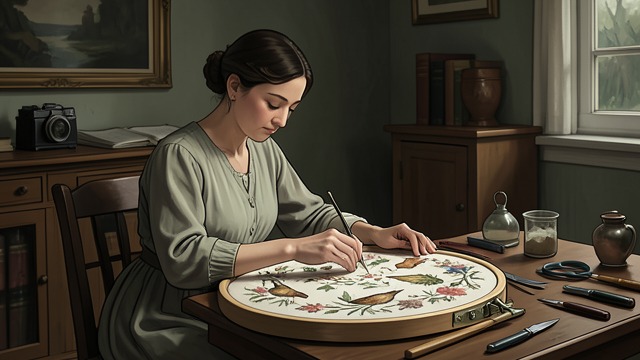
Precision Becomes Value
Fine Designs
The Queen develops delicate, careful embroidery that attracts wealthy clients. Her work transforms ordinary household linens into elaborate compositions of birds, angels, and flowers.
Success and Friction
The same skill that grants her independence takes clients from Rana. Artistic achievement carries a social cost, revealing how a rare opportunity can strain the relationships that made it possible.
The Commission for September
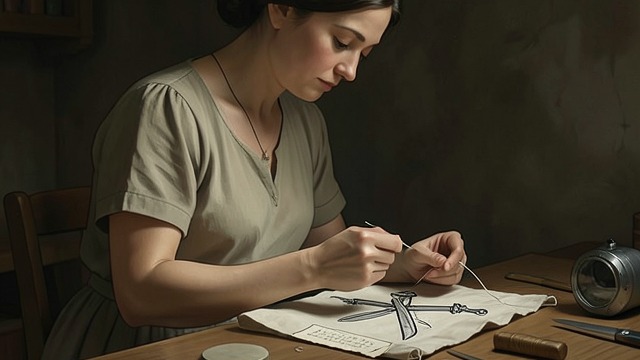
A Prestigious Order
Doña Catita’s Request
Doña Catita orders a tablecloth for a military dinner and asks for a national emblem with crossed swords. The Queen completes the work but refuses the design she considers vulgar.
Unequal Terms
The commission connects her labor to the households of powerful military families. She depends on their money, yet her judgment as an artist prevents her from becoming a wholly compliant servant.
The Vision at the Mansion
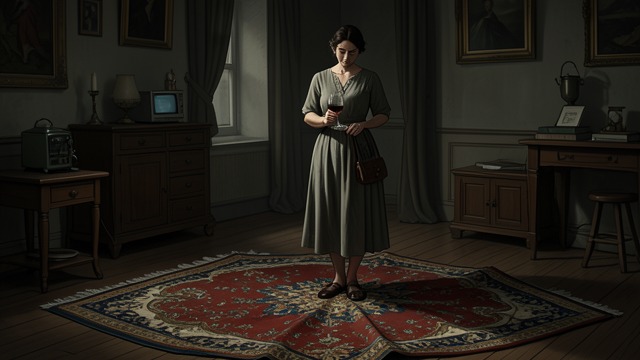
The Cloth Becomes a Warning
Imagined Banquet
Alone in the dining room, the Queen imagines generals celebrating military deaths. The embroidered birds and angels seem to drown beneath the wine and blood of the scene.
Refusal and Dignity
She leaves with the tablecloth rather than deliver it to a household whose celebration she cannot bear to serve. Her decision costs her a client but affirms that her labor does not have to sanctify power.
The Cloth at the Sea
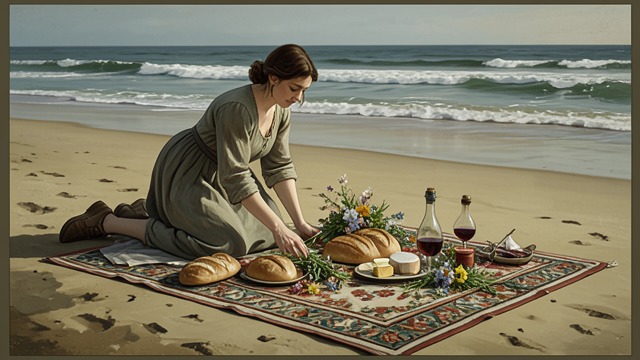
A Portable Kingdom
Setting the Table
The Queen spreads the embroidered cloth on the beach and arranges bread, cheese, wine, and wildflowers. The work she once made for wealth becomes the setting for a private farewell.
A Last Possession
After she leaves, the tide reaches the cloth on the sand. Its exposure to the sea echoes the loss of her home and the fragile beauty she has repeatedly created from limited means.
During the Queen’s years of street hardship
After the Queen establishes her own livelihood
Early September 1986
September 1986, during delivery of the commission
The final afternoon at Laguna Verde
