1986 assassination attempt on Pinochet
My Tender MatadorThe 1986 assassination attempt on Pinochet shatters the dictator’s conviction that his movements are beyond challenge. On the return drive from Cajón del Maipo toward Santiago, armed attackers strike his motorcade on the Achupallas grade. Pinochet survives when his chauffeur turns the Mercedes-Benz around and drives out of the ambush; seven of the dictator’s men die, while the attackers escape. The scene is also refracted through the Queen of the Corner’s love for Carlos, whose involvement she imagines as she watches an action film, and through the searches and public fear that follow the attack.
Causes and Background
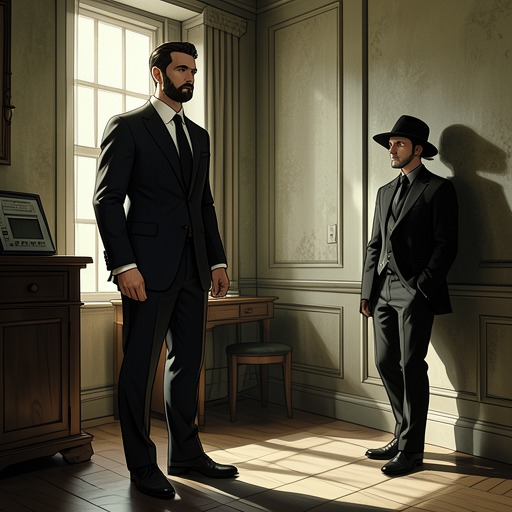
On September 11, the motorcade waits to leave the countryside for Santiago as reports describe unrest, student protests, bombs, and blackouts. Pinochet regards the return journey as a tiresome obligation and does not want to face the rebellious activity awaiting him in the capital. His security services have urged him to change his route as a precaution against attack, but he dismisses their concern. He assumes that the guerrillas are more influenced by films than capable of mounting an operation, and that nothing in the country can happen without his knowledge.
That certainty is set against a wider atmosphere of opposition and state repression. The Queen has heard reports of students arrested after university riots and has listened to Radio Cooperativa broadcast accounts of families seeking justice for relatives who have been detained and disappeared. Earlier that day, she was struck by a police officer while trying to pick up leaflets calling for demonstrations and later joined women demanding answers about the disappeared. The ambush therefore occurs in a narrative already marked by resistance, public protest, and coercive government power, rather than appearing as an isolated interruption.
The Ambush on the Achupallas Grade
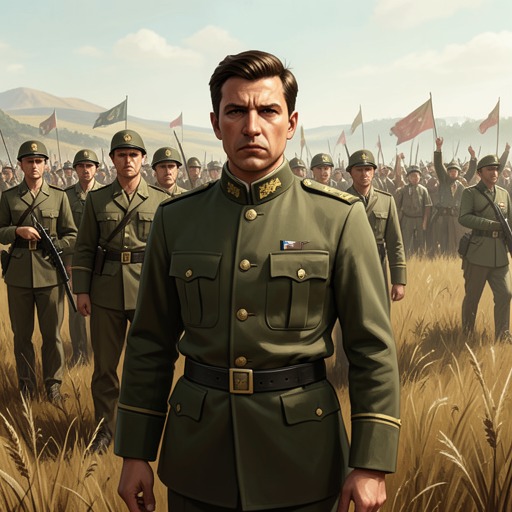
At 7:11 p.m., Pinochet is still insisting on taking the route security officials had advised him against. The motorcade includes the presidential Mercedes-Benz, two cars behind it, and a leading vehicle. The lead car suddenly skids to avoid a house trailer blocking the road. Before the convoy can recover, gunfire bursts against the cars from the cliffs above. The chauffeur urges Pinochet to get down; Pinochet presses himself to the floor as the guards, caught off guard, struggle to respond.
A rocket strikes the first car and sends it into the air. The attack turns the convoy into a scene of wreckage and confusion, with the guards unable to organize an effective defense. At 7:20 p.m., Pinochet calls for escape as the motorcade is trapped. The chauffeur reverses, colliding with the car behind, then manages to turn the armored Mercedes-Benz around and drive away. The remaining vehicles are left damaged and smoking on the slopes. Pinochet survives without a reported physical injury, but the narrative presents him as shaken and incapacitated by fear during the escape.
The Queen, Carlos, and the Attack
The event reaches the Queen through a charged mixture of news, longing, and fantasy. Earlier, while waiting in a movie theater, she sees an action sequence blur into an imagined vision of Carlos fighting on the mountainside. She calls out warnings to him in her mind, as if her voice might accompany or protect him. The film’s gunfire and escape imagery make the scene a parallel, imagined version of the violence taking place on the road: the Queen’s attention turns the distant political conflict into a personal fear for the man she loves.
When she leaves the theater, the changed city gives her no immediate certainty. The Plaza de Armas is nearly deserted, buses are crowded, patrol cars move through the streets, and helicopters search overhead. On the bus, she hears contradictory fragments: that there was an ambush, that Pinochet was killed or wounded, and that seven bodyguards had died. An older passenger tells her that Pinochet escaped without a scratch and that every guerrilla got away. The Queen’s relief is directed not only toward the attackers’ escape but toward Carlos, whose fate she cannot verify. The rumor that the Front’s members vanished keeps the outcome uncertain even as it suggests the operation succeeded in evading capture.
Aftermath and Significance
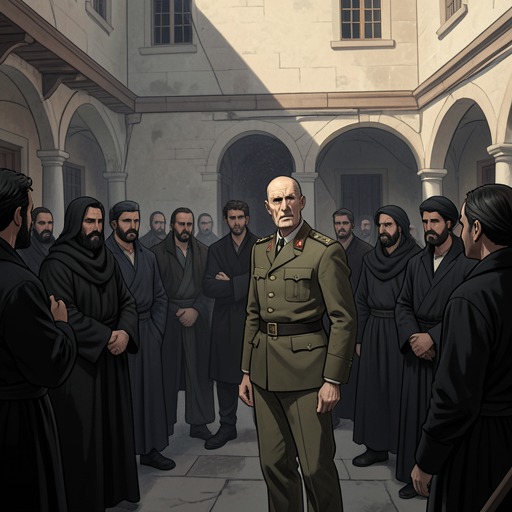
At the house in Cajón del Maipo, officials and relatives gather around Pinochet after the attack. He has been bathed and is drinking tea with a tranquilizer prescribed by his doctors while his wife Lucy repeatedly insists that she had warned him. Her complaints turn the failure of the security arrangements into a domestic argument: she points to the cost of the guards and their training, contrasts their performance with the attackers’ escape, and notes that seven of Pinochet’s men have been killed. Her bitter appraisal punctures the image of an invulnerable ruler without erasing the power of the state he commands.
For the Queen, the immediate aftermath is not a return to safety. A loudspeaker orders passengers off the bus one at a time to be searched, and a soldier divides people by gender. Carrying the photograph of a disappeared person she had taken from the protest, she must decide how to navigate the checkpoint. The episode connects the attack’s public consequences to the routine intrusion of military authority: the same city where women had demanded justice is now subject to searches and armed surveillance. The assassination attempt exposes a limit to Pinochet’s personal security, but it does not end the apparatus of repression; instead, the city’s intensified control becomes part of the event’s aftermath.