Anti-Dictatorship Resistance and Popular Mobilization
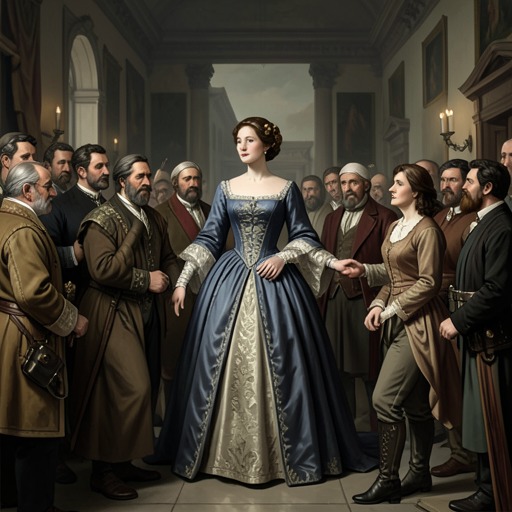
My Tender MatadorAnti-Dictatorship Resistance and Popular Mobilization is the novel’s shifting field of public protest and clandestine action under military rule. It appears in demonstrations, strikes, blackouts, radio reports, and neighborhood conversation, but also in the Queen of the Corner’s gradual passage from frightened listener to outspoken witness and participant. The story places this resistance inside ordinary routines—embroidering, riding a bus, opening a home—so that political danger is shown not as an abstraction but as a pressure on daily choices.
Public Protest and the Rhythm of Repression
In spring 1986, Santiago’s streets carry the signs and sounds of opposition: brightly colored graffiti and anarchist slogans appear on walls, unions mobilize, and student demonstrations meet police water cannons. Students answer with stones and Molotov cocktails. Blackouts interrupt the city’s electricity; residents hurry to buy candles, whose practical use is joined to the wish to preserve memory of the disappeared. September returns each year as a hoped-for turning point, yet the cycle of anticipation and disappointment continues. The Movement for Change has not displaced the ruler, and the approaching month brings both calls to action and the knowledge that previous mobilizations have not ended the regime.
The city’s political atmosphere is conveyed through recurring sounds and interruptions. The Queen hears reports from Radio Cooperativa about demonstrations, arrests, and the blackout that left metropolitan Santiago without electricity. The radio’s news and protest songs reach into homes and workplaces, but she initially finds the reports frightening and prefers old popular music. Her response changes over time: the station’s voice, once associated chiefly with alarming news, becomes familiar enough to offer a measure of reassurance during a blackout. The contrast between the broadcasts and her embroidery for wealthy clients connects national crisis to a domestic routine that continues under it.
Mobilization also takes place through argument among ordinary passengers. On a bus to the Barrio Alto, a woman condemns young people for rioting and striking. The Queen, who has not regarded herself as politically involved, answers that the country is not as prosperous as the government claims: soldiers are everywhere, and explosions and gunfire make sleep difficult. Students applaud her. The exchange marks a change in her public conduct: convictions she had not previously voiced emerge in response to someone treating protest as mere disrespect. Her subsequent pride is tied to imagining Carlos’s approval, but the act itself is hers, spoken aloud before strangers.
Organizing Behind the Public Scene
The resistance also has a concealed infrastructure. Carlos first asks the Queen to store boxes that he describes as censored books, while his friends meet in the rooftop room. From the neighbors’ observations, the boxes and visitors become a source of gossip, but not a reliable account of what is inside. The Queen does not press him for details, partly because of her feelings for him and partly because she accepts the limited explanation he offers. His clandestine work therefore enters her home before she understands its nature, making domestic hospitality one of the conditions that allows political activity to proceed.
Her involvement grows through specific favors rather than an initial declaration of political commitment. When Carlos needs a package delivered downtown, she offers to carry it, learns the instructions by heart, and takes it on a bus. Police violence and tear gas erupt during the journey. After the package slips beneath the seats in the confusion, she returns for it and completes the delivery to the designated recipient. Her concern is personal as well as political: she fears Carlos would blame her if the package were lost. Yet the task places her directly inside the hazards of street repression, where demonstrators, police, and passersby are caught in the same upheaval.
Only later does Carlos explain that his name is an alias and that he belongs to the Manuel Rodríguez Patriotic Front. He says the group uses assumed names to operate clandestinely and confirms that the Queen and the Front are involved in the same undertaking, while insisting that limiting what she knows is a matter of safety. Their conversation clarifies what earlier signs—the boxes, meetings, and deliveries—had left uncertain. The explanation gives her a place within the Front’s network without making her a fully informed organizer: she has helped the group, but Carlos has deliberately kept her access to information narrow.
State Violence in Everyday Spaces
The novel makes the costs of resistance visible through repeated accounts of force directed at students and demonstrators. A Radio Cooperativa bulletin reports that more than twenty students were injured and at least as many arrested after university riots; the students were handed over to military authorities. Another broadcast reports a vigil outside the Vicaría de la Solidaridad, where the Organization of Families of Detained and Disappeared Persons demands justice for human rights violations. The Queen has heard these stories often, but the accounts of relatives searching for missing loved ones move her to tears. She begins to call the system a dictatorship rather than the “military government” used by her friend Lupe, showing that the political language available to her has changed alongside her understanding.
The resistance’s street confrontations are not presented as safe or orderly. During the package delivery, tear gas fills a bus, passengers struggle to breathe, and the Queen helps another woman look for a lost shoe before realizing the package has been left behind. Later, as demonstrators scatter from advancing police, she initially refuses to flee, assuming that her age and appearance will protect her. She addresses an officer and gets through the police formation with the heavy package, then delivers it to the man Carlos described. Her passage depends on improvisation and nerve; the scene does not turn her into a combatant but shows how a civilian can be pulled through a violent encounter while carrying out a clandestine task.
Repression, Shelter, and Displacement
After the ambush on the presidential motorcade, Santiago is subjected to house-to-house searches, roadblocks, and a military siege. Soldiers search vehicles, homes, and whole neighborhoods; residents can be made to stand through the night in football fields, while people suspected of hesitation are beaten and taken away in trucks. The Queen spends the night listening to low-volume radio reports, keeping a kettle ready in case Carlos or his friends arrive. The familiar house, previously a refuge for her and a meeting place for the Front, is now exposed to the consequences of the crackdown. Domestic vigilance becomes a form of waiting under surveillance.
On her way back to the house, the Queen is stopped with other passengers and confronted with a demand that men and women separate. She turns the soldier’s attention away from the picture of a disappeared person in her pocket by answering him with a joke about needing to be in both lines at once. Her banter invokes her embroidery work for military households, and the soldier lets her pass without searching her. The moment links her practical knowledge of gender performance to survival under armed scrutiny; it also leaves her acutely aware that she could be suspected of helping Carlos and that her home may be implicated by the Front’s stored supplies and meetings.
The house cannot remain a secure refuge. At dawn, after a sleepless night, the Queen burns papers bearing addresses and telephone numbers, cleans surfaces, and packs her possessions into two bags. From the rooftop she looks across the city she is about to leave, knowing she may never see it again, and departs to seek La Rana. Her evacuation is a direct consequence of the repression that has made the Front’s former shelter dangerous. Resistance has drawn her into political action and given her a role in protecting others, but the cost is the loss of the only home she had been able to call her own.
Political Meaning and Narrative Form
Resistance in the novel is composed of actions with different degrees of visibility: a student protest, a radio report, a neighbor’s political argument, a secret meeting, a carried package, and a person’s effort to evade a search. These episodes do not collapse into a simple division between heroic militants and passive civilians. The Queen first avoids political news, then responds emotionally to reports about the disappeared, speaks against a pro-government passenger, and accepts practical risks for Carlos and the Front. Her development shows how participation can emerge through personal attachment and ordinary acts before a person possesses a complete account of the organization she is helping.
The Queen’s marginal social position shapes how she encounters power. Her reputation as an effeminate neighborhood figure makes her a target of gossip, but her wit, clothing, and ability to perform different roles also help her move through encounters with soldiers and police. The novel does not treat these tactics as a substitute for organized resistance: they are individual means of navigating a state whose searches, arrests, and violence reach into public transport and private homes. The contrast between state power and the Queen’s improvised agency remains stark, especially when the final response to repression is not triumph but forced departure.
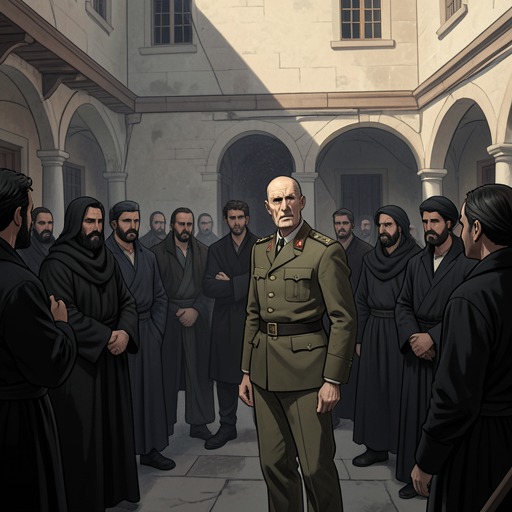
The novel also brings the dictator’s private world into contrast with public mobilization. While streets fill with protest and the regime’s forces intensify their response, Augusto Pinochet appears in domestic scenes shaped by grievance and fear. His recollection of childhood military toys and his anger at a newspaper photograph sit beside the organized actions of demonstrators and clandestine activists. These shifts in focus prevent resistance from becoming a remote political tableau: the same historical pressure appears in state violence, in the ruler’s unease, and in the Queen’s intimate losses. Her story gives popular resistance a human scale, measured not only in demonstrations and broadcasts but in the boxes stored, the package delivered, the kettle kept ready, and the home she must leave.