Hummingbirds
My Tender MatadorHummingbirds serve both as living creatures and as a recurring image through which the novel links the Queen of the Corner’s emotional life to political power. The Queen’s heart is likened to a baby hummingbird, and Carlos’s whispered secret reaches her through the same image; meanwhile, birds hover in the Dictator’s garden, where he treats their movement as a disturbance. The motif’s small scale makes it an emblem of vulnerability, but its repeated, ungovernable flight also resists the authority that tries to classify or control it.
The Queen and the Hummingbird Image
The hummingbird first provides a figure for the Queen’s tender, unsettled inner life. While recounting fragments of her past to Carlos during their long nights, she remembers her heart as vibrating like a baby hummingbird, orphaned when her mother died. The comparison gathers abandonment and nervous energy into one image: her heart remains alive and in motion, but its movement carries the vulnerability of a creature left without protection.
That association returns when Carlos tells the Queen that he uses an alias and belongs to the Manuel Rodríguez Patriotic Front. He explains that their clandestine work may require a secret phrase known only to the two of them. Rather than write it down, he moves close and asks her to memorize it; she whispers the refrain in his ear. The narration frames this exchange through the “hummingbird’s mouth,” turning the bird image into a vehicle for intimacy and secrecy. The closeness is real, but it does not undo the unequal terms of their relationship: Carlos entrusts her with a code while keeping the political knowledge she may have to protect to a minimum.
The motif also sharpens the difference between what the Queen feels and what Carlos offers. She imagines herself as small and fragile in the presence of her desire for him, while his careful kindness and reliance on her home sustain her hope without answering it. The hummingbird image does not make that love reciprocal; instead, it gives the Queen’s inward experience a form that can return across scenes even when the relationship remains bounded by Carlos’s needs and reserve.
Birds in the Dictator’s Garden
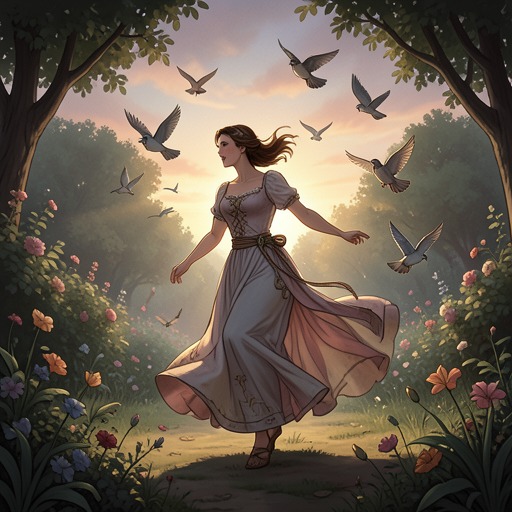
At the Cajón del Maipo, the Dictator watches the mountain peaks and hopes to see a condor, a bird he associates with the heights and the hunt. Instead, a group of hummingbirds passes over his gray head and darts among the garden railings, hovering as it feeds on flowers. Their movement is close, quick, and indifferent to his expectations. When they disturb his hair, he mistakes them for mosquitoes and shoos them away, dismissing them as pests rather than recognizing them as birds.
This encounter takes place as the Dictator inspects a cadet in the garden and reacts with hostility to what he perceives as effeminacy. He orders the young man removed and discharged, then watches him being taken away. Afterward, the hummingbirds remain the one element still troubling the morning’s order. The parallel is telling without equating the birds with the cadet: both fall outside the Dictator’s preferred image of disciplined masculinity, but only the cadet can be expelled. The birds continue to move through the garden after his attempt to restore control.
The hummingbirds recur again when the Dictator reads a newspaper carrying a photograph of himself from the days after the coup. He strikes the table with his fist, and the birds scatter from the garden. His anger therefore has a visible effect on them, even as their flight makes clear how briefly he can impose himself on the surrounding life. The scene places his political rage beside a fragile natural presence without suggesting that the birds can alter the power he wields over people.
Recurrence, Vulnerability, and Resistance
The novel places hummingbirds within a wider pattern of fear, repression, and movement. In the Queen’s memories, the image belongs to a heart shaped by early loss; in the encounter with Carlos, it accompanies a whispered password and the secrecy of resistance. In the Dictator’s garden, the birds become unwanted motion within a carefully managed setting. Across these scenes, their smallness does not make them merely decorative: it lets the narrative set intimate vulnerability against the state’s immense capacity for coercion.
The motif’s force comes from repetition with variation. The Queen’s hummingbird-like heart and the birds in the garden are not the same image in the same situation: one expresses private feeling, while the others are actual creatures that interrupt the Dictator’s attention. Yet both appearances depend on quick, delicate movement that cannot be made into the kind of fixed order he prefers. Even when the birds are dismissed as pests or scattered by a blow to the table, they remain a persistent presence in the narrative’s account of what authority cannot entirely command.