My tender matador
My Tender Matador“My tender matador” is the Queen of the Corner’s signature address to Carlos, at once a song lyric, an expression of intimate devotion, and a refrain that exposes the distance between her romantic hopes and his guarded revolutionary life. First heard in the Queen’s voice as she sings from her rooftop room, it recurs at a birthday celebration and later becomes the three-word remembrance she asks Carlos to take with him when the two part under the pressure of political danger.
A Song That Announces the Queen
In the spring of 1986, the Queen makes a home in a dilapidated, earthquake-damaged corner house in Santiago. From the rooftop room, whose narrow railing is just wide enough for laundry, she sings “My tender matador” with open windows. The lyric belongs to the public soundscape as much as to her private feeling: neighbors hear the old-fashioned songs, and the Queen’s music soon becomes the block’s dawn alarm. The phrase therefore enters the story as a performance that makes her visible and audible to a working-class neighborhood where unemployment, credit at the grocery store, and political talk shape daily life.
The first appearance is already edged with apprehension. The Queen sings that she fears her matador’s smile will disappear that afternoon. The line turns a tender address into a forecast of loss: its beloved is evoked through a smile that may not last, while the singer’s fear is made melodious and public. The refrain’s romantic idiom does not erase the threatening world around it. The same spring is marked by cordoned streets, blackouts, gunfire, and the repeated chant that Pinochet will fall; song offers the Queen a way to voice desire amid that political violence without ceasing to be part of the neighborhood’s collective life.
The Birthday Performance
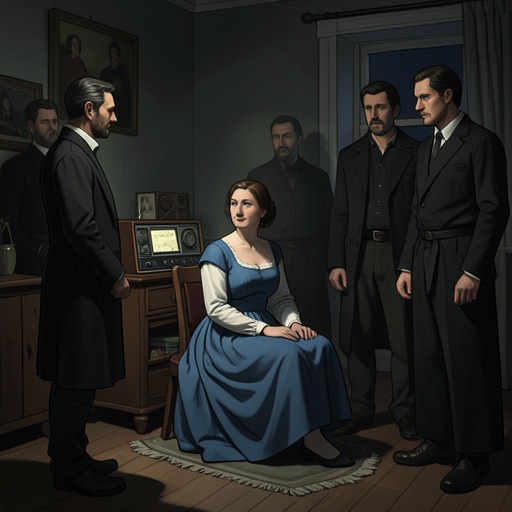
The phrase returns at Carlos’s birthday, after the children’s party has exhausted itself and the house has fallen quiet. Once the mothers have collected the children, the Queen leaves the mess of frosting and party scraps behind and offers Carlos a private surprise. She puts on an LP, places the needle carefully into its grooves, and lets the song fill the room. Carlos closes his eyes and leans back among the pillows as the music carries him into an inward, dreamlike state. The lyric is no longer simply the Queen’s public morning serenade: it now accompanies an intimate scene arranged for the two of them.
The Queen brings in pisco, soda, and two glasses, proposing a toast. Carlos answers that he wants to toast having met her and to what he calls the best birthday of his life. The song frames this exchange, but the scene does not promise that their feelings are equal. The Queen lowers her eyes, blushes, and drinks; her delight is shadowed by the knowledge that happiness is fleeting. As she looks at the party’s remnants, she says she wants to forget the afternoon and the stinginess of a life that so rarely grants such moments. Her sadness, she explains, is how she wrings the last drop of happiness from an experience before it is gone. The song’s fear that the beloved’s smile may disappear thus finds a counterpart in her deliberate effort to savor a temporary closeness.
When Carlos places the crown on her head, the Queen calls him her strange and unknown prince. She asks for a secret, not everything, because she understands that he cannot tell her everything. The request leads Carlos to speak about a memory from when he was thirteen or fourteen, while avoiding names and dates. Here the lyric’s tender fantasy meets the guardedness of the man it addresses: the Queen can draw him into confession, but only within limits. The phrase creates an intimate space between them without dissolving the secrets that define Carlos’s life.
Refrain at a Parting
Later, in Viña del Mar, the Queen repeats the song’s address to Carlos in a meeting shaped by danger and separation. She has reached a coastal café without enough money even to pay for a drink; the waiter nevertheless invites her in and offers mineral water on the house. Outside, naval infantrymen stop and search traffic, and the Queen has no identity card to show. Against this backdrop of searches and concealed movement, Carlos appears, and she greets him with the familiar phrase. The refrain briefly restores their private language in a place where surveillance makes a private encounter perilous.
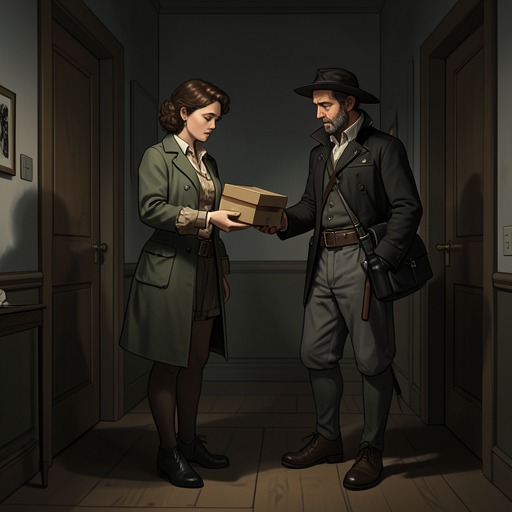
The Queen tells Carlos that his absence has hurt her and that she thought she would never see him again. He takes her hand beneath the table, but cuts short the conversation about her fear: they have little time, he says, and the café is full of spies. He ushers her out, carrying her bags. The moment brings the phrase’s affectionate promise into contrast with the conditions of their relationship. The Queen wants simply to be with him; Carlos is there to deliver information and move her out of danger. Their tenderness is real, but their needs and priorities are not the same.
When the Queen later challenges Carlos over the aftermath of the ambush, the disparity becomes explicit. She objects that the Front remembers her when it is convenient and discards her otherwise. Carlos says they are protecting her, though he concedes that they have not really trusted her; he offers money for lodging and expenses while she stays away from Santiago until things settle down. She hears the offer as a possible payment for services and describes herself as a foolish person who has confused everything. Carlos insists that he will not forget her, takes her faded, birdlike hands, and kisses them. Asked how she could repay him, he requests three words. She answers with the refrain: “My tender matador.”
What the Expression Holds Together
At the point of parting, the phrase serves as an answer to Carlos’s request and as the Queen’s chosen account of what matters between them. She does not ask him for a declaration or a promise of reunion. Instead, she gives him the words by which she wants their intimacy remembered. The exchange makes the refrain both affectionate and painful: Carlos’s kiss and assurance of remembrance meet the Queen’s wish for recognition, but neither cancels the unequal terms of their attachment or the practical separation imposed by danger.
The expression changes function as it recurs. From the rooftop it is a sung lyric that announces the Queen’s arrival in the neighborhood; at Carlos’s birthday it accompanies a carefully staged private celebration; in Viña del Mar it becomes a greeting amid searches, a farewell, and finally the three-word gift she offers in response to his thanks. Its repetition links public self-fashioning to private vulnerability. The Queen can turn a song into a performance, a toast, and a compact declaration of love, but she cannot make the relationship secure by naming it. The refrain’s enduring force lies in that tension: it is a small, repeatable form for a feeling that remains vulnerable to absence, secrecy, and political violence.