Pinochet regime
My Tender MatadorThe Pinochet regime governs the novel’s 1986 Chile through a stark combination of public force, restricted information, and the everyday fear that follows people into homes, buses, and neighborhood conversations. Its power is visible in the police dispersing protesters and the army sealing Santiago after an attack, but it is also present in the competing broadcasts and private calculations through which residents try to understand what is happening. The regime’s claim to have restored order is repeatedly undercut by scenes of coercion, political uncertainty, and a ruler who imagines himself both invulnerable and threatened.
Public Order and Popular Resistance
Spring in Santiago arrives with graffiti, union mobilization, student protests, and police water cannons. Students return to the streets after being driven back, while blackouts prompt residents to buy candles. The novel links these recurring acts of protest to remembrance: the candlelight becomes a means of keeping the disappeared in public consciousness. This movement is cyclical and precarious; September brings heightened expectations, but each year passes without the anticipated end of the regime.
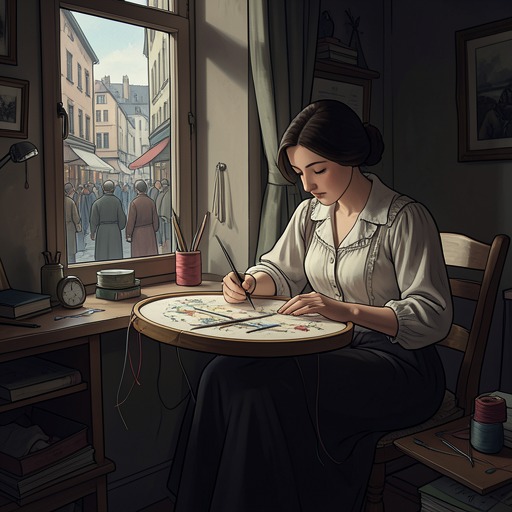
Neighborhood life registers that politics through argument and radio. At the grocery store, residents discuss demonstrations, Opposition statements, the Dictator’s threats, and calls to mobilize in September. Radio Cooperativa carries urgent bulletins and protest songs; its reporting names itself “the radio of the majority.” Yet the Queen of the Corner is initially frightened by its steady stream of bad news and prefers old songs while embroidering linens for wealthy clients. Political events reach her first as an anxious background to work, music, and neighborhood gossip, rather than as a cause she has chosen to pursue.
The state’s account of unrest is sharply different. A government communiqué says that a subversive plan for September has been uncovered and that measures have been taken to prevent violence. The Queen, however, turns to Radio Cooperativa for reporting on a vigil by the Organization of Families of Detained and Disappeared Persons outside the Vicaría de la Solidaridad at Plaza de Armas. Listening to relatives describe those taken from their families moves her to tears. She begins to call the system a dictatorship rather than the military government preferred by some of her acquaintances: a change in language that marks her growing recognition of what the official account leaves out.
Repression in the Streets and at Home
The Queen’s domestic world becomes entangled with political activity through Carlos, who asks her to store boxes he describes as books and to let his friends meet in the rooftop room. Her attachment to him makes her reluctant to ask questions. Neighbors notice the traffic of packages and people, while she dismisses their curiosity and continues listening to news of arrests. When radio reports that injured students have been detained and handed to military authorities, she fears that Carlos may be among them; seeing him cross the street brings immediate relief, even as she recognizes that her feelings do not tell her what he thinks.
That entanglement becomes an act of practical risk when she carries a package for Carlos across Santiago. Tear gas fills her bus during a disturbance, and in the confusion the package disappears beneath the seats. She returns to retrieve it, then continues through a crowd fleeing police. As officers advance behind shields and helmets, she refuses to run, insists on being allowed through as a respectable older woman, and makes her way past the formation with the bag. At noon she delivers the package to a mustached man outside the store Carlos named. The scene makes repression part of a seemingly ordinary errand: a bus ride, a lost parcel, a delivery whose purpose the Queen does not know.
The danger broadens after the attack on Pinochet’s motorcade. In Santiago, rumors travel on a crowded bus: the ruler is wounded but alive, seven bodyguards are dead, and the attackers have escaped. Passengers are ordered off the bus one at a time for searches. That night, the army occupies the city and cuts off roads in and out. Soldiers search cars, houses, and entire neighborhoods; residents may be held standing through the night in football fields, and people who hesitate can be beaten and taken away in trucks. A radio announcement tells citizens to stay home, remain vigilant, and report anything suspicious. The demand for public vigilance turns neighbors into potential informants even as armed forces conduct house-to-house searches.
Official Narratives and the Ruler’s Private World
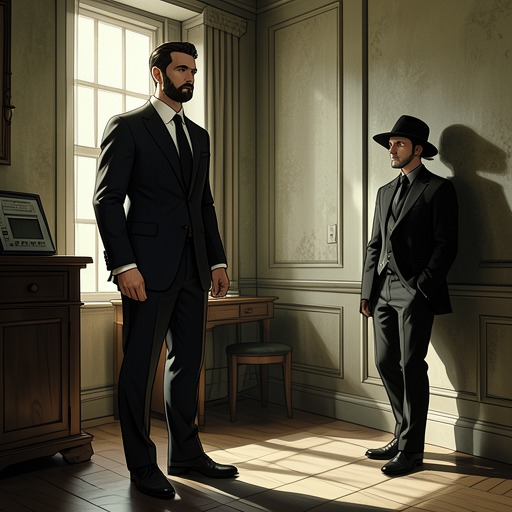
The regime’s politics are also presented through Pinochet’s own justifications. In his recollection of the 1973 coup, he remembers ordering the bombing of La Moneda from a command room in Peñalolén and imagines that God and the Virgin of Carmen supported what he calls a historic action. He interprets the resulting country as fertile and orderly. The novel places this self-description beside the protesters, arrests, and censorship that make the language of order unstable: the ruler’s account is not a neutral explanation, but a claim that attempts to overwrite the visible costs of his power.
His private life does not make that power less consequential, but it exposes the vulnerability and self-mythologizing of the man who wields it. During a birthday, he dreams of a funeral procession in which he is the sole protagonist, then wakes in fear. The image returns in other forms: after seeing a newspaper photograph of himself in dark glasses, he cannot stop thinking about how it has been used against him. He recalls that he wore the glasses so no one would see his eyes as people were dying. Later, a dream turns circling birds into attackers and leaves him terrified until his guards wake him. These episodes puncture the posture of complete command without suggesting that private fear cancels state violence.
The novel also uses satire to set Pinochet’s security apparatus against the confidence it claims to provide. After the motorcade attack, the High Command rushes to the house in the Cajón del Maipo by car and helicopter, while Pinochet drinks tea with a tranquilizer. Lucy angrily says she had warned him and ridicules the bodyguards, including cadets trained for counter-guerrilla operations. She counts the consequences in seven deaths, funerals, monuments, compensation packages, and flags for coffins, then bitterly suggests the Front would have been cheaper to hire. Her complaints are comic in their exaggeration, but they also make the costs of the attack and the failure of the security detail unmistakable.
Consequences and Narrative Significance
The regime’s repression does not end with the immediate response to the attack. After a sleepless night in a city under military occupation, the Queen receives a call from Laura, who tells her Carlos is safe but says they urgently need to meet. The Queen does not yet know what the request entails. Before she can settle the uncertainty, she spends the dawn removing traces from her home: burning papers with phone numbers and addresses, cleaning surfaces, and packing her possessions into two bags. The house that had been her refuge and the setting for Carlos’s meetings is no longer safe. She leaves for La Rana’s home, carrying the consequences of political danger into the few relationships that have sustained her.
The regime therefore operates at two scales at once. Its forces can disperse crowds, detain students, search homes, and close off a city; its political language can also shape what people say they are permitted to call the government. Against that machinery, the novel places radio listeners, family members of the disappeared, students, neighbors, and a queer protagonist drawn into dangerous errands by affection. The result is not a portrait of political power as distant background, but of a system that enters daily routines and intimate attachments, making even a home, a parcel, or a radio broadcast part of the struggle over who may speak and who may remain safe.