Plaza de Armas
My Tender MatadorPlaza de Armas is a public square in Santiago where the Queen’s private fear of state repression turns into an act of solidarity with families of the disappeared. Its changing character—from a place of public assembly to an almost deserted corner under military control—makes the square a measure of how political pressure enters ordinary city life.
Public Assembly and Calls for Justice
The square appears first in the Queen’s news and radio landscape. After a government communiqué warns of a subversive plan scheduled for September, she turns to Radio Cooperativa, which reports that the Organization of Families of Detained and Disappeared Persons is holding a vigil in front of Vicaría de la Solidaridad at Plaza de Armas. The gathering calls for those responsible for human-rights abuses to be brought to justice. Listening to repeated testimony from women whose relatives had been taken, the Queen becomes more emotionally responsive to their claims and begins calling the regime a dictatorship rather than using the more accommodating term preferred by Lupe.
The Queen Joins the Vigil
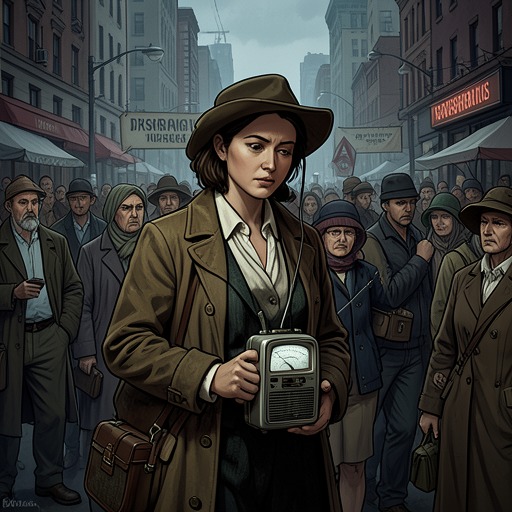
On a later visit, the Queen reaches the square after being struck by a uniformed officer and sits briefly to recover. Near the cathedral, she sees women holding photographs of relatives who were arrested and disappeared. Their signs and chants demand justice, ask where the missing people are, and insist that the families never saw them again. A young woman gestures for the Queen to join them. She takes a placard bearing a disappeared person’s photograph and adds her voice to the protest. In the company of the women, she feels less exposed and more secure than she had expected; the square offers a moment of belonging as well as a place to make a political claim.
Repression and Changed Meaning
That fragile security ends when police sirens announce an effort to disperse the gathering. The Queen escapes from the square and takes refuge nearby, leaving the protest behind. Her brief participation nonetheless marks a change: she is no longer only a listener to radio reports about the families’ demands but a participant in their public witness. The square thus connects information, grief, and action, while the authorities’ response shows the risks attached to making those demands collectively.
The Square Under Military Control
Later, after the Queen has been inside a cinema, she emerges into a city transformed by searches and military presence. Plaza de Armas is nearly deserted, lit by patrol cars, while buses carry people through streets emptied of their usual traffic. Authorities stop a bus and order passengers to leave one at a time for searches. In the aftermath of the September 1986 attack on Augusto Pinochet’s motorcade, the square’s open civic space is part of a city under lockdown: public movement is scrutinized, and an ordinary journey becomes uncertain. The contrast with the earlier vigil gives the location its narrative force. It is both a place where people can gather to demand justice and a landmark within a city where the state can make gathering, travel, and safety precarious.