Queen of the Corner’s house
My Tender MatadorQueen of the Corner’s house is a dilapidated three-story building on a street corner in Santiago, at once the Queen’s carefully fashioned refuge and a covert site used by Carlos and his associates. Its transformation from boarded-up ruin into a vivid home makes it a shelter for queer community and private fantasy, but also places it within reach of the political violence closing in on the city.
Building and Transformation
The house had been boarded up for years and was described as earthquake-damaged, crowded with rats, ghosts, and bats. A staircase rose through the narrow three-story structure to a rooftop room. From the roof, the Queen could see the city under a veil of dust; the small rooftop space, enclosed by three walls and a railing, was just wide enough for her to hang sheets, tablecloths, and underwear.
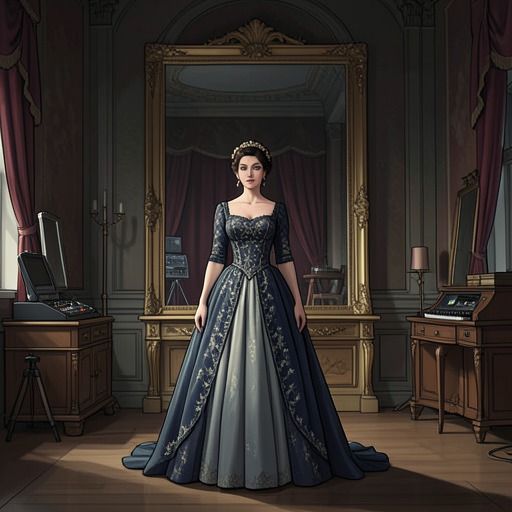
After moving in, the Queen cleared the building herself, sweeping out debris with a feather duster and broom. She made the house her own through decoration: birds, fans, flowering vines, and lace mantillas adorned the walls and cornices, while sheer fabrics covered boxes repurposed as furniture. The contrast between the neglected shell and its theatrical interior gives the house two identities at once: an impoverished, damaged building and a world the Queen composes through care, performance, and imagination.
The house also connected private life to the surrounding lower-class neighborhood. The Queen’s singing and radio music carried through open windows, waking residents and making her a familiar presence. Neighbors gathered at the grocery store to discuss unemployment, demonstrations, opposition statements, and threats from the dictator, while the Queen worked at home embroidering linens for wealthy older women. Her house was thus embedded in a neighborhood where domestic labor and political talk occupied the same everyday landscape.
Refuge and Social Space
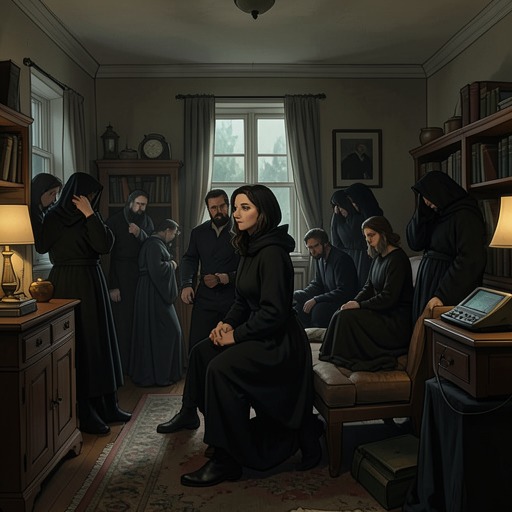
In the spring of 1986, the Queen regarded the house as her refuge and perhaps the only place she had ever been able to call her own. Its rooms offered her a setting for music, embroidery, and elaborate domestic arrangement, as well as a place to welcome queer friends. Boxes and crates became thrones, armchairs, and divans; small groups of friends visited for tea, while the Queen’s jokes about her male visitors revealed the teasing intimacy of that social circle.
The home’s protection was not simply architectural. The Queen’s routines—decorating, cleaning, singing, and receiving visitors—made the house feel inhabitable despite the political unease outside. Yet the same openness that sustained neighborhood familiarity also made the home a visible part of the street. It was a domestic refuge, not a place separate from the city’s dangers.
Carlos and the Boxes
Carlos first asked the Queen to store boxes, describing their contents as censored books. She accepted without questioning him, captivated by his manner and drawn to his presence. At her insistence, the first boxes were brought into her bedroom, where they served as a bedside table and a place for her radio. As more boxes arrived, she rearranged them around the house and covered them with cushions and fabric, turning them into furniture that concealed their contents.
The house then became a meeting place. Carlos asked permission to bring university friends to study in the rooftop room, and the Queen agreed. Meetings took place late at night and at dawn; visitors sometimes arrived in the rain, while one person remained outside on the corner. The Queen served coffee and sang along with the radio until her guests changed the station to Radio Cooperativa, whose reports described violence and barricades on Alameda Bernardo O’Higgins. The building’s ordinary functions—bedroom, sitting room, rooftop, and gathering place—therefore accommodated a clandestine use that the Queen only partly understood.
Her attachment to Carlos colored how she interpreted the house and its activity. She welcomed his requests and treated his politeness as an intimacy, even as neighbors speculated about the young man, the boxes, and the visitors. When reports announced that students had been injured and arrested, the Queen worried that Carlos might be among them. Seeing him cross the street brought relief; a wave of affection followed, but she recognized that her hopes for a relationship extended beyond what he had offered. The house sheltered Carlos’s meetings and supplies, while the Queen’s emotional investment made that shelter feel like a bond between them.
Celebration and Political Unease
The house could also host an expansive, improvised celebration. For Carlos’s birthday, the Queen joined boxes into a long table and covered it with an embroidered cloth depicting birds and angels. She prepared hot chocolate and invited children from the block, decorating the room with balloons and ribbons and reserving a silver cardboard crown for Carlos. When he arrived, the children’s surprise and the Queen’s preparations moved him; the party filled the house with shared activity and momentarily displaced the secrecy associated with the boxes and meetings.
Political pressure nevertheless entered the home through its radio and through what the Queen heard and saw outside it. After a government communiqué announced that a plan for September had been uncovered, she switched to Radio Cooperativa and heard of a vigil by the Organization of Families of Detained and Disappeared Persons at the Vicaría de la Solidaridad in Plaza de Armas. The testimonies of families whose relatives had been taken away moved her, and she began to call the regime a dictatorship rather than the military government. The house remained a domestic setting, but its occupant was increasingly affected by the political realities that threatened its apparent safety.
When Carlos’s associates later removed boxes, the Queen found an identity card among the cushions. She wondered whether it belonged to Carlos and whether the name she knew was false, but put the card away without investigating. Soon afterward, a broadcast reported a vigil and renewed demands for justice; the Queen’s knowledge of the house’s use remained incomplete even as the danger surrounding it became harder to ignore.
Repression and Departure
In September 1986, military searches and a citywide siege turned the house’s surroundings into a place of acute danger. Soldiers occupied Santiago, roads were cut off, and searches reached cars, homes, and whole neighborhoods. Residents could be made to stand through the night in football fields, and those suspected of wrongdoing were beaten and taken away. The Queen stayed awake, startled by noises and by the creaking staircase, keeping a kettle ready in case Carlos or his friends came and listening to Radio Cooperativa at low volume for updates.
At dawn, the Queen began erasing traces of herself from the house. She burned scraps bearing telephone numbers and addresses, swept away footprints, washed windows, and dusted surfaces. Only after packing her possessions into two bags did she climb to the roof and look over the city. The rooftop that had once served as a place to hang laundry and survey the neighborhood became the vantage point for her farewell. A car stopped in front of the building; the Queen left with La Rana, carrying packages and offering no full explanation of what had happened.
The house’s trajectory—from abandoned structure, to self-made refuge and clandestine meeting place, to a home emptied under pressure—condenses the novel’s connection between private life and political history. Its decoration and everyday uses do not shield it from repression. Instead, the same rooms that hold friendship, work, longing, and celebration become part of the Queen’s exposure to a city under military lockdown, making departure the last act of protection the house can no longer provide.