Radio Cooperativa
My Tender MatadorRadio Cooperativa is the novel’s persistent countervoice to official announcements and the intimate soundtrack of political crisis. Its reports bring demonstrations, arrests, blackouts, and demands for justice into the Queen of the Corner’s home, gradually changing her from a frightened listener who prefers old songs into a witness who recognizes the dictatorship’s human cost. During the September 1986 crackdown, the station’s bulletins become practical warnings as well as a fragile thread connecting listeners to events outside their doors.
A News Voice in the Neighborhood
In the spring of 1986, Radio Cooperativa’s reports reach a Santiago neighborhood already charged with political expectation. At the grocery store, residents discuss demonstrations, the Opposition’s declarations, the Dictator’s threats, and the coming September mobilization. Their forecasts that 1986 will be the year Pinochet falls mingle with the station’s near-constant bulletins, making broadcast news part of the neighborhood’s public conversation rather than a distant account of national affairs.
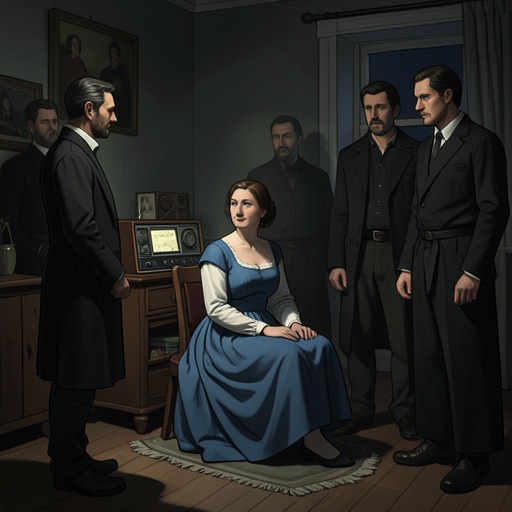
The Queen of the Corner initially wants no part of that atmosphere. She finds the station frightening because its coverage seems to offer one bad report after another, and prefers oldies programs while she embroiders linens for wealthy clients. Yet Radio Cooperativa cannot be kept outside her home: its urgent communiqués compete with the romantic songs that shape her private world. The radio’s movement between popular music and political reporting makes listening itself a daily negotiation between refuge and unwanted knowledge.
When Carlos and his friends meet in the Queen’s rooftop room, they sometimes interrupt her ballads to tune in to the station. A report of violent incidents and barricades on Alameda Bernardo O’Higgins cuts across the gathering, exposing the political work concealed behind the visitors’ ostensible university studies. The station’s news does not explain every secret, but its presence makes the divide between the Queen’s domestic sanctuary and the dangerous city increasingly difficult to sustain.
From Fear to Recognition
A blackout changes the emotional meaning of the broadcasts. After the Manuel Rodríguez Patriotic Front claims responsibility for leaving the Santiago metropolitan area without electricity, the Queen has grown used to following the station. When the power fails and she has to use batteries in her radio, the familiar voice of reporter Sergio Campos calms her in the darkness. The broadcasts still carry alarming news, but the voice that delivers it becomes a form of reassurance, bound up with her longing for Carlos and his insistence on staying close to the reports.
That growing attentiveness opens her to the experiences described on air. She listens to accounts of women searching for missing relatives, asking for news at doors that remain closed, and facing water cannons while seeking answers. Their grief moves her because it gives human weight to the crisis she had tried to avoid. The news is no longer simply a succession of frightening political events: it carries the voices and losses of families who have been left without information about those taken from them.
The station also reports events that sharpen her anxiety about Carlos. After a university disturbance leaves more than twenty students injured and at least as many arrested, Radio Cooperativa says that the special police have turned those arrested over to military authorities. With no word from Carlos, the Queen fears he may be among them. His eventual appearance brings relief, but the broadcast has already made clear how readily student politics can become a matter of arrest and military custody.
Later, she hears a government communiqué claiming that a subversive plan for September has been uncovered and that measures have been taken to prevent violence. She turns away from that official account to seek the station she considers reliable. Radio Cooperativa reports instead on a vigil by the Organization of Families of Detained and Disappeared Persons outside the Vicaría de la Solidaridad at Plaza de Armas, where families demand justice for human-rights abuses. Hearing the testimonies has changed her vocabulary as well as her sympathies: she now calls the military government a dictatorship. The change signals a new willingness to recognize what her preferred songs and former political distance had kept at bay.
Broadcasts During the Crackdown
Radio Cooperativa’s reports recur against the escalating September crisis. The Queen hears of weapons and leaflets confiscated by security forces and of calls for a popular uprising. These bulletins run alongside her private hope that Carlos will return, making public danger inseparable from the uncertain fate of the young man she loves. The station’s title as “the radio of the majority” emphasizes its place as a broadly shared source of news, reaching her through the neighborhood store as well as her own receiver.
As political tension intensifies, the broadcasts help situate her movements within a city of demonstrations and police violence. She carries a package for Carlos through tear gas and a street confrontation, listening amid a world in which armed forces, resistance, and ordinary errands occupy the same streets. The station’s reporting does not make her an informed strategist; it makes the danger surrounding her harder to mistake for rumor or private misfortune.
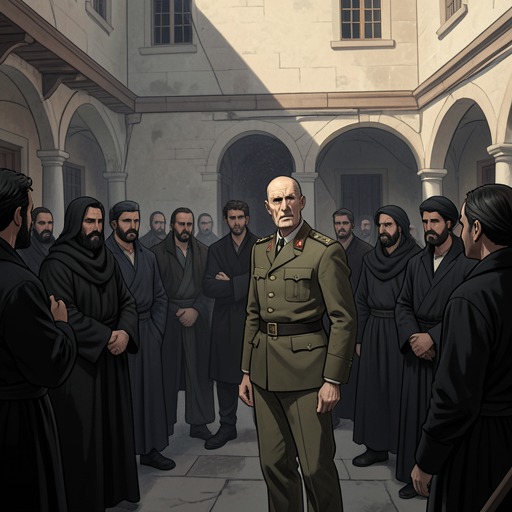
After the attack on Pinochet’s motorcade, the authorities’ response turns Santiago into a militarized landscape of searches, roadblocks, and arrests. Radio Cooperativa relays an announcement from the Undersecretary of the Interior asking citizens to stay home, remain vigilant, and report anything suspicious. The warning reaches the Queen during a night when she waits in her house with the kettle ready in case Carlos or his friends appear. Its language of vigilance stands in sharp contrast to her hospitality: the same home that has served as shelter for the Front is now exposed to the surveillance the announcement encourages.
Competing Accounts and Public Memory
After the attack, the station also brings the President’s household before the public. Lucy tells journalists that the Virgin saved her husband, pointing to what she sees as an image of the Virgin in the shattered Mercedes-Benz window; she says the car should be exhibited so people can give thanks. A Radio Cooperativa correspondent questions her about the supposed miracle and the President’s condition. Lucy answers angrily, while the reporter’s questions make the claim available for public scrutiny rather than leaving it as the government household’s unquestioned account.
The scene sets competing ways of interpreting political violence beside one another: Lucy gives the damaged car a religious meaning, while the station’s correspondent asks direct questions about the attack and its consequences. The President, listening from his bedroom, remains frightened and unsettled. Radio Cooperativa thus does more than announce events. Its reporters create a public encounter in which official explanations can be challenged, even as the state’s power and the immediate risks facing ordinary people remain unmistakable.
Narrative and Political Significance
The station’s recurrence gives the novel a sound structure for connecting private life with political history. Bulletins interrupt music, conversations, and household work; news from the streets enters a room arranged as a refuge, while the Queen’s personal concerns—Carlos’s safety, the future of her home, the families of the disappeared—give the broadcasts an intimate human scale. Radio Cooperativa is not merely a source of exposition: the characters hear it, react to it, and gradually change their understanding of what its reports mean.
Its significance lies in the contrast between what the Queen first wants from the radio and what she comes to receive. She begins by choosing love songs over a frightening stream of news. Yet the broadcasts’ recurring accounts of arrests, repression, and families seeking the disappeared draw her into political awareness without dissolving the particularity of her life. In the final emergency, Radio Cooperativa’s voice cannot promise safety or prevent the searches, but it keeps the city’s events audible inside the fragile shelter of the home.