Tell Us Where They Are
My Tender Matador“Tell Us Where They Are” is a protest slogan that makes the fate of the disappeared a public demand rather than a private fear. Repeated at a vigil and carried on a placard by the Queen, it connects families’ testimony, radio reporting, and street protest while exposing the gap between people’s appeal for justice and the force used to silence them.
Words in Public
In downtown Santiago, the slogan appears among the chants of women gathered on the steps near the cathedral in the Plaza de Armas. Wives, mothers, grandmothers, and sisters hold photographs of relatives who were arrested and disappeared. Alongside demands for justice, they call for the authorities to tell them where their loved ones are. The slogan names the central fact of their loss: not only that family members were taken, but that those left behind have been denied an answer about their whereabouts.
The phrase is also printed on demonstration leaflets scattered along Paseo Ahumada. Those leaflets call for a September demonstration and place the demand amid slogans promising liberation and the fall of Pinochet. Its recurrence across street print and public speech gives the demand a collective voice, while the photographs make the absent people visible to passersby.
Broadcast and Witness
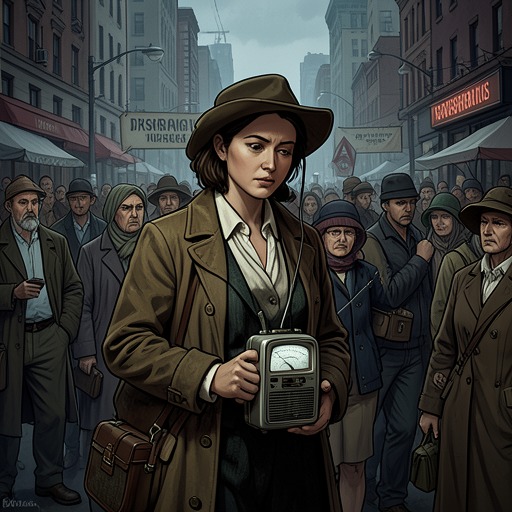
The Queen has already encountered the issue through Radio Cooperativa. The station reports that the Organization of Families of Detained and Disappeared Persons is holding a vigil in front of the Vicaría de la Solidaridad in the Plaza de Armas and demanding that those responsible for human-rights abuses be brought to justice. Repeated listening has moved her: she now speaks of dictatorship rather than the euphemism of military government and is brought to tears by accounts from women whose relatives were taken.
When a young woman gestures for the Queen to join the gathering, she takes up a placard bearing a photograph of a disappeared person and adds her voice to the chant. She is surprised that she feels no embarrassment about speaking in her high-pitched voice among the women. The shared demand briefly gives her a sense of safety and belonging, making her participation an act of witness as well as solidarity.
Repression and the Unfinished Demand
Police sirens announce the dispersal of the gathering. The Queen flees with the others, falls on the wet paving stones, and reaches shelter in a passageway while still affected by tear gas. She carefully removes the photograph from the placard, folds it, and puts it in her pocket. The preserved image carries the vigil’s appeal beyond the interrupted protest, even as the slogan itself is forced off the street.
The demand returns in the wider atmosphere of searches and arrests. After an ambush, passengers are ordered off a bus one by one to be searched by authorities; the Queen hears the announcement while seeking news of Carlos and the Front. Set beside the families’ unanswered calls, this routine display of state power sharpens the slogan’s significance: the authorities control movement and conduct searches, while relatives continue to ask for the basic information they have not received. The book presents the demand not as a resolved appeal but as a repeated public insistence on truth and accountability.