Junk time
Naked LunchJunk time is time measured by the body’s need for drugs: its intervals contract around obtaining a dose and stretch through waiting, sickness, and uncertainty. In the novel, it is at once a practical rhythm of the drug trade and a disorienting experience that can make the past and future seem to move through the present.
Definition and Bodily Measure
The addict’s body functions as a clock, with drugs passing through it like sand through an hourglass. Time has meaning chiefly in relation to need: a person waits until a connection appears, seeks another dose when its effects recede, and must endure the interval when supply is unavailable. The rhythm does not follow a dependable schedule. Deliveries arrive on time only by accident, and the addict’s urgent timetable repeatedly intrudes into the time of people who do not share that dependence.
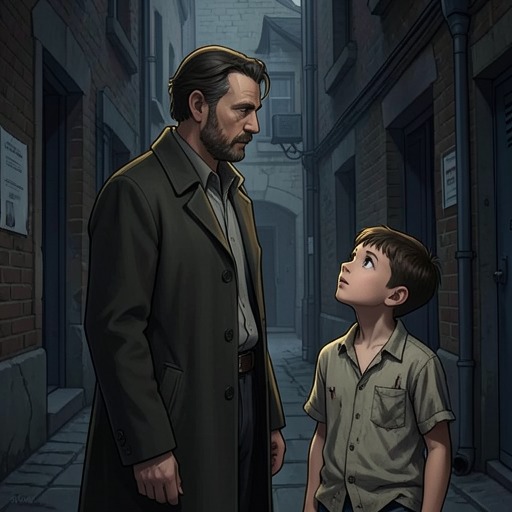
The Sailor’s scene at a counter makes this mismatch concrete. His grey felt hat and black overcoat hang nearby, and a paper napkin beneath his coffee cup marks the prolonged sitting of someone accustomed to waiting in public places. The Sailor’s body and attention are oriented toward a boy who arrives and takes a seat; the encounter unfolds inside the extended pause of junk time. Coffee does not resolve the wait. It marks another unit of time spent enduring it.
Waiting, Supply, and Social Networks
Junk time governs not only the user but the network of suppliers and customers around him. The drug connection is encountered through informal recognition, remembered routes, and improvised arrangements. In Houston, a druggist recognizes the narrator after five years with one look, nods, and tells him to wait at the counter. Only after the narrator sits down for coffee does the druggist join him and ask what he wants. Recognition opens the possibility of supply, but does not eliminate the interval between request and delivery.
Across a wider network, addicts in places including Yemen, Paris, New Orleans, Mexico City, and Istanbul are linked by dependence and withdrawal, while the local circumstances of supply differ. The connection may be found through a street-level contact or a government script that permits a local addict a monthly quantity. These arrangements make drugs both commodities moving through social networks and necessities that organize the users’ daily lives. The network crosses borders, but its recurring condition is the same: people wait, become sick, obtain drugs, and return to need.
The Present Disrupted
The phrase also describes a rupture in ordinary temporal belonging. After the narrator realizes that he has been cut off from space-time, he understands that he has lost access to a key point of intersection. He imagines himself consigned, along with Hauser and O’Brien, to a landlocked junk past where heroin remains twenty-eight dollars an ounce and opium ash can still be obtained in a Sioux Falls laundry. Junk time here is no longer only the repetitive wait for a dose; it becomes a temporal exile, a past that persists as the narrator is shut out of the present.
During withdrawal, Lee’s experience likewise turns time into a shifting medium. Familiar drug-meeting places become portents, and the cure brings impressions of past and future moving through his consciousness. These images do not restore a stable chronology. They make time feel spectral and unstable, as if the experience of the present were threaded with other temporal moments.
Narrative and Thematic Significance
Junk time sets the bodily rhythm of addiction against the schedules assumed by public life. A person dependent on drugs cannot simply enter another person’s timetable: the trade is unscheduled, and petitioners wait unless their needs happen to coincide with non-addict time. That mismatch gives waiting a social dimension, separating those who control access to supply from those whose bodies make delay urgent.
The novel extends this temporal pressure beyond private experience. Its recurring movement between withdrawal, supply, recollection, and imagined displacement resists a single orderly clock. Junk time is therefore both a material condition—need measured through the body and the uncertain drug trade—and a narrative principle through which past, present, and future can overlap without settling into a secure sequence.