
The Opposition of Mind and Sensation
Narcissus and GoldmundThe novel’s contrast between Narcissus’s disciplined intellect and Goldmund’s sensory imagination develops into a recognition of complementary, not interchangeable, paths.
increasing Bearing strength in each event
 decreasing
Bearing strength in each eventdecreasingDifference as Method
Difference as Method
Naming the Contrast
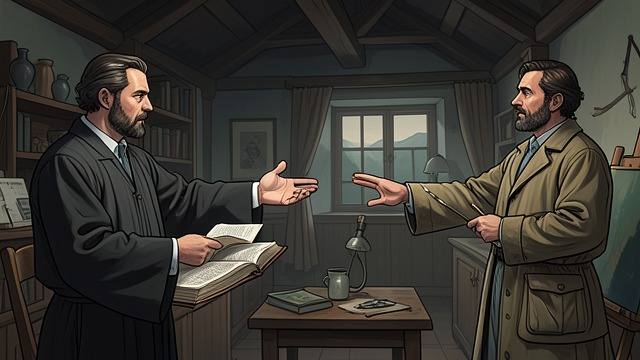
Narcissus argues that knowledge begins by distinguishing one nature from another. Goldmund resists reducing people to classifications and trusts perception that exceeds formal learning.
A Friendship of Opposites
Their disagreement clarifies the central tension without making one man simply superior. Understanding may depend on honoring what another person cannot become.
Sea and Land

Sea and Land
Complement Rather Than Fusion
Narcissus describes their natures as opposites that must recognize and honor one another. Goldmund hears both affection and a limit on the intimacy he had imagined.
Difference Made Useful
The friendship’s purpose is not sameness. Each man becomes more fully himself by encountering the other’s distinct way of being.
Letters That Become Images

Letters That Become Images
Goldmund’s Imaginative Perception
Goldmund describes letters turning in his mind into fish, birds, and other forms. He experiences language as part of a living image-world rather than a stable system of signs.
Limits of Abstraction
Narcissus values the fixed symbols needed for scholarship, while admitting that Goldmund’s transformations possess a different kind of power. Their disagreement reveals two modes of attention.
Thought and Artistic Form

Thought and Artistic Form
Two Roads to Realization
Narcissus explains that both thinker and artist try to realize an inner possibility, one through concepts and the other through images. Goldmund’s craft is no longer treated as inferior to abstract thought.
A More Generous Account
Each road remains limited, but each can approach truth through its own gifts. Their conversation replaces hierarchy with mutual recognition.
Mutual Education
Mutual Education
Narcissus Learns to See Art
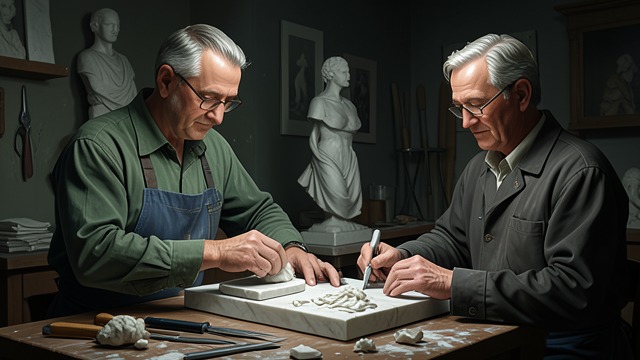
Watching Goldmund work teaches Narcissus that attention to mortal forms can reveal meaning rather than distract from it. Art becomes a serious path to knowledge.
Goldmund Values Discipline
Goldmund, in turn, envies Narcissus’s steadiness and acknowledges that creation requires repeated effort. Their exchange makes opposition productive without erasing it.
During Narcissus and Goldmund’s first major philosophical conversation
When Narcissus tells Goldmund they are not meant to become alike
During Goldmund’s later student conversations with Narcissus
During Narcissus’s explanation of art and philosophy at Mariabronn
During Goldmund’s later years working at Mariabronn
