“Without a mother, one cannot love. Without a mother, one cannot die.”
Narcissus and Goldmund“Without a mother, one cannot love. Without a mother, one cannot die.” Goldmund’s last intelligible words to Narcissus give this expression its force: spoken during his final illness, it joins the capacity for love to the capacity to face death, while exposing the deepest difference between the two friends. For Goldmund, the mother is not only a remembered person but a presence he finds recurring throughout life; Narcissus, he tells him, has no mother.
The Words at the End
The expression occurs near the close of Goldmund’s life. He has returned to Mariabronn sick after a journey that began with an accident: his horse fell with him into a brook, where he spent the night in cold water. He says he believes he broke several ribs, but continued onward rather than turn back. When pain eventually made riding impossible, he sold the horse and spent a long time in a hospital. Back at the monastery, he tells Narcissus he will not wander again and had returned hoping to draw and make a few more figures.
Goldmund’s illness brings him into sustained conversation with Narcissus. Accounts of the journey survive only in fragments: Narcissus recorded some of Goldmund’s reports and confessions, and Erich supplied others. In this context, Goldmund’s final address is not a detached maxim. He looks into his friend’s face, says farewell with his eyes, and asks how Narcissus will die when his time comes, since he has no mother. The expression is both a declaration about human dependence and a personal challenge addressed to the friend who has been beside him throughout his return and decline.
The Mother as a Recurring Presence
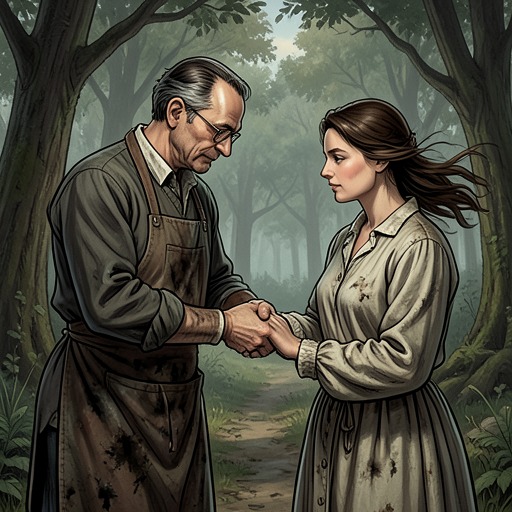
Goldmund’s account of the mother extends beyond literal recollection. He tells Narcissus that he had completely forgotten her until Narcissus brought her back to mind when they were young. He now recognizes her in varied forms: Lise, Master Niklaus’s beautiful Madonna, life, love, and ecstasy. He also associates her with fear, hunger, and instinct. At the end of this sequence, the mother becomes death itself, imagined through the chest pain that accompanies his final illness.
The expression therefore gathers together experiences that Goldmund has previously encountered as distinct parts of existence. Motherhood signifies not simply comfort or origin: it encompasses desire and vitality, but also fear, bodily vulnerability, and mortality. The words make love and death inseparable by placing both within the same maternal relation. Goldmund’s claim is personal and visionary, arising from his own remembered and imagined experience rather than from an abstract explanation of how every person must live.
A Contrast Between Goldmund and Narcissus
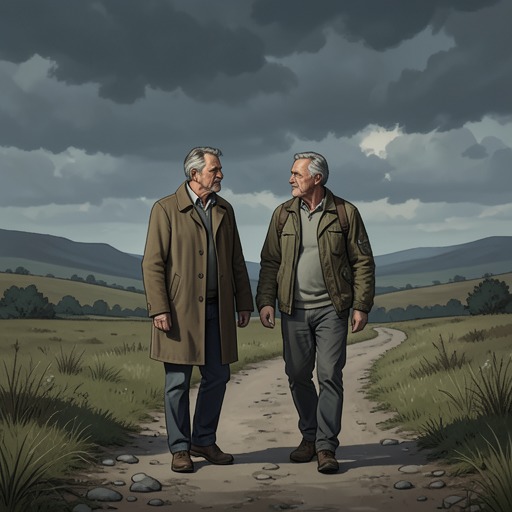
The line’s second force lies in its address to Narcissus. Their friendship has joined lives ordered differently: Goldmund’s wandering, sensory experience and artistic making stand against Narcissus’s disciplined monastic existence. Now, at the moment of farewell, Goldmund casts that difference in terms of motherhood. He has found the mother everywhere, even in the forms of love and art; Narcissus, he says, has none.
Narcissus does not answer the claim. He asks Goldmund not to speak so much and to wait until the next day. But Goldmund’s words remain with him: during the final two days, Narcissus sits by the bed, watching his friend’s life ebb away, and the last words burn in his heart. The expression thus continues beyond its speaker as a burden of memory for the surviving friend, while leaving unresolved what Narcissus’s own relation to love and death might be.
Meaning and Narrative Function
The expression closes a recurring movement in Goldmund’s story: a memory first recovered through Narcissus returns at the end as a way of understanding a whole life. Earlier, Narcissus had told Goldmund that he had forgotten his childhood and mother, and that he had now been awakened. In his final conversations, Goldmund confirms the lasting importance of that awakening, describing the mother as a presence that has accompanied his loves, his perceptions of beauty, and finally his approach to death.
Its paradox is deliberate. The mother is invoked as the condition for love, yet she is also the figure through whom Goldmund imagines death arriving. Rather than separating life’s beginnings from its end, the words make them part of one continuing bond. Spoken as a farewell and remembered by Narcissus afterward, the expression becomes more than a summary of Goldmund’s belief: it leaves his friend with the question of how a life founded on another kind of discipline can meet the same ending.