Dance of Death
Narcissus and GoldmundThe Dance of Death is a cloister fresco that Goldmund studies during his journey through plague-stricken country. It depicts Death leading people of every social rank out of life, making mortality visible as a universal fate. The painting gives Goldmund a renewed sense of purpose in his journey toward Master Niklaus, but its severe vision also clarifies what his own art would need to express: death, for him, is not only an ending but a force intimately connected with life.
The fresco and its procession
The painting shows pale, bony Death dancing people out of life while skeletal musicians play. King and bishop, abbot and earl, knight, doctor, peasant, and soldier are all included. Rank offers no exemption: the procession gathers people across the social order and carries them toward the same end. Goldmund recognizes the work as both a successful picture and a sermon, a forceful statement of the lesson the Black Death has made impossible to ignore.
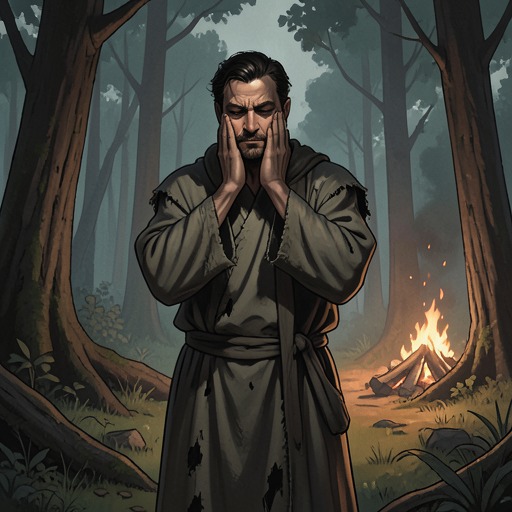
The fresco appears in a cloister during Goldmund’s passage through a land marked by deserted farms, unburied dead, and communities fearful of strangers. He stops to look at it for a long time. The artist is unknown to him, but Goldmund recognizes a fellow maker who has encountered the Black Death and turned that experience into an image for others. The fresco’s religious setting gives its procession the force of public instruction: mortality is not an abstraction but a fate that touches every kind of person.
Goldmund’s disagreement with its vision
Goldmund does not dismiss the fresco. He considers it a good picture and a good sermon, and believes its maker has seen and painted the subject well. Yet he distinguishes the picture’s stern account of the obligation to die from the death he has experienced. The fresco makes death bony and severe; Goldmund’s inner understanding gives it another sound, at once sweet, seductive, and motherly.
That contrast grows from Goldmund’s passage through the plague country. He has seen death at close quarters and has encountered its consequences in abandoned homes and devastated communities. Rather than turning away, he remains drawn to observe. In his response to the fresco, death becomes not only warrior, judge, or hangman, but also mother and mistress: its approach can make life glow more intensely, and its call can resemble an invitation home. The painting’s limits are therefore interpretive, not technical. It states the certainty of death, but not the intimate relation between death, love, and the vitality of the living.
Relation to Goldmund’s art
The encounter renews Goldmund’s desire to reach Master Niklaus and return to his craft. The fresco becomes a point of comparison for the art Goldmund hopes to make: an image should not merely announce that everyone must die, but should give form to the fuller experience he carries through the plague. His vision of death is connected with the maternal image that recurs in his imagination and with his sense that ecstasy, pain, and death belong close together.
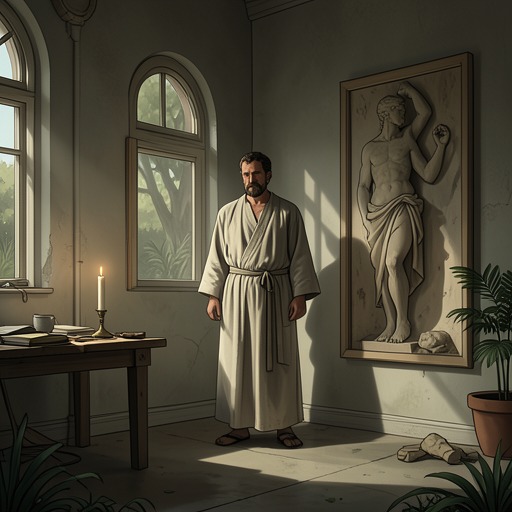
The contrast also illuminates Goldmund’s own practice as a sculptor. Earlier, he had worked on a wooden Saint John whose features recalled Narcissus, treating artistic creation as a way for a beloved person’s image to emerge from the material. The Dance of Death presents a different artistic task: to make an experience shared by all social ranks visible without reducing it to a single lesson. Goldmund’s response holds together the fresco’s universal warning and his own more intimate understanding of mortality. The image does not resolve that difference; it sharpens the artistic question that accompanies him onward.