Goat
Narcissus and GoldmundThe Goat is a stray animal that accompanies Goldmund and Robert through the Black Death and becomes part of their improvised household. Its practical value is inseparable from its place in a fragile interval of shelter: it supplies milk, requires care, and remains alive when Goldmund leaves the hut after Lene’s death.
Arrival and Practical Value
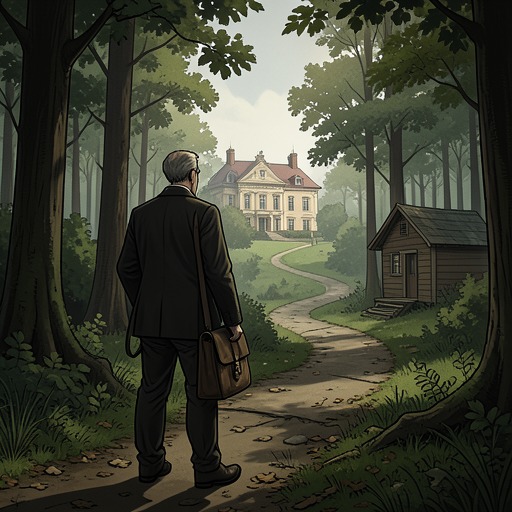
On the road, Goldmund and Robert came across stray goats and took one with them. When they found an empty log cabin in a birch wood, Goldmund proposed that the three people and the animal settle there. The plan assigned Robert a partition and a room shared with the Goat; with little food left, they expected to rely on goat’s milk while Goldmund went to search for provisions.
The animal made the shelter’s daily routine possible without making it secure. Lene gathered berries and looked after the Goat while Goldmund scoured the area for food and Robert worked on a rough birch partition. Later, the three improved their home, found another goat, and located turnips; the first animal was therefore part of a small but growing stock of food and household resources. The clear-water brook nearby and their work on the beds and hearth helped make the cabin livable, though the group’s settled life remained provisional.
A Household Under Strain
Robert and Goldmund treated the Goat differently as they confronted the danger around them. Robert welcomed the isolated cabin partly because he believed it protected them from contamination, but he remained fearful of contact with abandoned places. Goldmund entered an empty peasant hut to retrieve a few useful objects, while Robert insisted that anything brought back be smoked and washed before he touched it. The Goat, by contrast, belonged to the ordinary work of sustaining their shared life: it was tended, milked, and kept with them as the shelter took shape.
The question of winter exposed how temporary that household was. When Lene wondered what they would do when the cold season came, neither man answered. She realized that the two wanderers did not truly expect to stay, and that the cabin was not a permanent home. The Goat was part of the life they had assembled there, but could not turn a brief refuge into a lasting settlement.
Lene’s Death and Goldmund’s Departure
During Lene’s final illness, she could no longer swallow milk, so Goldmund drank it himself; the hut had no other food. He occasionally led the Goat out to graze, giving the animal room to feed, drink, and move while he remained close to Lene and watched over her. His care for the Goat continued alongside his attention to the dying young woman, within the constrained routine of their isolated shelter.
After Lene died, Goldmund went back into the hut and looked at her once more. He burned the shelter, taking nothing with him except a flint. Although he knew he needed food and strength for the road, he could not bring himself to kill the Goat and roast some of its meat. Instead, he drove it out onto the heath and walked away alone. The decision marks a limit to the animal’s role as a resource: at the moment of departure, Goldmund releases it rather than turn it into provisions.
Significance in the Plague Journey
The Goat links several scales of the plague narrative: the collapse of ordinary rural life, the precarious domestic arrangements of travelers, and the practical choices forced by hunger. Earlier, the wandering pair had found an abandoned farm where a cow was left unmilked; across the stricken countryside, unattended livestock and empty dwellings made human absence visible. Goldmund and Robert could use surviving animals for food, but their experience of abundance was shadowed by death and insecurity.
The Goat’s final release gives the improvised household a quiet ending. Goldmund does not preserve the cabin or carry its animal companion onward; he leaves the burned shelter with only the means to make fire. The Goat thus remains both a concrete participant in the group’s survival and a measure of how little permanence their refuge could offer.