Goldmund and Niklaus's Master–Apprentice Relationship
Narcissus and GoldmundGoldmund and Niklaus’s Master–Apprentice Relationship is an unusual artistic bond between a settled master sculptor and a grown wanderer who will not fit the guild’s ordinary path. Niklaus gives Goldmund a chance to learn without making him a conventional apprentice; Goldmund repays that trust with the wooden Saint John, a work that earns the master’s profound respect. Yet even the success that could secure Goldmund’s professional future cannot reconcile the two men’s different needs: Niklaus offers recognition, partnership, and a place in his workshop, while Goldmund returns to the road.
An Unconventional Apprenticeship
Goldmund first encounters Niklaus’s work through a wooden Madonna in a city church. Its delicately inclined figure and living expression move him deeply. The priest explains that the statue is controversial: some viewers find it too modern and worldly to represent the mother of God, while others admire it. It was made by Niklaus and given to the cloister only a year earlier. For Goldmund, the image becomes more than a notable work; it identifies the artist whose example he wants to follow.
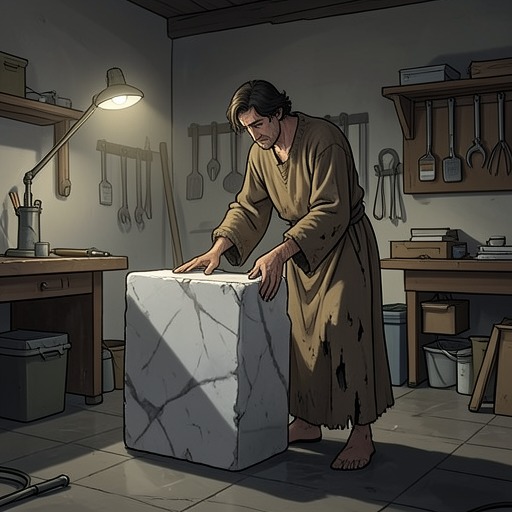
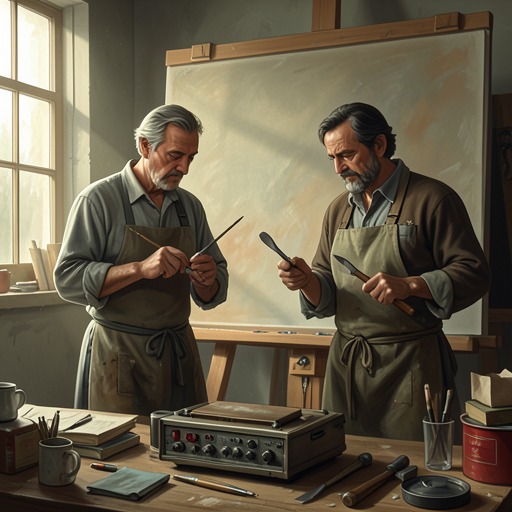
The next morning, Goldmund seeks out Niklaus and delivers Father Bonifazius’s greetings. In the master’s workshop, wearing a leather apron, Niklaus asks what he wants. Goldmund answers that he wants to become his apprentice and learn from him. But the request immediately meets the limits of guild practice. Apprentices usually enter the trade at thirteen or fourteen, fifteen at the latest, and spend years serving and running errands before advancing. Goldmund is already a grown man, old enough by the usual measure to have become a journeyman or even a master. Niklaus has never had a bearded apprentice and dislikes keeping one in his household; Goldmund, moreover, does not seem suited to being ordered about.
Niklaus does not dismiss him outright. He has examined Goldmund’s drawing and sees both its faults and its beauty. He judges that Goldmund may have an artistic vocation, but explains that guild advancement ordinarily depends on completing an apprenticeship. Rather than bind Goldmund by contract or impose the full customary arrangement, he offers a trial: if Goldmund can support himself in the city, he may come to the workshop and learn. He may leave whenever he chooses. The offer makes instruction possible without pretending that Goldmund has entered the standard institutional route.
Learning Through Work
Niklaus’s distinction between artistic talk and workshop practice shapes their relationship. He is willing to discuss art with Goldmund, but insists that conversation cannot substitute for the work of making: in the workshop, what matters is what a person can do with his hands. He asks whether Goldmund has ever modeled in clay or wax, turning the question of his ideas into a practical test of ability.
Over the course of a year, Goldmund becomes an able draftsman and learns through direct work. Niklaus sometimes lets him model clay as well as carve wood. Goldmund’s first successful piece is a clay figure of Julie, Lydia’s sister, about two spans high. Niklaus praises it but refuses Goldmund’s wish to have it cast in metal, considering the figure too worldly for him to sponsor. Their difference is already visible: the master’s approval does not mean that he accepts every subject or artistic choice Goldmund makes.
Goldmund then begins the wooden figure of the Apostle John, intended as a likeness of Narcissus. Niklaus considers the work for a crucifixion group on which his two assistants have long been working, though the master has reserved the final touches for himself. The carving gradually becomes the center of their working relationship. Goldmund proceeds slowly and capriciously, with interruptions and changes of mood, but he remains tenacious and sure in shaping the figure. Niklaus dislikes much about his pupil’s conduct, yet watches the statue come into being and believes it will become a work beyond the abilities of his assistants.
The master’s investment in the carving is also a response to the person making it. Goldmund’s indifference to money and possessions, his desire to spend freely, his love affairs, and his quarrelsome life make him difficult for Niklaus to accept as a dependable member of the household. Niklaus also notices the attention Goldmund pays to his daughter Lisbeth. The apprentice’s unsettled habits repeatedly strain the arrangement, and Niklaus sometimes regrets having taken him on. Still, the work holds his patience: he does not scold Goldmund about the Saint John, even when he gives him frequent reprimands over other matters.
Recognition Without Possession
When the statue is finished, Niklaus examines it after having left Goldmund undisturbed at work. His stern expression changes as he looks at the figure; Goldmund sees him become happy. Niklaus pronounces the carving very good and calls it Goldmund’s assistant’s piece, declaring that Goldmund has finished learning. He intends to show the work to the guild and demand that its makers grant Goldmund the rank of master.
This recognition marks a reversal of the initial arrangement. Goldmund had arrived asking to begin at the bottom of a profession whose usual sequence he was too old to enter. The finished work gives Niklaus grounds to seek the highest guild status for him without years of customary service. Yet Niklaus does not treat the achievement as proof that artistic creation can be taught or repeated at will. He admits that some of his own works fall short of Goldmund’s in truth, despite his skill and care, and calls the making of such a work a secret. His humility concerns not technical craft alone, but the irreducible quality he sees in Goldmund’s accomplishment.
Goldmund, in turn, makes clear that his admiration for Niklaus is not the same as his attachment to Narcissus. He reveres Niklaus’s best figures as examples but does not take the master himself as an example, and sometimes takes pleasure in disappointing or annoying him. The distinction helps explain why artistic esteem does not become obedience or settled loyalty. Goldmund can recognize the authority of Niklaus’s work while resisting the life and professional identity organized around the workshop.
The Offer and the Departure
After completing the Saint John, Goldmund speaks privately to Niklaus. He tells him that he has loved and revered the man who made the Madonna and had once regarded becoming like him as the highest goal. But the completed statue has left him without a plan for another work. Niklaus responds with patience rather than trying to force an immediate return to labor. He does not expect Goldmund to work as an assistant, understands that he needs freedom, and proposes that they discuss his future after a few days. He recognizes the emptiness that can follow the completion of an important piece.
During that interval, Niklaus works to turn recognition into a durable future. He persuades the guild to issue Goldmund a master’s diploma and devises a plan to make him an associate rather than a subordinate. They would discuss and undertake important commissions together and share the earnings. The offer would secure Goldmund’s standing and give the aging Niklaus a partner capable of sustaining the reputation of his workshop. Niklaus also considers the personal complication that Goldmund might soon become his son-in-law, given his relationship with Lisbeth. His proposal thus combines confidence in Goldmund’s talent with a concrete plan for professional continuity and shared work.
Goldmund refuses the future Niklaus has arranged. He tells him that he had decided to leave before accepting the invitation or learning of the honorable offer, and that he is returning to the road. Niklaus struggles to control his response, then orders him to go at once and not force him to see him again. The rupture is painful precisely because it follows genuine recognition: Niklaus has secured the rank and partnership that could make Goldmund’s artistic life materially stable, but Goldmund cannot accept stability as the price of continuing to create. Their relationship ends not in a denial of the work they shared, but in the unresolved difference between Niklaus’s rooted world of guild, workshop, and commissions and Goldmund’s insistence on remaining free to leave.