Goldmund rejects Niklaus’s partnership offer and leaves the city
Narcissus and GoldmundGoldmund rejects Niklaus’s partnership offer and leaves the city at a decisive break between the security of a recognized artistic career and the freedom of wandering. Master Niklaus has arranged an unusually rapid promotion and offers him a place as an associate in the workshop, but Goldmund has already decided to go. His departure is not a rejection of the art or the master who taught him: he leaves with gratitude, and with a final visit to the Saint John that had earned Niklaus’s confidence. It is the stability attached to the offer, rather than the value of the work or the relationship, that he cannot accept.
The offer and its stakes
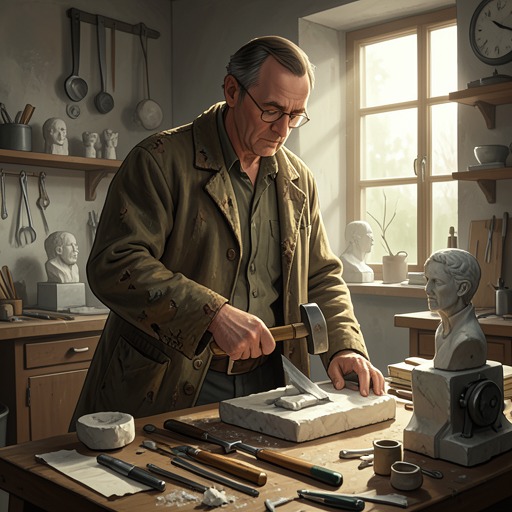
Niklaus’s proposal grows out of Goldmund’s achievement as a carver. The master has watched him make a Saint John that, despite Goldmund’s uneven attendance and difficult moods, promises to be a work beyond the ability of ordinary assistants. Concerned that his famous workshop might otherwise decline as his own creative strength wanes, Niklaus persuades the guild to grant Goldmund a master’s diploma without the customary apprenticeship. He plans to enlarge the back workroom for him, give him an attic room, provide new clothes for his guild standing, and share important commissions and their earnings with him. The partnership would make Goldmund neither a subordinate assistant nor merely a temporary learner, but the intended continuing partner in the workshop.
This offer reverses the uncertain terms on which Goldmund first came to learn from Niklaus. Guild custom normally required an apprentice to begin at thirteen or fourteen, with a father paying for the training; much of the apprenticeship involved errands and service. Goldmund was already a grown man, and the master had acknowledged that neither a conventional contract nor a long apprenticeship suited him. Instead, Niklaus had let him try carving without obligation, free to leave whenever he chose. His later elevation is therefore exceptional, but it also places a settled occupational identity before someone whose freedom to leave had been part of the original arrangement.
The master’s plan includes more than workshop economics. He has considered the possibility that Goldmund might become his son-in-law, and has sounded out his daughter Lisbeth, who is not opposed to the prospect if Goldmund settles into his craft. Niklaus believes the offer will secure both the future of his workshop and the future of his family. The dinner at which he presents it has been carefully prepared: Goldmund is invited again, and the master waits until his daughter has left before disclosing the proposal. Niklaus regards the place he has made for Goldmund as a fortune, a warm home and professional future offered together.
Goldmund’s decision
Goldmund receives the offer with embarrassed surprise. He had expected a mild reprimand for his recent absences and perhaps a proposal to remain as an assistant; instead, Niklaus has placed before him a rapid promotion and a share in the workshop. He cannot immediately answer. But his hesitation does not mean that he needs time to weigh the terms: he tells Niklaus that the decision to leave was made before he accepted the dinner invitation and before he knew of the offer.
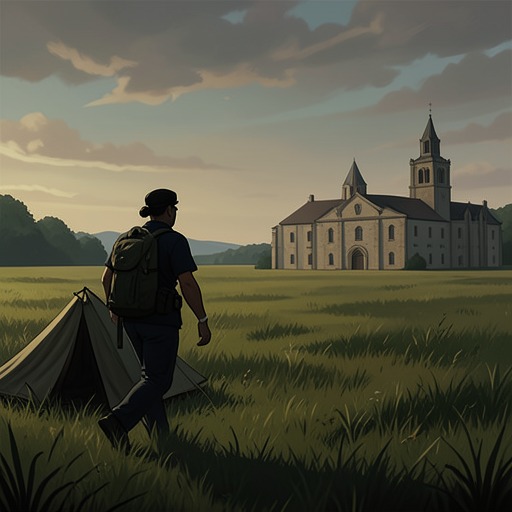
Goldmund thanks the master for his goodwill and, especially, for the patience with which he taught him. He insists that he will not forget his debt to Niklaus, but says that he will not remain in the city: he must travel and be free. His refusal thus distinguishes gratitude from consent. He does not claim that the workshop has failed him, or that its offer is unworthy. Rather, even a position designed to accommodate his talent and make him a partner cannot overcome his attachment to the road.
The farewell
Niklaus first gives Goldmund time to think, but the refusal quickly becomes a rupture. When Goldmund repeats that nothing will change his decision, the master turns pale, refuses the hand Goldmund offers, and paces in anger. He finally tells him to leave at once and not to make him see him again, trying to control himself before saying or doing something he might regret. The scene turns a generous offer into a painful separation: Niklaus’s anger is the response of a teacher whose carefully prepared future has been rejected, while Goldmund leaves without withdrawing his thanks or his wish for a friendly farewell.
Goldmund’s last moments in the house are quiet rather than argumentative. He puts on his cap, descends the stairs, and lets his hand brush over the carved heads. In the small courtyard workshop, he stops before the Saint John and takes leave of the sculpture that had sustained Niklaus’s belief in him. He then leaves the house, carrying a deeper pain than he felt when he departed the knight’s castle and Lydia. The familiar city seems transformed as he crosses the threshold: the master’s door has become the door of a house now closed to him.
What he leaves behind
Goldmund’s departure makes visible the tension between artistic vocation and the institutions that can support it. Sculpture depends on a workshop, materials, tools, training and recognition; Niklaus has offered a way to turn Goldmund’s ability into an enduring livelihood. But the institutional reward also implies a settled life, and Goldmund’s refusal confirms that artistic achievement has not made him willing to exchange movement for security. His earlier impatience with ownership and settled craft helps explain why the master’s plan, however generous, cannot hold him.
The Saint John gives the farewell its emotional measure. Goldmund does not leave because the work has become meaningless: he pauses before it, and Niklaus’s confidence in that work is what made the offer possible. Yet the completed artistic achievement does not bind him permanently to the place where it was made. His departure closes his apprenticeship and his immediate relationship with Niklaus’s workshop, while carrying forward the pattern of leaving even when affection, recognition and material shelter are available. The journey that follows belongs again to the road, though Goldmund’s return to Mariabronn will later bring his art back into a settled community.
Narrative significance
The event is a double ending: Niklaus’s workshop loses the partner he hoped would preserve its excellence, and Goldmund relinquishes the most secure professional future yet offered to him. The refusal does not erase the teacher’s influence. It makes the bond more consequential by separating what Goldmund has learned from the settled career in which Niklaus hoped that learning would culminate. The carving remains as evidence of their shared artistic work; the departure shows that, for Goldmund, mastery and belonging are not the same thing.