Goldmund returns to the bishop’s city
Narcissus and GoldmundGoldmund returns to the bishop’s city after a long journey through plague-stricken lands, hoping to resume his artistic life with Master Niklaus. The return brings him not the homecoming he imagined but a series of losses: the city has endured epidemic and unrest, Niklaus is dead, and the workshop that once embodied Goldmund’s artistic future stands empty. The episode tests whether memory, grief, and the desire to create can still bind the wanderer to a place.
The road back through the plague
Goldmund’s return begins long before he reaches the city. On the road he and Robert encounter a deserted farmhouse where the entire household has died. The discovery explains why armed peasants had tried to keep them away from a nearby village: the plague has made strangers dangerous in the eyes of frightened communities. Robert panics at the possibility of infection and tries to leave, but Goldmund insists that they remain together, reasoning that either might fall ill and should not be abandoned to die alone.
As they continue, the epidemic reshapes the countryside. Some villages bar entry; others let the travelers pass. Farms stand deserted, bodies remain unburied, livestock go untended, and survivors respond with fear, isolation, or desperate revelry. Goldmund and Robert make use of food and drink left behind, and at times tend animals, but abundance does not make the journey easy. Robert repeatedly fears that he has contracted the disease, while Goldmund watches the devastation with a grave, absorbed curiosity.
Goldmund’s response is not simple indifference. He remembers that he has known fear in other circumstances, but regards plague as a death that cannot be fought in the way he once fought physical danger. The journey therefore becomes an encounter with mortality: he keeps moving through the afflicted country, observing the dying and the dead, and is drawn toward the experience even as it weighs on him. His destination remains Master Niklaus’s city, the place toward which his heart directs him.
A painted Dance of Death in a cloister gives this experience a visual counterpoint. Its skeletons lead people from every station of life toward death, presenting the end as stern and unavoidable. Goldmund recognizes the force of the image but understands death differently: to him its call is also maternal and intimate, not only a threat or judgment. The contrast clarifies why the plague journey presses him toward art. He has seen death’s reach, and the city’s workshop represents the possibility of giving human lives a lasting form.
A familiar city altered by time
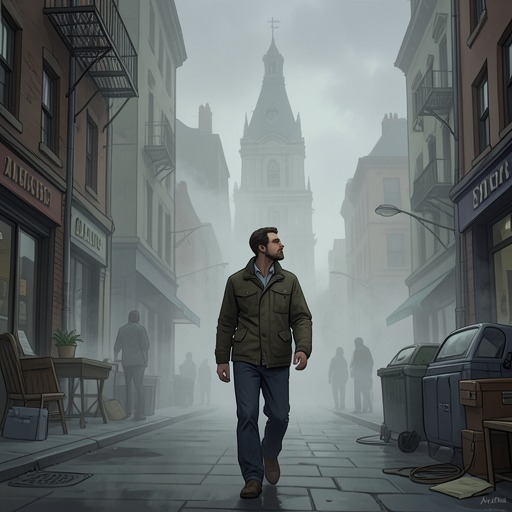
Goldmund enters through the same gate by which he had first arrived in search of his master. The plague has subsided, though its aftermath remains part of the city’s recent history. The bishop had fled during the outbreak, and the Emperor had sent a governor to restore order and enforce emergency measures. By the time Goldmund returns, people are awaiting the bishop’s return and hoping to resume ordinary life.
The recognizable streets affect Goldmund like a homecoming. He sees the portals, fountains, cathedral tower, the newer tower of the church of St. Mary, the bells of St. Lawrence, and the marketplace still in their places. He had feared that buildings would have changed or fallen into ruin, so their survival moves him. He envies the burghers their secure houses and settled lives, though his own life has been shaped by wandering rather than belonging.
The city’s ordinary activity briefly seems to set the catastrophe aside. Goldmund watches butcher boys lead a calf while exchanging jokes with a maid above them. Their casual laughter makes the passage of time palpable: the plague fires and the work of disposing of the dead belong to the recent past, while daily life has resumed. Goldmund feels gladness and warmth toward the burghers, but that ease breaks when he approaches Niklaus’s house. The familiar route to the workshop turns anticipation into anxiety; he wants to know at once whether the master is still there and whether he can return to his work.
News of Niklaus and Lisbeth
The locked door is the first sign that the house has changed. The old servant Margrit does not recognize Goldmund and tries to turn him away. When he identifies himself and demands to see Niklaus, she tells him that the master is dead. Goldmund pushes past her and hurries through the house, where the workshop is closed and the collected figures remain. Lisbeth appears, but the proud, beautiful woman he remembers has become a sickly, bent figure in a plain black dress.
Goldmund learns the circumstances from the people who receive him afterward. Niklaus did not die of plague. Lisbeth fell ill and remained gravely sick for a long time; her father nursed her and died a few weeks before she recovered. She survived, but her beauty was gone. The workshop now stands empty, and Goldmund’s former landlord suggests that he could make a home there as an image-carver, with work and money available. The offer points toward stability, but it comes alongside the loss of the master whose judgment and example had made that prospect meaningful.
The city’s broader crisis also becomes clearer through the account of the household that welcomes him. During the plague, a mob burned a hospital and attacked the homes of wealthy burghers. With the bishop gone, order and safety had broken down; the Emperor sent Count Heinrich and soldiers to restore control. The governor’s rule brought hardships, and the townspeople hoped it would soon end with the bishop’s return. Goldmund has come back to a city that looks familiar but has passed through a period of violence and disruption.
Marie, memory, and an uncertain stay
Marie recognizes Goldmund through a memory he has almost lost. She is the daughter of his former landlord, the lame, sickly child who had warmed milk for him on the morning he left the city years earlier. He remembers her sadness at his departure and the solemn kiss he gave her. Now grown, she still limps, but Goldmund notices her beautiful eyes and is relieved that someone in the city remembers and loves him.
Marie takes him home, where the family invites him to eat and stay. His old painting still hangs in the room, and his red ruby glass remains on the mantelpiece: small survivals that connect the returning traveler to an earlier version of himself. Marie’s affection comforts him, but he cannot return her love; he can offer only kindness and pity. His stay is therefore shaped by an imbalance between the welcome he receives and the feeling he can give back.
Although Goldmund says he will rest and then continue wandering, he stays for more than physical recovery. The city is dear to him because it contains memories of happier times, and Marie’s quiet admiration warms him. More decisive still is his need to become an artist again. Even without Niklaus, his workshop, or proper tools, he cannot simply leave the impulse to create behind. He begins drawing intensively, using the paper Marie finds for him to bring out the images accumulated within him.
The drawings return the losses of the road to view: Lene, the peasant boy, the carts carrying the dead, Rebekka, and Goldmund himself as wanderer, lover, fugitive, and participant in desperate celebrations. He also draws Lisbeth and Margrit as he remembers them, Niklaus, and the great mother figure that has recurred in his imagination. Art becomes an immediate way of working through experience, not a substitute for the people who have died or changed. The return thus ends without restoring Goldmund’s former life: the master is gone and the workshop is empty, but the desire to shape what he has witnessed has drawn him back to the city.