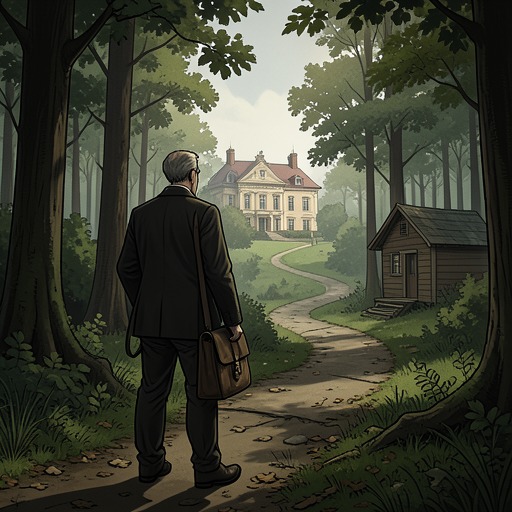
Goldmund takes Lene from the plague-stricken city and establishes a temporary shelter
Narcissus and GoldmundGoldmund takes Lene from the plague-stricken city and establishes a temporary shelter during the Black Death, turning a chance encounter at a city window into a brief household in the woods. The episode places escape and companionship beside the devastation that makes both possible: Goldmund offers Lene safety from a dying town, but their shelter cannot become the lasting home she hopes for.
Background: A town under the plague
Goldmund and Robert arrive at a fortified town whose wide-open gates and empty defenses offer no reassurance. Robert refuses to enter. Then a priest emerges carrying a cross, followed by three carts piled with corpses. Goldmund watches the procession to a vast grave outside the town and sees the dead placed in it before he enters alone. Robert remains outside, distressed by Goldmund’s absorption in what he has witnessed.
Inside, Goldmund sees signs of a city in distress, including a woman at an upper-floor window combing her hair. He calls up to ask whether she is sick. When she shakes her head, he invites her to leave the city with him and live in the woods. He asks whether she is with her parents or serving strangers; learning that she is in service, he urges her to come before she has time to reconsider. The offer is both practical and impulsive: the plague has made the city dangerous, but Goldmund’s appeal also promises youth, company, and a little enjoyment while life remains.
Lene leaves the city
Goldmund walks on, leaving the choice open rather than immediately pressing the woman to follow. When he comes back, she is still at the window and waves to him. She then runs after him, carrying a small bundle and wearing a red kerchief. At the city gates, she gives her name as Lene and says that everyone in the city is dying and that she wants to leave.
Robert, waiting near the gates, reacts with alarm when Goldmund returns with her. He objects to taking someone from a plague-stricken town and threatens to leave rather than share the danger. Goldmund lets him complain, then tells him that Lene will stay with him and that the three of them will find a hut or build one. He imagines himself as head of the household, Lene as its mistress, and Robert as their friend. The arrangement is not an equal household: Goldmund even forbids Robert to touch Lene, though he presents the prohibition as reassurance. Robert accepts the plan once he is told that he need not make physical contact with her.
Making a refuge
The next day the travelers find an empty log cabin in a small birch forest, perhaps built by woodcutters. They break open its door and agree that the hut and its secluded surroundings will serve as a refuge. A stray goat they have taken along provides milk. Goldmund assigns Robert, who had once worked as a cabinetmaker, the task of making a partition: one room for Goldmund and Lene, another for Robert and the goat. With supplies short, they must make do with little food while they establish the shelter.
The work is shared but divided by circumstance. Goldmund and Lene gather straw, fern, and moss for bedding; Robert cuts birch posts with his knife and begins the partition. It takes more than a day, so Robert sleeps outside at first. When the partition is completed, they make its rough openings prettier with woven juniper. Lene gathers berries and tends the goat, Goldmund searches for food, and Robert works with the limited tools at hand. They later find another goat and a small field of turnips; Goldmund also catches two stray chickens. They build beds and a hearth, and a nearby brook supplies clear water. Their shelter gradually becomes more comfortable, and they sometimes sing as they work.
The refuge remains precarious. The region seems uninhabited, a quality Robert values because it reduces the risk of infection and quarrels, but isolation also means scarcity. Goldmund proposes bringing useful objects from an abandoned peasant hut nearby. Robert refuses to enter it; he will not touch anything Goldmund brings back until it has been smoked and washed. The objects Goldmund retrieves are few—a pair of posts, a milk pail, some crockery, and a hatchet—yet they help furnish the home. The effort to make the cabin pleasant is real, but every improvement rests on materials salvaged from a depopulated landscape.
A temporary home and its limits
As the three drink milk and praise their settled life, Lene asks what they will do when winter comes. Neither man answers at first. She recognizes that Goldmund and Robert have not seriously imagined remaining in one place for so long: to them, the hut is a stop along the way, not a home. Goldmund reassures her that the plague cannot last forever and that she might return to her parents, if they survive, or find work as a maid. For the present, he says, they can stay as long or as briefly as they please.
Lene asks what will happen afterward—whether Goldmund will leave her. Her questions bring the cost of their arrangement into view. She does not want to leave or to let him go, and she cannot be happy while knowing that their life together will end. Goldmund responds that lasting happiness does not exist. He also warns that if their present life is no longer enough for her, he will set fire to the hut and each of them can go his own way. Lene yields, but a shadow falls over her joy.
The shelter is therefore both a practical answer to epidemic danger and an unstable refuge from loss. Its partition, beds, hearth, livestock, and shared work create the appearance of domestic continuity, while the unanswered question of winter reveals the limits of that appearance. Goldmund treats the household as temporary and insists that Lene accept its brevity; she seeks a future the circumstances and his terms cannot provide. The episode’s decisive turn is not simply their escape from the town, but the discovery that safety and affection do not make a home permanent.