Goldmund’s homeless wandering
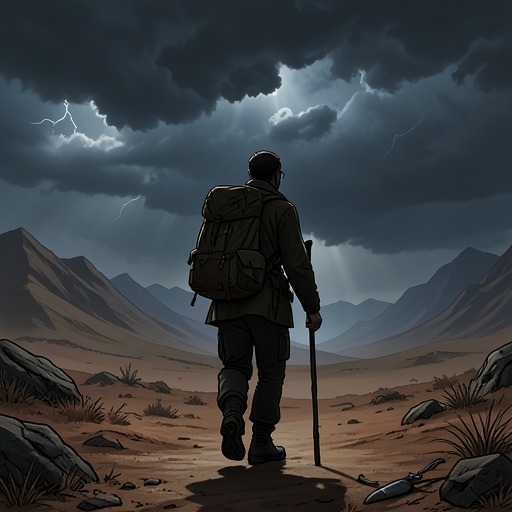
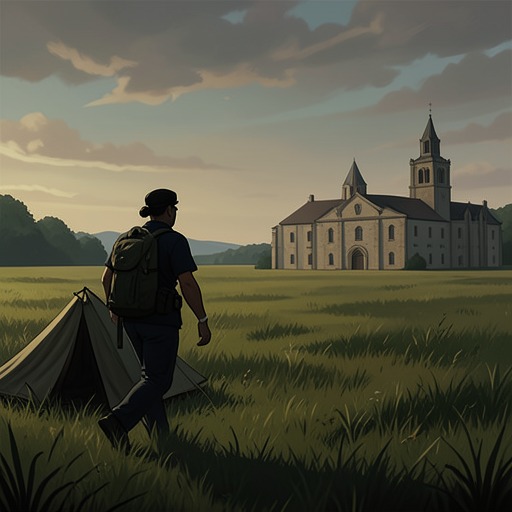
Narcissus and GoldmundGoldmund’s homeless wandering is not merely travel from place to place: it is the condition in which he discovers the world beyond the cloister, lives without a settled home or fixed goal, and encounters beauty and death without the shelter of an established order. His movement gives him freedom and makes him attentive to lives beyond his own, but it also leaves him exposed to solitude, brief attachments, and a landscape transformed by plague.
Separation from the Cloister
Goldmund’s departure becomes inwardly certain before it is physically complete. In his conversation with Narcissus, he recognizes that his friend belongs to an established order of duty and religious service, while he himself has no such goal. He understands that he has no home and that an unknown world awaits him. His mother’s departure from her own home and community offers a family echo of this uncertainty: she, too, had gone out into an unknown life, and Goldmund believes she may have perished there. He sees that Narcissus had made the cloister, its learning, and its disciplined life seem desirable; without his friend, the school, its routines, and its other inhabitants no longer bind Goldmund to the place.
During this period of waiting, the cloister seems already to be passing out of his life. Narcissus withdraws into fasting and night vigils, remaining physically present but no longer available to Goldmund. Goldmund visits the places he has come to love, including the chapel carvings, the choir stalls, the fountain in the garden, and the chestnut tree. He spends time with Father Anselm, watches work at the mill, and accepts meals, yet these familiar activities feel strangely like memories before he has even left. The people and buildings are becoming less real to him; what remains vivid is the inward life of longing, fear, and dreams, whose voices and images recall his mother. Wandering thus begins as a gradual separation: he is still within the cloister, but his attention and allegiance have already turned elsewhere.
The Open Road and Its Solitude
When Goldmund says he will leave with Lise, he describes her as a stranger without a home and says that he has no goal. Narcissus warns him that their road together may be short, but does not try to detain him. Once outside the cloister, Goldmund experiences the open countryside not as an excursion that ends in return, but as the world in which his fate will unfold. There is no bell to call him to bed, worship, lessons, or meals. He is small within a landscape whose weather and uncertainty now directly shape his life.
The forest makes the cost of this freedom tangible. Goldmund eats what he can find, including corn and hazelnuts, and later rests among abundant blueberries. He studies the forest’s animals and plants, but when a large animal crashes through the undergrowth at night, fear reminds him how little control he has over the world around him. Unable to find his way out, he sleeps on a bed of moss and imagines the possibility of remaining alone among the trees. Food and shelter might be managed, he thinks, but permanent separation from people—their faces, conversation, and affection—would be unbearable. He imagines that even becoming an animal would be preferable to retaining reason and language in a life without human company. The night sounds become his companions, and he understands himself as belonging, for the moment, to the forest and its creatures. After waking, he resumes his walk by taking his direction from the sun.
The wandering life repeatedly brings intimacy without permanence. Goldmund rarely spends two nights in one place, and women whom he meets often leave in the morning. He notices that none asks to share his road, but also recognizes that he has not invited them to do so and that he values his freedom. His attachments, too, fade quickly as new ones arise. The pattern leaves him wondering whether the brevity of these encounters comes from the unsettled life he leads or from something particular in himself. His homelessness is therefore both circumstance and choice: it enables movement and preserves independence, while making a lasting shared life difficult to imagine.
Being Seen as Homeless
Lydia gives Goldmund a particularly clear account of how his condition appears to someone who loves him. She sees sorrow behind his handsome, apparently happy face and connects it to his lack of a home: he has come from the woods and, she believes, will eventually return to the roads and sleep on moss. Her own home will remain materially intact, with family, a room, and a window from which to think of him, but she says that his departure will make it cease to feel like home. Her observation turns homelessness into a relational condition: it affects not only where Goldmund can rest, but also whether affection can provide anyone with a lasting sense of belonging.
Lydia imagines that Goldmund will have no ordinary life, that he will travel widely and be loved yet remain alone. She even suggests that he might return to the cloister and his friend Narcissus, while fearing that he could die alone in the forest. Goldmund does not answer her fears with explanations; he comforts her through gentle gestures and presence. Their difference remains unresolved. Lydia can foresee the loneliness built into his path, but neither her love nor the home she offers in words becomes a reason for him to give up the road.
Wandering Through the Plague
The road eventually carries Goldmund and Robert into a country where the Black Death has disrupted ordinary community life. At an isolated farm, they find a silent household and discover that the entire family is dead. The event exposes the danger of travel in a landscape where villages may bar strangers and homesteads may have no living inhabitants. Robert recognizes the plague and tries to flee, afraid that Goldmund may have been exposed. Goldmund insists that they remain together rather than leave one another to die alone, and from then on he takes the lead while Robert obeys.
Their circumstances are at once materially abundant and devastating. They find deserted farms, unattended livestock, food, and drink; they milk and feed animals and sometimes kill livestock for food. But Robert remains terrified of infection, trying to protect himself by holding his head and hands in campfire smoke and checking his body for signs of illness. Goldmund does not share his fear. He travels through the afflicted country with curiosity and sorrow, repeatedly confronted by abandoned houses, unburied dead, and the collapse of ordinary care. His response to the plague is not simply indifference: he is drawn to witness what is happening, even as the sights weigh on him.
After leaving Lene behind in the burning hut, Goldmund continues through a region where fear has intensified cruelty and suspicion. He encounters people abandoned by relatives, bodies left without burial, and crowds looking for someone to blame for the disease. In one town he witnesses the ghetto being burned and people driven back into the fire. The scale of suffering makes the plague more than a danger encountered along the road; it changes the moral and social world through which he moves. Goldmund sees fear turn into persecution and violence, while desperate survivors seek either refuge or a brief, feverish assertion of life.
Death, Perception, and the Meaning of the Road
Goldmund says that he is not afraid of the plague. Earlier threats, such as the danger he faced from Viktor or the cold and hunger of difficult days, were dangers he could resist; plague, by contrast, cannot be fought in the same way. Since leaving Lene behind, he seems less interested in preserving his own life, but curiosity keeps him moving. He helps carry bodies for food, throws earth over the dead for small payments, and passes through gatherings where people eat, drink, and dance amid the surrounding catastrophe. These episodes show the wandering life stripped of any promise of security: he continues not because the road protects him, but because witnessing it has become compelling.
A fresco of the Dance of Death offers Goldmund an image against which to measure his own experience. The painting shows death carrying people from every rank and occupation, from rulers and clergy to peasants and soldiers. He recognizes its force as a warning about the inevitability of death, yet feels that it does not express everything he has encountered. To him, death is not only stern and destructive; it also has a maternal and seductive aspect, a call that makes life seem more intense as it nears its end. This perception binds the road’s beauty and terror together rather than separating them into safe and dangerous worlds.
The wandering remains directed by an impulse even when it lacks a practical destination. Goldmund’s heart draws him toward Master Niklaus’s city, but the journey is continually delayed by new encounters and sights. A child travels with him for several days before a peat digger’s wife takes the boy in; later, a stray dog accompanies him and becomes his companion in conversation before wandering away. Such attachments are temporary, but they reveal Goldmund’s readiness to respond to those he meets rather than simply pass by. His homelessness is therefore a continuing tension: he belongs nowhere for long, yet the road repeatedly places other people, animals, and works of art within his care and attention. In the plague’s devastated landscape, that unsettled existence becomes the means by which he confronts mortality directly and develops a vision of death that includes not only loss, but also tenderness and longing.