Great Death
Narcissus and GoldmundThe Great Death is the plague epidemic that overtakes the lands through which Goldmund wanders, turning private travel into prolonged exposure to death, fear, and social breakdown. It interrupts ordinary life at every level: farms are deserted, communities exclude strangers or leave them to pass, and people respond to danger with both practical acts of care and violence against those made scapegoats. For Goldmund, the epidemic becomes not only a threat but an experience that alters his understanding of mortality, suffering, and the world he inhabits.
Arrival of the Epidemic
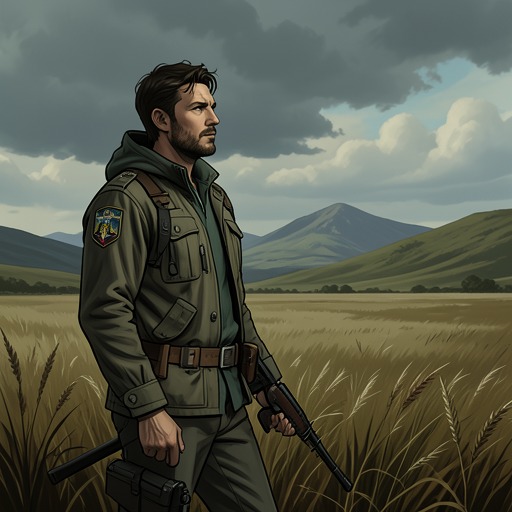
Goldmund and Robert first encounter the crisis indirectly, when armed peasants bar their way near a village and threaten them. The next morning, at an isolated farm, they discover a household that has fallen silent. The cow is left unmilked, the buildings are empty, and inside the house Goldmund finds the family dead, including an old woman who died seated beside the hearth. He counts five bodies: three in a bed, a boy across the threshold, and the old woman. The abandoned animals and household objects make the deaths visible as a rupture in daily life, not simply a distant report of illness.
Robert recognizes the danger and fears that Goldmund may have been exposed. When he tries to flee, Goldmund holds him back, arguing that they face the same risk and must remain together rather than leave either man to die alone. The encounter establishes their different responses: Robert repeatedly fears infection, while Goldmund accepts their shared vulnerability and keeps them traveling as companions.
A Land under the Plague
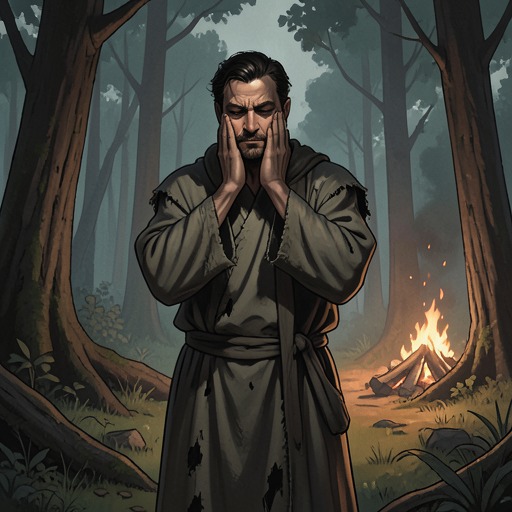
As the two wander on, the epidemic is present across villages and farms. Some settlements refuse entry to strangers; others allow them through. Many homes stand deserted, corpses remain unburied, livestock starves or runs loose, and the travelers feed and milk animals and take food from abandoned farms and cellars. This abundance does not make their circumstances easy: Robert remains preoccupied with infection, using smoke from their campfire as a supposed preventative and checking his body for signs of illness.
Goldmund does not share Robert’s fear or revulsion. He moves through the stricken country fascinated and saddened, with his attention fixed on death and on the suffering it exposes. His earlier fear of death had been tied to dangers he could resist; plague, by contrast, cannot be fought in that way. He continues through devastated settlements, witnessing abandoned children, looting, and people left without care. The calamity also produces contrasting forms of collective behavior: some flee alone and avoid contact, while others gather to drink, dance, and pursue pleasure in defiance of the surrounding deaths.
Scapegoating and Rebekka
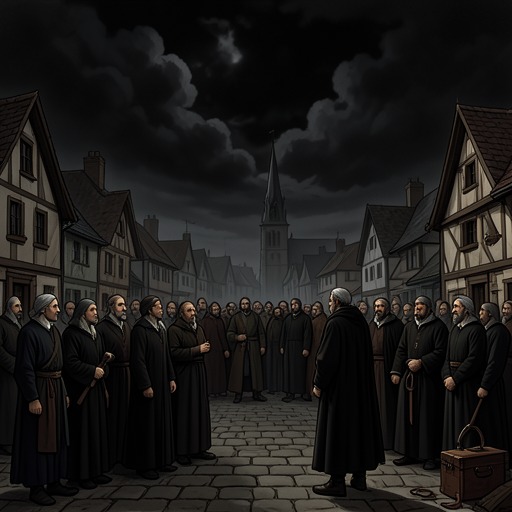
Fear turns into accusation and persecution. People claim that supposed enemies have deliberately spread disease by poisoning wells or smearing infection on surfaces. Those blamed may be condemned by authorities or killed by mobs. Goldmund witnesses a town’s ghetto being burned and sees the mob drive fleeing Jews back into the fire. The epidemic thus brings more than illness and loss: it becomes the setting for organized violence against innocent people.
Outside a town, Goldmund meets Rebekka, who is mourning her father, burned with fourteen other Jews by order of the town authorities. She has escaped and returned, blaming herself for not having died with the others. At her request, Goldmund helps gather her father’s bones from the ashes and bury them in a hiding place in the fields. He then offers to protect and feed her, but his attempt to turn that offer toward courtship makes her reject him. Rebekka condemns the Christians who first help bury her father and then presume to claim his daughter. Goldmund recognizes that he has failed to understand her grief and asks forgiveness. The episode makes the epidemic’s social violence personal, while exposing the limits of good intentions when they are shaped by desire and unequal circumstances.
Death, Art, and the Return
The plague gives Goldmund a new, sustained encounter with mortality. In a cloister he studies a newly painted Dance of Death, in which Death leads people of different ranks out of life. He understands the painting as a stern account of the inevitability of dying, but feels that his own experience has another register: death can seem not only harsh but also intimate and alluring. The image renews his desire to return to Master Niklaus and his craft, as if artistic work might give lasting form to lives otherwise consumed by change and loss.
After leaving Lene behind in the burning hut, Goldmund travels through the plague-stricken region toward the city where Master Niklaus had worked. He continues to encounter death and suffering, and later describes to Narcissus the dead, the mass burials, the abandoned children, and the burned Jews. Narcissus points out that Goldmund’s condemnation of the world is rooted in feeling, and sets those feelings against the happiness and desire he also experiences. The epidemic therefore becomes a continuing subject of their dispute about evil and human life, not a horror Goldmund simply leaves behind.
When Goldmund reaches the bishop’s city, the plague has subsided. The city had suffered riots and unrest after the bishop fled; Count Heinrich had been sent by the Emperor to restore order, and the bishop is expected to return. Goldmund arrives through the same gate he had entered years earlier, finding the familiar city intact after a journey through devastation. The epidemic has altered the people and places he encounters, but his return also reconnects him with the artistic vocation that drew him there.